Dự án AIIA FOIA: Tiêu chuẩn xét duyệt bí mật của USCIS – Kiểm tra an ninh quốc gia
Ngày 6 tháng 6 năm 2025
Các thông tin được tiết lộ theo Đạo luật Tự do Thông tin (FOIA) cho thấy Cục Di trú và Nhập tịch Hoa Kỳ (USCIS) sử dụng các tiêu chí “an ninh quốc gia” mập mờ và thường mang tính chủ quan - đặc biệt đối với nhà đầu tư từ các quốc gia được coi là có rủi ro cao như Trung Quốc - để đánh dấu các trường hợp EB-5 cần xem xét kéo dài hoặc từ chối. Các tiêu chí này bao gồm từ mối quan hệ với quân đội đến việc liên kết với một số trường đại học cụ thể. Các cuộc xem xét này có thể diễn ra ở bất kỳ giai đoạn nào và gây ra sự chậm trễ kéo dài nhiều năm trừ khi được giải quyết thông qua kiện tụng hoặc can thiệp chính trị.
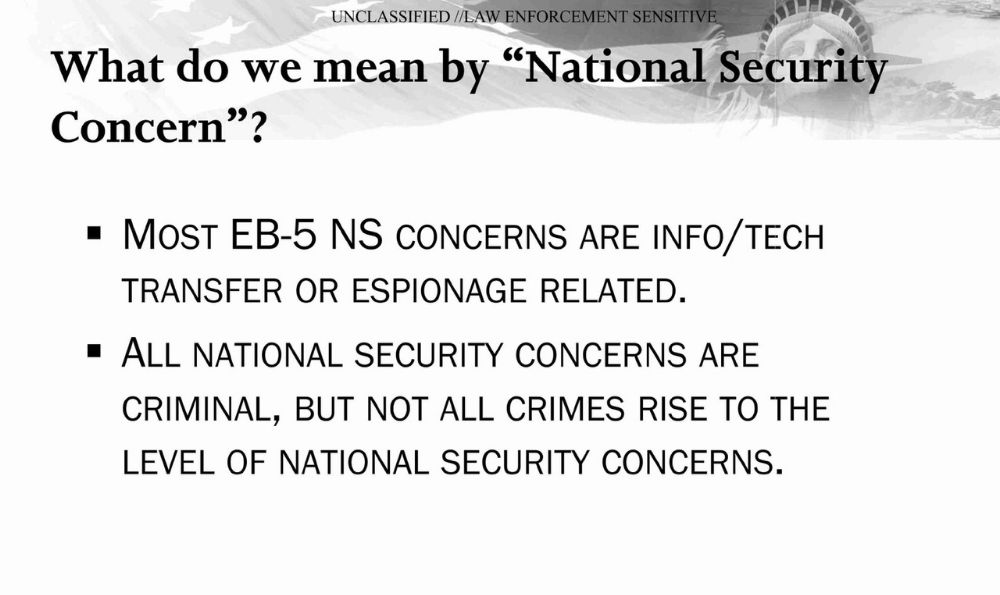
Bài viết này là một phần của chuỗi bài “FOIA Series” của chúng tôi, nơi chúng tôi trình bày thông tin thu thập được từ các tài liệu công khai liên quan đến nhà đầu tư EB-5. Trước hết, chúng tôi xin ghi nhận công lao của các luật sư. John Pratt và Edward Ramos— cả hai Kurzban Kurzban Tetzeli và Pratt — vì công việc xuất sắc trong vụ kiện theo Đạo luật Tự do Thông tin (FOIA) đã giúp chúng tôi thu thập được các tài liệu này.
Gần đây, Chính phủ Hoa Kỳ đã tìm cách hạn chế việc nhập cảnh và di cư của công dân nước ngoài với lý do “an ninh quốc gia”. Tổng thống Donald Trump đã ký một số lệnh hành pháp và tuyên bố liên quan đến vấn đề này. Các biện pháp này bao gồm việc tăng cường kiểm tra đối với sinh viên quốc tế của Đại học Harvard, đến... Theo dõi mạng xã hội của sinh viên quốc tế F-1, đến Hỏi dồn dập bởi các nhân viên Hải quan và Biên phòng Hoa Kỳ tại các cửa khẩu nhập cảnh.
Nhà đầu tư EB-5 không nằm ngoài sự kiểm tra chặt chẽ này. Tất cả công dân nước ngoài tại Hoa Kỳ sẽ phải đối mặt với việc kiểm tra ngày càng kỹ lưỡng về lịch sử cá nhân và mối quan hệ của họ. Xu hướng này, ít nhất, dẫn đến việc kéo dài thời gian xử lý đơn xin nhập cư và, trong trường hợp xấu nhất, việc từ chối không công bằng các đơn xin và các lợi ích khác. Tại Hiệp hội Nhà đầu tư Nhập cư Hoa Kỳ (AIIA), chúng tôi mong muốn thông tin cho các nhà đầu tư EB-5 và người nộp đơn về cách thức kiểm tra này diễn ra trong thực tế.
Như một phần của sứ mệnh tìm kiếm sự minh bạch trong Chương trình EB-5 cho nhà đầu tư, AIIA thường xuyên nộp các yêu cầu thông tin theo Đạo luật Tự do Thông tin (FOIA) tới Cục Di trú và Nhập tịch Hoa Kỳ (USCIS). Kết quả là, chúng tôi nhận được hàng nghìn trang tài liệu FOIA, và nhân viên của chúng tôi dành nhiều giờ để phân tích chi tiết các tài liệu này nhằm phát hiện thông tin mới về chương trình EB-5 — để xác định bất kỳ mối đe dọa nào đối với lợi ích của nhà đầu tư và những hiểu biết mới có thể giúp ích cho nhà đầu tư. Trong suốt năm 2024 và 2025, AIIA đã nhận được 13 bộ hồ sơ thông tin EB-5 từ USCIS, tổng cộng hơn 4.200 trang. Mỗi bộ hồ sơ chứa đựng lượng thông tin mới đáng kể về chương trình EB-5, mà chúng tôi hiện đang nỗ lực chia sẻ.
Thông tin thu thập được thông qua FOIA có thể đóng vai trò quyết định đối với thành công của đơn xin của nhà đầu tư. Ví dụ, trong một yêu cầu FOIA trước đây, chúng tôi đã tiến hành phân tích sâu rộng về... Xác định nguồn vốn tại giai đoạn I-829 và phát hiện ra một tài liệu hướng dẫn đào tạo chưa từng được công bố trước đây, xác nhận rằng cơ quan này thực sự kiểm tra kỹ lưỡng nguồn vốn của nhà đầu tư ngay cả sau khi đơn I-526 của họ đã được xét duyệt. Các tài liệu được phát hiện thông qua nỗ lực đó đã được nhiều công ty luật và nhà đầu tư sử dụng để phản hồi các yêu cầu bổ sung thông tin (RFEs) và thông báo từ chối (NOIDs) một cách quyết liệt và đạt được sự chấp thuận.
Ở đây, chúng ta sẽ thảo luận về các tiêu chuẩn xét duyệt nội bộ mà USCIS sử dụng để sàng lọc các đơn xin EB-5. Cụ thể, chúng ta sẽ mô tả các yếu tố an ninh quốc gia có thể dẫn đến việc nhà đầu tư phải trải qua quá trình xét duyệt nâng cao bởi Cục Phát hiện Gian lận và An ninh Quốc gia (FDNS) của USCIS.

Trên đây là ảnh chụp màn hình của một buổi trình bày đào tạo do Bộ phận Phát hiện Gian lận và An ninh Quốc gia của USCIS tổ chức cho các cán bộ xử lý hồ sơ, hướng dẫn họ về thời điểm cần chuyển hồ sơ đơn xin EB-5 để tiến hành kiểm tra kỹ lưỡng hơn. Trang 42 của tài liệu L, các thông tin được tiết lộ theo Đạo luật Tự do Thông tin (FOIA) của AIIA.
Thông tin của chúng tôi sẽ giúp các nhà đầu tư nhập cư hiểu rõ hơn về quy trình kiểm tra FDNS, cách tránh quy trình này và cách đẩy nhanh quy trình để tránh các trì hoãn không cần thiết trong quá trình xử lý. Trong tương lai, chúng tôi sẽ đăng một bài viết thảo luận về các dấu hiệu gian lận có thể dẫn đến quy trình kiểm tra FDNS.
Cục Phát hiện Gian lận và An ninh Quốc gia (FDNS)
Hoa Kỳ nhằm mục đích ngăn chặn việc nhập cư của những cá nhân có thể đe dọa an ninh quốc gia của mình. Do đó, tất cả các ứng viên nhập cư đều phải trải qua quá trình kiểm tra lý lịch. Trong lịch sử, USCIS đã tích cực tìm cách phát hiện các rủi ro an ninh và gian lận. Điều này đã dẫn đến việc từ chối hoặc hủy bỏ các đơn xin nhập cư, bao gồm cả các đơn EB-5.
Vì những lý do này, USCIS đã tạo ra Phòng Phát hiện Gian lận và An ninh Quốc gia (FDNS). FDNS là cơ quan chính chịu trách nhiệm kiểm tra các đơn xin đầu tư EB-5 về các vấn đề an ninh, và hợp tác với Cộng đồng Tình báo Hoa Kỳ và các cơ quan thực thi pháp luật liên bang để thực hiện nhiệm vụ này.
Trong FDNS có một đơn vị trực thuộc được gọi là “Chi nhánh Kiểm tra An ninh Quốc gia.” Trích dẫn từ các tài liệu: Chi nhánh này chịu trách nhiệm về Xét duyệt các đối tượng tham gia Chương trình EB-5: bao gồm nhà đầu tư, nguồn vốn của họ, các trung tâm khu vực và các dự án để đánh giá các mối đe dọa an ninh quốc gia.
Khi FDNS đánh dấu đơn xin EB-5 để xem xét nâng cao trên cơ sở an ninh.
USCIS thường kiểm tra nhà đầu tư và nguồn gốc của số tiền họ đầu tư để đánh giá rủi ro an ninh quốc gia hoặc tiền án tiền sự. Thông thường, các yêu cầu này được xử lý dựa trên “thông tin cá nhân cơ bản” của nhà đầu tư — tức là., tên của họ, ngày sinh, quốc tịch, số hộ chiếu, địa chỉ cư trú và các thành viên trong gia đình.
USCIS tra cứu thông tin này qua các cơ sở dữ liệu của chính phủ Hoa Kỳ: ví dụ như Cơ sở dữ liệu Màn hình Chống khủng bố (TSDB), Trung tâm Thông tin Tội phạm Quốc gia (NCIC), Môi trường Dữ liệu Danh tính Khủng bố (TIDE), Danh sách Các Cá nhân Đặc biệt Được Chỉ định (SDN) và Danh sách Các Tổ chức Khủng bố Toàn cầu Đặc biệt Được Chỉ định (SDGT). Khi thông tin cá nhân của người nộp đơn EB-5 trùng khớp với thông tin trong một trong các cơ sở dữ liệu này, FDNS có thể tạm hoãn việc xem xét đơn của người đó để tiến hành kiểm tra bổ sung. Tuy nhiên, đối với phần lớn người nộp đơn tuân thủ pháp luật, khả năng trùng khớp như vậy là rất thấp.
Ngoài việc chỉ thực hiện các tìm kiếm trong cơ sở dữ liệu, các cán bộ xử lý hồ sơ của USCIS có thể đưa ra các quyết định chủ quan về thời điểm tạm hoãn một đơn xin EB-5 để xem xét thêm. Các quyết định này dựa trên “Các chỉ số an ninh quốc gia”có thể có mặt.”.
Theo lời của USCIS: “‘Chỉ số’ chỉ là một thuật ngữ hoa mỹ có nghĩa là manh mối hoặc gợi ý.”

Trên đây: Một ảnh chụp màn hình từ bài thuyết trình dành cho các nhân viên USCIS do đại diện của FDNS trình bày. Trang 315 của tài liệu F, AIIA FOIA Disclosures.
Các chỉ số an ninh quốc gia được FDNS sử dụng để đánh dấu các đơn xin EB-5
Theo các thông tin được tiết lộ theo Đạo luật Tự do Thông tin (FOIA) mà AIIA nhận được, USCIS cho biết họ “không có danh sách đầy đủ về những gì được coi là [chỉ số an ninh quốc gia]”. Họ thừa nhận rằng quyết định đánh dấu một đơn xin là “thường… là quyết định dựa trên các sự kiện hiện có”. Tuy nhiên, USCIS đã liệt kê một số loại mối quan ngại về an ninh quốc gia mà họ xem xét khi đánh giá các đơn xin, bao gồm khủng bố, chuyển giao thông tin hoặc công nghệ (tức là., hoạt động liên quan đến việc chuyển giao công nghệ hai dụng có ứng dụng quân sự, công nghệ chịu sự kiểm soát xuất khẩu và vũ khí cho các quốc gia nước ngoài có liên quan), gián điệp và do thám cho các quốc gia nước ngoài và phá hoại (tức là., việc phá hủy hoặc gây hư hại cho cơ sở hạ tầng quan trọng, đe dọa hoặc ép buộc nhằm ảnh hưởng đến dân thường hoặc chính sách của chính phủ).
USCIS đã xác định một số “các quốc gia cần quan tâm” Để mục đích kiểm tra FDNS. Đây là các quốc gia là đối thủ chính trị của Hoa Kỳ. Công dân của các quốc gia này (bao gồm cả công dân có hai quốc tịch) có thể phải chịu thêm các biện pháp kiểm tra. Các quốc gia bao gồm Trung Quốc, Nga, Triều Tiên, Cuba, Iraq, Afghanistan và Syria.

Trên đây: Một ảnh chụp màn hình từ bài thuyết trình dành cho các nhân viên USCIS do đại diện của FDNS trình bày. Trang 47 của tài liệu L, AIIA FOIA Disclosures.
Ngoài quốc tịch, FDNS sử dụng một số thông tin cá nhân làm chỉ số an ninh quốc gia. Điều này bao gồm các nội dung sau:
- Dịch vụ ngoại giao nước ngoài, Theo đó, người đó được cấp hộ chiếu dịch vụ, hộ chiếu công vụ hoặc hộ chiếu ngoại giao. Điều này bao gồm cả người phụ thuộc của một nhà ngoại giao chính, ngay cả khi người phụ thuộc là trẻ em dưới 18 tuổi vào thời điểm đó.
- Thành viên của một tổ chức liên quan đến an ninh quốc gia của một quốc gia đáng quan ngại. Những cơ quan này có thể bao gồm các cơ quan cảnh sát và thi hành pháp luật, cơ quan tình báo, các nhánh quân đội, các đơn vị bán quân sự và dự bị/địa phương, cũng như các bộ và cơ quan chính phủ giám sát các cơ quan này. Các ví dụ được nêu ra bao gồm KGB của Liên Xô, Cục An ninh Liên bang Nga (FSB) và Quân đội Giải phóng Nhân dân (PLA) của Đảng Cộng sản Trung Quốc (CCP).
FDNS nhận thức rằng nhiều quốc gia có thể có chính sách nghĩa vụ quân sự bắt buộc, yêu cầu tất cả công dân nam trong độ tuổi nhất định phải phục vụ trong lực lượng vũ trang của họ. “Nghĩa vụ quân sự bắt buộc” là một yếu tố có thể làm giảm khả năng được chuyển sang xét duyệt bổ sung. USCIS có thể đánh giá tổng thể các hoàn cảnh khi xem xét việc chuyển sang xét duyệt bổ sung như vậy: tức là., Thời gian phục vụ, mức độ tham gia của người nộp đơn vào các cuộc xung đột vũ trang và loại hình đào tạo đã nhận.
- Mối quan hệ với các viện nghiên cứu do nhà nước tài trợ hoặc các viện nghiên cứu quân sự, trong đó người đó là sinh viên, giảng viên, nhân viên, hoặc có bất kỳ liên hệ nào với cơ sở giáo dục đó. Nhiều cơ sở giáo dục đại học ở nước ngoài nhận được tài trợ từ chính phủ cho nghiên cứu; cụ thể, USCIS đang tìm kiếm các cơ sở có liên kết với các tổ chức an ninh quốc gia. Ví dụ bao gồm các cơ sở giáo dục của Quân đội Giải phóng Nhân dân (PLA) và Cảnh sát Vũ trang Nhân dân (PAP) của Đảng Cộng sản Trung Quốc (CCP), cũng như các trường đại học “Bảy Con Trai của Quốc phòng” ở Trung Quốc đại lục.
Determination Process if EB-5 Investor Has A National Security Indicator

Trên đây: Một ảnh chụp màn hình từ bài thuyết trình dành cho các nhân viên USCIS do đại diện của FDNS trình bày. Trang 50 của tài liệu L, AIIA FOIA Disclosures.
USCIS sử dụng nhiều nguồn thông tin khác nhau để xác định liệu một người có thể có dấu hiệu liên quan đến an ninh quốc gia hay không. FDNS đã chỉ đạo các cán bộ xử lý hồ sơ của USCIS dựa vào các thông tin sau:
- Kiểm tra tệp, hoặc thông tin được nêu trong đơn I-526/I-526(E) và các tài liệu kèm theo (Ví dụ:., Đơn xin điều chỉnh tình trạng (I-485). USCIS cũng có thể xem xét toàn bộ lịch sử nhập cư của người nộp đơn/người phụ thuộc – bao gồm cả những mâu thuẫn có thể có giữa các thông tin đã khai trong các đơn xin visa trước đây (Mẫu DS-16) – để tìm kiếm bất kỳ thông tin nào có thể gây nghi ngờ.
- Tìm kiếm mã nguồn mở, theo đó, cán bộ có thể xem xét các bài báo trên báo chí, trang web, bài đăng trên mạng xã hội và các thông tin khác có sẵn cho công chúng. USCIS ngày càng chú trọng đến mạng xã hội và đưa ra những kết luận tiêu cực từ đó.
- The Theo dõi các trường đại học quốc phòng của Trung Quốc, đây là cơ sở dữ liệu về tất cả các cơ sở giáo dục đại học tại Trung Quốc có liên kết với Đảng Cộng sản Trung Quốc (CCP), các đơn vị quân đội và cảnh sát của Quân đội Giải phóng Nhân dân (PLA) và Cảnh sát Nhân dân (PAP), cũng như các cơ quan quốc phòng khác.
Như được thể hiện trong hình thu nhỏ của bài viết này, FDNS đã nhấn mạnh trong các thông báo rằng hầu hết các vấn đề an ninh quốc gia liên quan đến EB-5 đều liên quan đến việc chuyển giao thông tin và công nghệ, cũng như hoạt động gián điệp.
Giới thiệu FDNS trong quá trình xin visa EB-5
USCIS đã nhấn mạnh rằng việc chuyển hồ sơ FDNS có thể xảy ra ở bất kỳ giai đoạn nào của quá trình nhập cư. Điều này có thể bao gồm các trường hợp mà đơn I-526/I-526(E) cơ bản đã được phê duyệt, ngay cả sau khi thông báo phê duyệt đã được gửi đến người nộp đơn.
Ngoài ra, trong trường hợp đơn xin được từ chối hoặc đơn xin bị rút lại, FDNS vẫn có thể tiến hành xem xét và ghi chép lại kết quả. Thông tin này sẽ được cung cấp nếu cá nhân đó nộp đơn xin lợi ích nhập cư vào bất kỳ thời điểm nào trong tương lai.
What Happens After An FDNS Referral?
Khi một người nộp đơn hoặc người liên quan được chuyển đến FDNS để xem xét, FDNS sẽ tiến hành một cuộc điều tra sâu rộng — được gọi là “kiểm tra nâng cao” — đối với cá nhân đó. FDNS sẽ dựa vào bất kỳ nguồn thông tin nào có sẵn, đặc biệt là các nguồn thông tin mật.

Trên đây: Trang 318 của tài liệu F, Thông tin công khai theo Đạo luật Tự do Thông tin (FOIA) của AIIA.
FDNS cũng đã nêu tên một số nguồn công khai mà họ tham khảo: PACER (tức là., Hệ thống Truy cập Công khai vào Hồ sơ Tòa án Điện tử (PACE) do Tòa án Liên bang Hoa Kỳ sử dụng), FinCEN (tức Mạng lưới Thực thi Pháp luật về Tội phạm Tài chính của Bộ Tài chính), và Thông báo Đỏ của INTERPOL do Tổ chức Cảnh sát Hình sự Quốc tế ban hành.
Sau khi FDNS hoàn tất quá trình kiểm tra nâng cao, có thể xảy ra một số kết quả sau:
- FDNS ban hành một thông báo được lưu vào hồ sơ của đơn đăng ký và ban hành bản tóm tắt kết quả đánh giá. Điều này có nghĩa là không có vấn đề nào phát sinh sau quá trình thẩm định.
- Đơn kiến nghị được đưa vào quy trình “Xem xét và Giải quyết Đơn xin Kiểm soát” (CARRP). Đây là Kết quả tồi tệ nhất có thể xảy ra đối với nhà đầu tư EB-5. Quy trình xem xét CARRP là một quá trình kéo dài, trong đó USCIS tìm kiếm các cách để Từ chối đơn xin Dựa trên những lý do bề ngoài, trong khi thực tế, động cơ cơ bản để từ chối đơn xin là do các lý do an ninh quốc gia có thể không được tiết lộ cho nhà đầu tư EB-5. Các bước ban đầu của CARRP bao gồm việc xem xét kỹ lưỡng đơn xin để tìm ra những lý do cơ bản nhất, thậm chí là những sai sót hành chính, cho việc từ chối. Trong tình huống này, đơn xin có thể bị xem xét. sự chậm trễ quá mức. Chương trình CARRP có lịch sử lâu đời và được phát triển ngoài bối cảnh EB-5. Thông tin chi tiết về chương trình và cách nó được phát hiện thông qua vụ kiện theo Đạo luật Tự do Thông tin (FOIA) là có sẵn tại đây.
Exemptions and Ways to Expedite to FDNS Review
Mặc dù chúng tôi không có thông tin cụ thể về vấn đề này do nhiều tài liệu chúng tôi nhận được đã bị bôi đen nặng nề, chúng tôi vẫn có thể thu thập được một số thông tin có thể hữu ích cho các nhà đầu tư EB-5 lo ngại về việc kích hoạt các cuộc đánh giá FDNS.
Miễn trừ đối với một số mối quan hệ ngân hàng của IranFDNS yêu cầu rõ ràng các cán bộ phải không Chuyển các đơn xin EB-5 để xem xét kỹ lưỡng hơn nếu người nộp đơn sử dụng ngân hàng Iran chỉ như một kênh trung gian để chuyển tiền vào Hoa Kỳ. Việc xem xét của FDNS chỉ được kích hoạt khi người nộp đơn, người phụ thuộc hoặc nguồn tiền có mối liên hệ trực tiếp với ngân hàng thông qua việc làm hoặc sở hữu.“
Thúc đẩy quá trình xem xét và thẩm định FDNS: Quy trình thẩm định FDNS có thể mất nhiều thời gian để hoàn tất, và cơ quan này thường phải xử lý một lượng lớn các trường hợp. Tuy nhiên, dựa trên các thông tin được công bố theo Đạo luật Tự do Thông tin (FOIA) (xem hình bên dưới), AIIA đã tìm hiểu được các cách để đẩy nhanh quy trình này. Các cách đó như sau:
- Nộp đơn khởi kiện yêu cầu ban hành lệnh mandamus (tương đương với một vụ kiện) chống lại USCIS tại Tòa án Liên bang Hoa Kỳ, do USCIS không xử lý đơn xin cấp phép một cách kịp thời;
- Nộp đơn kháng cáo lên Văn phòng Kháng cáo Hành chính (AAO) của USCIS;
- Yêu cầu sự can thiệp của một thành viên Quốc hội để đẩy nhanh quá trình xét duyệt. Khi một Thượng nghị sĩ Hoa Kỳ hoặc Hạ nghị sĩ Hoa Kỳ liên hệ với USCIS thay mặt cho một công dân Hoa Kỳ để yêu cầu đẩy nhanh quá trình (Ví dụ:., (đơn xin EB-5 do một thành viên gia đình cư trú trong khu vực bầu cử của họ nộp), USCIS cố gắng phản hồi tích cực bằng cách đẩy nhanh quá trình xem xét.
Từ những ngày đầu thành lập, tổ chức phi lợi nhuận của chúng tôi đã liên tục hỗ trợ và giới thiệu các nhà đầu tư và các bên liên quan với cả ba lựa chọn này.

Trên đây: Một ảnh chụp màn hình từ bài thuyết trình dành cho các nhân viên USCIS do đại diện FDNS trình bày. Trang 201 của tài liệu J, AIIA FOIA Disclosures.
Nhà đầu tư Trung Quốc và các giới thiệu từ FDNS
Như đã biết, quan hệ giữa Hoa Kỳ và Chính phủ Cộng hòa Nhân dân Trung Hoa (PRC) ngày càng căng thẳng. Chính phủ Hoa Kỳ đang tích cực quan ngại về việc tiếp nhận công dân Trung Quốc có thể ủng hộ các nỗ lực của PRC và Đảng Cộng sản Trung Quốc (CCP) trong việc cạnh tranh với Hoa Kỳ.
Điều quan trọng nhất là Chính phủ Hoa Kỳ lo ngại về việc cấp thị thực cho các chuyên gia kỹ thuật có trình độ cao mang quốc tịch Trung Quốc có kinh nghiệm trong các ngành công nghiệp công nghệ cao của Trung Quốc, những người có thể gây ra rủi ro gián điệp và phản gián, cũng như những người trung thành với Đảng Cộng sản Trung Quốc (CCP). Có lẽ hơn bất kỳ quốc gia nào khác, USCIS (Cục Di trú và Nhập tịch Hoa Kỳ) cực kỳ thận trọng trong việc thẩm định công dân Trung Quốc đại lục trong chương trình EB-5.
Ngoài những yếu tố đã nêu trên, còn có một số yếu tố khác có thể làm tăng khả năng kiểm tra FDNS. Chúng tôi đã liệt kê chúng sau hình ảnh bên dưới.

Trên đây: Một ảnh chụp màn hình từ bài thuyết trình dành cho các cán bộ USCIS do đại diện của FDNS trình bày. Trang 49 của tài liệu L, AIIA FOIA Disclosures.
Thành viên của Đảng Cộng sản Trung Quốc (CCP)
Đảng Cộng sản Trung Quốc (CCP) là đảng cầm quyền của Cộng hòa Nhân dân Trung Hoa (PRC), và Cơ quan Di trú và Nhập tịch Hoa Kỳ (USCIS) có quan điểm không ủng hộ việc nhập cư của các thành viên trung thành của Đảng Cộng sản Trung Quốc vào Hoa Kỳ.
USCIS thừa nhận rằng nhiều thành viên cá nhân của Đảng Cộng sản Trung Quốc (CCP), bao gồm cả những người gia nhập đảng một cách tự nguyện, có thể không tham gia tích cực vào các hoạt động và dự án của đảng có thể gây hại cho lợi ích của Hoa Kỳ. Do đó, việc là thành viên của CCP không phải là yếu tố duy nhất để tiến hành đánh giá FDNS; phải có thêm yếu tố khác.
Như biểu đồ nêu trên cho thấy, các cuộc đánh giá FDNS có thể bị đánh dấu khi người nộp đơn là thành viên của Đảng Cộng sản Trung Quốc (CCP) và đã từng giữ “các vị trí cao cấp trong đảng, chính phủ hoặc quân đội” hoặc có liên quan đến cá nhân như vậy. Biểu đồ cũng liệt kê các tổ chức, theo viết tắt, mà việc có liên quan đến các tổ chức này có thể kích hoạt cuộc đánh giá. Các tổ chức này bao gồm các cơ quan của Hội đồng Nhà nước, các tổ chức của Đảng Cộng sản Trung Quốc (CCP) và các ủy ban trung ương thực thi quyền lực nhà nước. Tuy nhiên, các nhà đầu tư Trung Quốc cần lưu ý rằng các tổ chức tỉnh thuộc các đơn vị tỉnh của Đảng Cộng sản Trung Quốc (CCP) không được coi là yếu tố để tiến hành đánh giá bổ sung.
Membership or Affiliation with a Chinese Company Affiliated with the PLA
Bộ Quốc phòng Hoa Kỳ duy trì một “danh sách đen” các công ty Trung Quốc có mối quan hệ chặt chẽ với Quân đội Giải phóng Nhân dân Trung Quốc (PLA). Trong khi đó, Bộ Tài chính Hoa Kỳ có một danh sách lớn hơn các “công ty thuộc phức hợp công nghiệp quân sự Trung Quốc”, được gọi là Danh sách CMIC. Bất kỳ người nộp đơn EB-5 nào có liên quan đến các công ty trong danh sách này đều có khả năng bị đánh dấu để xem xét bởi FDNS. Danh sách đen các công ty trong lĩnh vực quốc phòng mới nhất đã được công bố vào năm 2021, và là có sẵn tại đây.
Ngoài ra, theo các luật quốc phòng mới ban hành vào năm 2021, Chính phủ Hoa Kỳ đã công bố danh sách các “công ty quân sự Trung Quốc” có thể có hoạt động tại Hoa Kỳ. Hơn 100 công ty lớn nhất của Trung Quốc được liệt kê trong danh sách này. Bất kỳ sự liên kết nào với các công ty này cũng có thể dẫn đến việc tiến hành đánh giá FDNS.
Affiliation with Chinese Technology Companies and High-Level Chinese Technology Executives
USCIS có thể chuyển hồ sơ của các ứng viên đến FDNS trong các trường hợp họ có mối quan hệ gia đình hoặc tài chính được chứng minh với một công ty công nghệ Trung Quốc, chẳng hạn như Huawei, Bytedance hoặc Alibaba. Hình ảnh minh họa bên dưới là một ví dụ về tình huống có thể cần được chuyển hồ sơ.

Trên đây: Một ảnh chụp màn hình từ bài thuyết trình dành cho các cán bộ USCIS do đại diện FDNS trình bày. Trang 62 của tài liệu L, AIIA FOIA Disclosures.
Việc USCIS nhắm mục tiêu vào các công ty công nghệ Trung Quốc là nhất quán với Kinh nghiệm của các chuyên gia EB-5 và cùng với các tài liệu khác được phát hiện thông qua vụ kiện theo Đạo luật Tự do Thông tin (FOIA).
Thuộc Hội Sinh viên Học giả Trung Quốc (CSSA) tại một trường đại học ở Hoa Kỳ
Sinh viên Trung Quốc từng tham gia bất kỳ tổ chức CSSA nào trong thời gian học tập tại Hoa Kỳ cũng sẽ phải đối mặt với mức độ kiểm tra nghiêm ngặt hơn trong quá trình xin visa EB-5.

Trên đây: Trang 60 của Tài liệu L, Các thông tin được tiết lộ theo Đạo luật Tự do Thông tin (FOIA) của AIIA.
Những suy nghĩ cuối cùng
Chương trình EB-5 đang hoạt động trong bối cảnh chính trị thay đổi liên tục. Do đó, việc nhà đầu tư hiểu rõ các chính sách có thể ảnh hưởng đến kết quả đơn xin nhập cư của họ trở nên quan trọng hơn bao giờ hết. Các cuộc kiểm tra an ninh quốc gia nội bộ do FDNS của USCIS thực hiện mang tính mờ ám, chủ quan và trong một số trường hợp, không hợp lý. Nhà đầu tư và luật sư của họ cần được thông báo về những vấn đề này.
Thông qua các yêu cầu theo Đạo luật Tự do Thông tin (FOIA) và phân tích kỹ lưỡng các thông tin được công bố, AIIA tiếp tục cam kết làm sáng tỏ và giải thích các chính sách ẩn giấu này. Mục tiêu của chúng tôi là trang bị cho các nhà đầu tư nhập cư kiến thức cần thiết để vượt qua quy trình phức tạp này. Điều này là một phần trong nỗ lực vận động của chúng tôi nhằm thúc đẩy tính minh bạch và công bằng trong Chương trình EB-5.
AIIA đã đầu tư rất nhiều thời gian và nguồn lực vào việc thu thập, phân tích và công bố thông tin này. Chúng tôi hoàn toàn phụ thuộc vào các khoản đóng góp để thực hiện công việc này. Nếu bạn đánh giá cao công việc của chúng tôi trong việc đấu tranh cho nhà đầu tư và thu thập thông tin về chương trình EB-5, Xin vui lòng ủng hộ cho chúng tôi.. Sự ủng hộ của quý vị là vô cùng quan trọng để đảm bảo chúng tôi thành công trong việc thu thập thông tin chưa từng được công bố về Chương trình EB-5 và các chính sách xét duyệt nội bộ của USCIS, như những thông tin được đăng tải trong bài viết này hôm nay.
Các thành viên của AIIA có thể yêu cầu chúng tôi tìm kiếm thông tin cụ thể trong các vụ kiện và yêu cầu theo Đạo luật Tự do Thông tin (FOIA) của chúng tôi. Chúng tôi có thành tích đã được chứng minh trong việc thu thập thông tin từ USCIS và danh tiếng về việc gây ra rắc rối pháp lý cho họ nếu họ từ chối yêu cầu của chúng tôi. Điều này giúp chúng tôi dễ dàng thu thập thông tin. Nếu bạn muốn hiểu rõ hơn về bất kỳ khía cạnh nào của Chương trình EB-5 — với tư cách là nhà đầu tư, luật sư, trung tâm khu vực hoặc thành viên ngành — vui lòng xem xét việc trở thành một Thành viên của AIIA Hôm nay. Toàn bộ bản sao kết quả FOIA của chúng tôi cùng với danh mục đầy đủ hiện có sẵn cho tất cả các thành viên của chúng tôi.
Danh bạ các chuyên gia

AIIA đã tuyển chọn một danh sách các chuyên gia hàng đầu, bao gồm luật sư, chuyên gia đầu tư và người viết kế hoạch kinh doanh, để hỗ trợ tất cả các bên liên quan đến chương trình EB-5.
Xem Danh bạ Chuyên giaBài viết liên quan
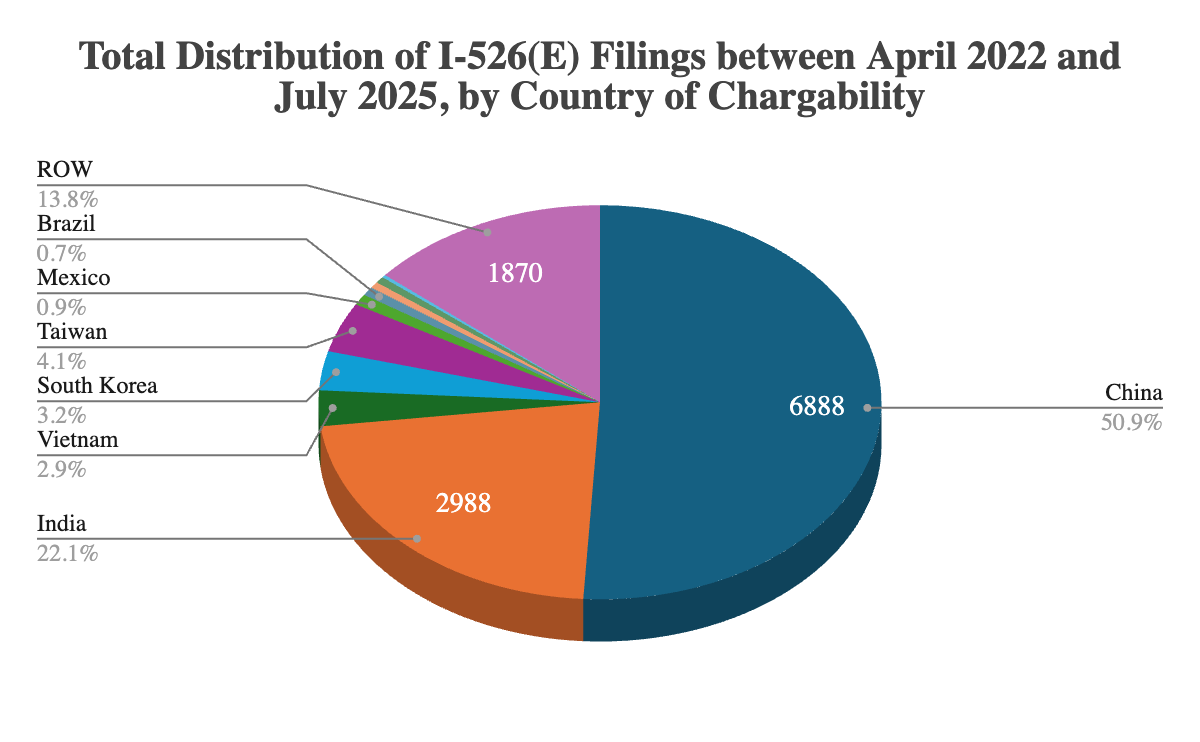
Chuỗi bài viết về Đạo luật Tự do Thông tin (FOIA) của AIIA: Số liệu thống kê cập nhật về hồ sơ I-526E tháng 7 năm 2025
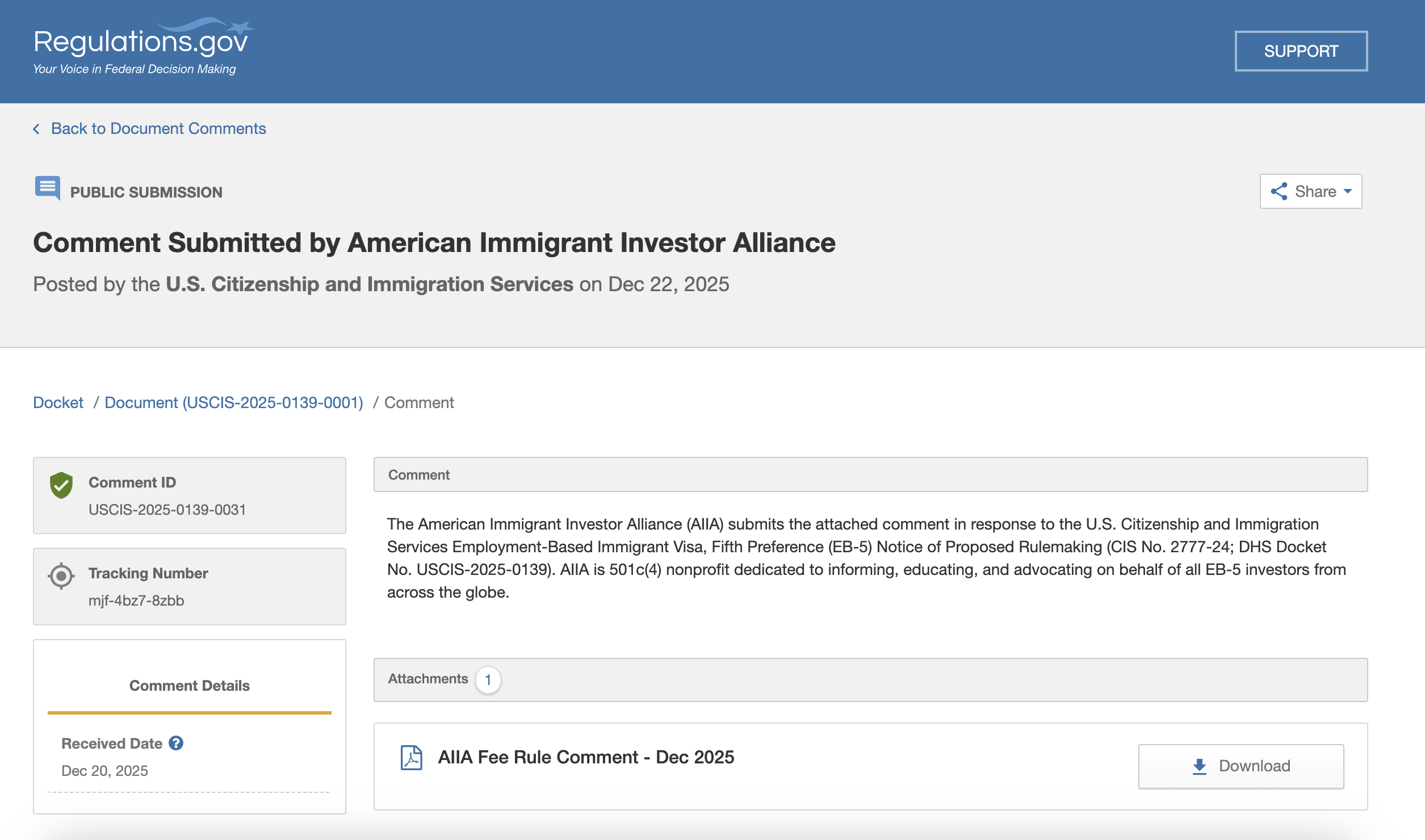
Hiệp hội Đầu tư Nước ngoài Hoa Kỳ (AIIA) gửi ý kiến đóng góp về Dự thảo Quy định (NPRM) của Sở Di trú và Nhập tịch Hoa Kỳ (USCIS) liên quan đến quy định cập nhật về lệ phí EB-5
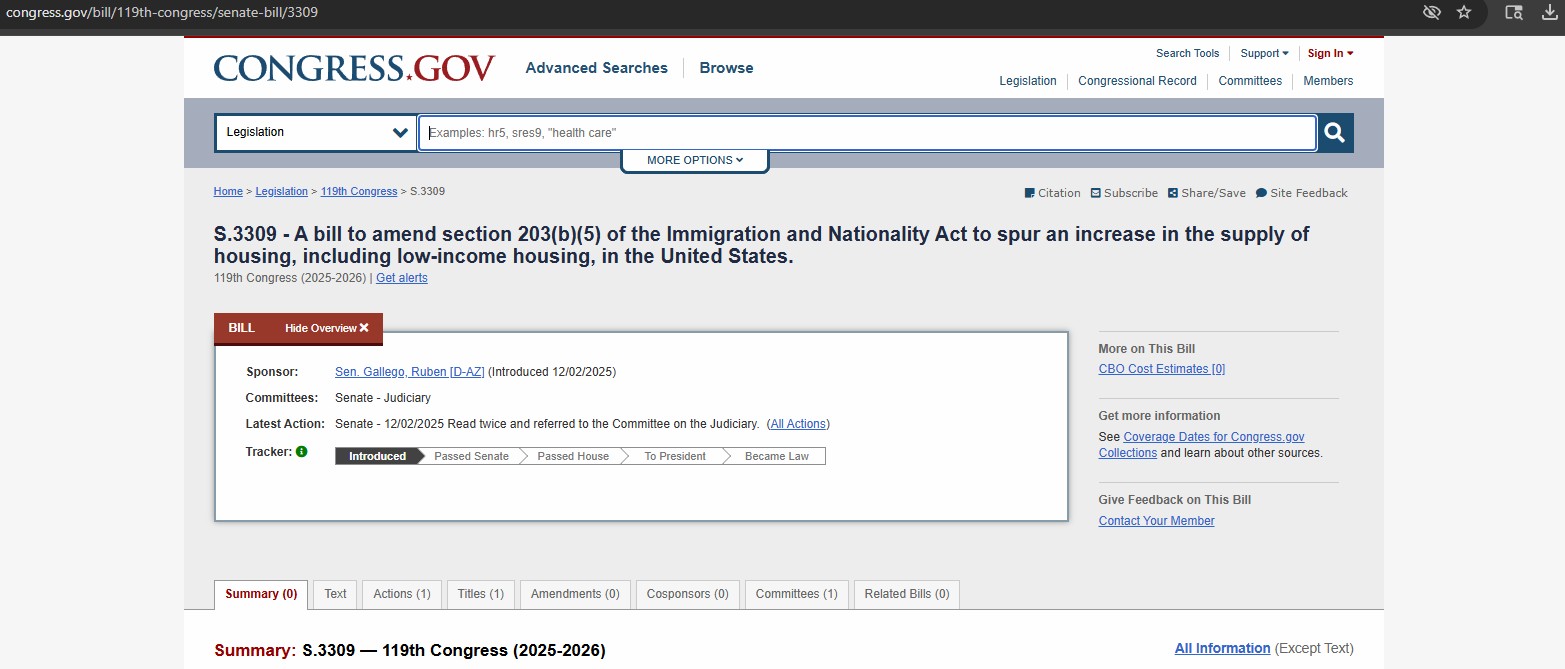
Chúng tôi xin chúc mừng Thượng nghị sĩ Gallego về dự luật mới tận dụng Chương trình EB-5 để xây dựng nhà ở giá rẻ.

Chúng tôi đã thắng kiện vụ kiện về việc tăng phí EB-5.

Danh bạ các chuyên gia
AIIA đã tuyển chọn một danh sách các chuyên gia hàng đầu, bao gồm luật sư, chuyên gia đầu tư và người viết kế hoạch kinh doanh, để hỗ trợ tất cả các bên liên quan đến chương trình EB-5.
Xem Danh bạ Chuyên giaBài viết liên quan
Chuỗi bài viết về Đạo luật Tự do Thông tin (FOIA) của AIIA: Số liệu thống kê cập nhật về hồ sơ I-526E tháng 7 năm 2025
Hiệp hội Đầu tư Nước ngoài Hoa Kỳ (AIIA) gửi ý kiến đóng góp về Dự thảo Quy định (NPRM) của Sở Di trú và Nhập tịch Hoa Kỳ (USCIS) liên quan đến quy định cập nhật về lệ phí EB-5
Chúng tôi xin chúc mừng Thượng nghị sĩ Gallego về dự luật mới tận dụng Chương trình EB-5 để xây dựng nhà ở giá rẻ.
Chúng tôi đã thắng kiện vụ kiện về việc tăng phí EB-5.

Cập nhật thông tin mới nhất từ AIIA
Đăng ký nhận bản tin của chúng tôi để cập nhật thông tin mới nhất về chương trình EB-5.
Bằng cách đăng ký, bạn đồng ý với Chính sách Bảo mật của chúng tôi và đồng ý nhận các cập nhật từ công ty chúng tôi.
Nguồn tài liệu được khuyến nghị

Vấn đề về việc hết hạn tuổi trong chương trình EB-5
Luật Bảo vệ Tuổi của Trẻ em (CSPA) giúp giữ nguyên tuổi của trẻ em trong các đơn xin visa EB-5, nhưng tình trạng ùn tắc visa kéo dài vẫn tiềm ẩn rủi ro...
Đọc thêm
Việc bán các đợt chào bán chứng khoán EB-5
Bán chứng khoán EB-5 thường sử dụng các quy định miễn trừ theo Quy định D (nhà đầu tư Mỹ) và Quy định S (nhà đầu tư nước ngoài) để tránh đăng ký với Ủy ban Chứng khoán và Giao dịch Hoa Kỳ (SEC) trong khi...
Đọc thêm
Lựa chọn giữa tài trợ EB-5 trực tiếp và thông qua Trung tâm Khu vực
Chương trình EB-5 trực tiếp dành cho các nhà đầu tư cá nhân tạo ra việc làm trực tiếp; Chương trình EB-5 Trung tâm Khu vực tập hợp nhiều nhà đầu tư, tính cả việc làm trực tiếp và gián tiếp cho...
Đọc thêmBài viết mới nhất trên blog

Class Action Lawsuit Filed Against USCIS for EB-5 Fee Refunds
Did you pay inflated EB-5 filing fees after April 2024? AIIA has filed a federal class action lawsuit against USCIS...
Tìm hiểu thêmChuỗi bài viết về Đạo luật Tự do Thông tin (FOIA) của AIIA: Số liệu thống kê cập nhật về hồ sơ I-526E tháng 7 năm 2025
AIIA đã thu thập được dữ liệu mới theo Đạo luật Tự do Thông tin (FOIA) tính đến ngày 31 tháng 7 năm 2025, tiết lộ cách USCIS thực sự xử lý các đơn xin EB-5, cho thấy việc ưu tiên xử lý rất cao...
Tìm hiểu thêmHiệp hội Đầu tư Nước ngoài Hoa Kỳ (AIIA) gửi ý kiến đóng góp về Dự thảo Quy định (NPRM) của Sở Di trú và Nhập tịch Hoa Kỳ (USCIS) liên quan đến quy định cập nhật về lệ phí EB-5
AIIA đã gửi ý kiến đóng góp về Dự thảo Quy định về Phí EB-5 tháng 10 năm 2025 của USCIS, trong đó ủng hộ mức phí được điều chỉnh và hợp pháp, nhưng đồng thời kêu gọi hoàn trả số tiền đã nộp thừa...
Tìm hiểu thêmChúng tôi xin chúc mừng Thượng nghị sĩ Gallego về dự luật mới tận dụng Chương trình EB-5 để xây dựng nhà ở giá rẻ.
Dự luật EB-5 của Thượng nghị sĩ Gallego huy động vốn nước ngoài để xây dựng nhà ở giá rẻ. Sự hợp tác này đã củng cố mối quan hệ và uy tín của AIIA với Quốc hội...
Tìm hiểu thêmLiên hệ với chúng tôi
Nếu quý vị có bất kỳ câu hỏi, thắc mắc hoặc đề xuất hợp tác nào, xin vui lòng liên hệ với chúng tôi mà không ngần ngại.
 Vietnamese
  English
  Chinese
Phản hồi (0)