Ai là người chịu trách nhiệm về việc chậm trễ trong hồ sơ EB-5 của tôi?
23rd Tháng chín, 2023
Sự chậm trễ trong quy trình nhập cư EB-5 là vấn đề kéo dài, đã tích tụ thành tình trạng đình trệ trong việc xử lý hồ sơ đối với một số nhà đầu tư EB-5. AIIA đã biên soạn một hướng dẫn để xác định một số nguyên nhân chính gây ra sự chậm trễ này, cũng như giải thích cách chúng ta hiện nay hiểu về quy trình nhập cư EB-5 được thực hiện giữa Bộ An ninh Nội địa (DHS) và Bộ Ngoại giao (DoS).

Many investors in the EB-5 program have suffered delays in their immigration process one way or another. These delays have inhibited family and financial planning, lost investors millions of dollars in redeployed investment funds, and have caused indescribable anguish to investors seeking adjudications on their immigration petitions. The EB-5 program has expanded greatly since 2008, stretching both USCIS’s processing capacity and the pool of available visas amongst thousands of potential immigrants. This means processing times and waiting queues for EB-5 green cards are at historical peaks and growing longer by the day.
USCIS is notorious for being an opaque institution with little accountability from the public, funded by petition fees rather than the U.S. taxpayer. Its connection to the Department of Homeland Security and other organizations dedicated to protecting U.S. national security makes it even more difficult to find public information about their operations, meaning that extracting any information about where these delays stem from is nearly impossible. Therefore, most immigrants do not know how long they must wait for adjudication on their applications or the total number of available visas dictated by the Visa Bulletin.
No organization can accurately speculate the amount of time investors must wait for adjudication; we can only use data derived from public reports and FOIA requests to draw conclusions about what the largest bottlenecks are, where they hold up the immigration process, and what agencies are responsible for addressing them.
To counter the lack of information on these delays, AIIA has compiled a guide to how the immigrant petition flows between government agencies, and has identified where we believe backlogs have accumulated. The information below is highly technical, therefore we recommend readers familiarize themselves with the basics of EB-5 and the step-by-step immigration process before proceeding, both which can be found on our tài nguyên trang.
Top down leadership
Two main governmental departments handle immigration procedures, both at different stages in the process. These two agencies are the Department of Homeland Security (DHS), which houses the U.S. Citizenship and Immigration Services (USCIS), và Department of State (DOS), which heads all U.S. consulates, embassies, and the National Visa Center (NVC). The DOS is responsible for all processing outside of the United States, such as when immigrants undergo consular processing. Meanwhile, the DHS operates almost exclusively within U.S. territory. Housed under USCIS, the Immigrant Investor Program Office (also known as the IPO) is the agency which is responsible for adjudicating both forms I-526/I-526E and form I-829, as well as adjustments of status (I-485s).
I-526/I-526E processing
When filing an I-526/I-526E, an investor and their attorney will send their petition to a USCIS service center. Once the petition has been received by a USCIS service center, USCIS will issue the immigrant petitioner a “priority date”, which indicates the date of initial application processing. This office then directs the petitions to the IPO, located in Washington, D.C.
The petitions will wait in an IPO storage facility until they are ready to be adjudicated by an IPO adjudicator. Currently, the IPO has limited staff and is allegedly seeking to improve their staffing numbers, as outlined in the Notice of Proposed Rulemaking from January 2023. However, many have observed that USCIS has made little progress towards this endeavor, and has continued to work in limited capacity This is where most immigrants find the longest delays.
The First in First Out (FIFO) system was thought to be used by USCIS and the IPO for a long time. However, as the EB-5 program has expanded beyond its visa capacity, there have been developments in what the EB-5 community has learned about IPO processing. According to a recent release from USCIS, the IPO now utilizes a “visa availability approach”, where petitions are chỉ processed if there are visas available or will soon be made available for their respective visa category and chargeability. USCIS now consolidates their limited staff into adjudicating petitions which are not currently backlogged, rather than on petitions from retrogressed countries with long waits for visa availability. This approach allegedly increases the speed of visa processing for those who have visas available.
In general, USCIS uses three separate queues for prioritizing I-526/I-526Es which arrive at their office.
- Queue one is reserved for applicants which the IPO has determined there is no available visa for, using the most recent Visa Bulletin’s Dates for Filing chart. In this queue, petitions will not be touched by adjudicators until the applicant’s respective visa category becomes current, at which point they will be moved to queue two or three.
- Queue two is reserved for immigrant petitioners who occupy a “current” visa category, meaning there are visas available for their immigration category and country of chargeability. However, members of this queue have invested in regional center or standalone projects which have not yet been reviewed by the IPO’s economists and adjudicators. Members of this queue must have their projects evaluated by IPO officials first, after which all immigrant petitioners invested in said project will be moved to queue three. Projects need only be vetted once before their investors can be moved to queue three.
- Queue three is reserved for all immigrant petitioners with a current visa category and a project which has previously been reviewed by IPO adjudicators. These investors are eligible for adjudication by IPO staff. It is unclear whether the IPO uses FIFO or other prioritization methods to process petitions at this point, but AIIA has seen no real evidence to determine the processing order in this queue.
In recent months, our professional partners have observed a significant number of I-526E petitions being approved by USCIS, which is a good sign for increased efficiency on USCIS’s behalf. However, AIIA has also noticed that despite the higher and faster rate of approval from new investors, pre-RIA investors are being left with the same delays, backlogs, lack of efficiency, and overall low rate of adjudication on I-526 petitions. This means that USCIS has dedicated much of its EB-5 resources towards adjudicating post-RIA petitions, leaving pre-RIA investors in the wind—with the potential for longer wait times as resources are reallocated.
Adjustment of Status/Consular Processing
There are two separate paths which visa applications may follow (applications here refers to all forms filed between the I-526(E) and the I-829, which are considered “petitions”). Each path is determined by whether the immigrant petitioner holds a current U.S. visa and resides within the U.S. More information on the differences of these procedures can be found on our immigration process page. The reason that these paths are separate is because individuals with a current U.S. visa have already been vetted by the DOS and have been authorized to live and/or work in the States. Immigrants who have not been vetted by the DOS yet must undergo a different process.
USCIS indicates to the DOS which applicants are eligible for a visa, and the DOS monitors the current visa allowance left for eligible applicants. Therefore, once an I-526 has been approved by the IPO (housed under USCIS), the case is sent to the NVC (housed under DOS) for visa interview scheduling OR is sent to USCIS officials for an adjustment of current immigrant status; which path a petition follows depends on whether the immigrant holds a current U.S. visa. If an applicant is abroad, they will have to undergo consular processing at a U.S. consulate or embassy local to them.
However, even the transfer of petitions to the NVC has come with significant delays for many immigrants. Many petitioners have found that the IPO has taken an average of six months, and even up to twenty months, to digitally transfer documents from the IPO offices to the NVC for interview scheduling. When USCIS hands over an approved petition to the NVC, the NVC officer will look at the pool of visas which remain available for the rest of the fiscal year and determine whether the applicant is eligible for an available visa, based on their country of chargeability and other admissibility factors. For U.S. residents who currently hold a U.S. visa, their current visa is merely shifted to the immigration category they have applied for, which is handled entirely by USCIS.
It is certain that the IPO is responsible for this delay, given that the NVC offers to track approved I-526 documents after a period of three months, and publishes annual reports of their processed petitions by immigrant category. This delay has been going on since before the pandemic occurred, and has only been exacerbated by COVID-19 delays, internal hiring freezes, and the EB-5 program lapse. Perhaps, the biggest problem is simply neglect. Transferring petitions to NVC should not require a delay of twenty months, especially given the simplicity of the task at hand.
US Residents – Adjustment of Status through Form I-485
Adjustment of status is completed by the filing and approval of Form I-485, which adjusts an immigrant’s status and visa type. USCIS’s offices will handle all documents and status adjustment, unless the visa bulletin regresses before the applicant’s priority date, after which USCIS may not issue an adjusted visa status to the applicant and their family until the priority date becomes current.
USCIS may call an applicant or their attorney to schedule an interview for the petitioner and any family included on their immigrant applications; however this is a rare occurrence and most individuals receive their conditional Green Cards in the mail without an interview. Some have found that there are delays in receiving a conditional green card in the mail, yet this varies wildly between investors.The approved application will stay within USCIS for completing the visa adjustment until the end of the I-829 adjudication.
Non-US residents – Consular Processing through form DS-260
For non-US residents, the process of receiving a welcome letter with invitations to fill out form DS-260 usually takes around three weeks once the NVC has the petitioner’s physical documents within their office. After filing the DS-260, an immigrant applicant must complete a biometrics exam with their family in preparation for a visa interview. Lưu ý: it takes nearly 5 weeks to receive biometrics results back, therefore it is best to complete this step as early as possible.
When form DS-260 is filed, the NVC schedules a visa appointment with the U.S. embassy or consulate closest to the immigrant petitioner. Consular processing often has more delays than the adjustment of status, given both the DOS’s internal processing and the availability of consular appointments. Due to residual delays from the pandemic and other external forces, consular appointments for many countries have been much harder to come by. This means that scheduling a consular appointment may lead to further delays, as an interview appointment may not be available, or have limited availability in the future.
Most applicants receive a visa interview appointment within a month. However, some consulates are more backlogged than others since the program lapsed in 2021. Consulates in Ho Chi Minh City, Abu Dhabi, Guangzhou, and Montreal have demonstrated notable backlogs in processing EB-5 applicants, failing to give applicants an interview date for many months and sometimes over a year. Although consulates limit interview capacity each quarter, each consulate’s capacity is different depending on their internal efficiency and interview backlog.
If the DOS finds that there are currently no visas available for the immigrant petition based on country of chargeability or immigrant category, the petitioner is placed into “queue one”, similar to the queue system used by USCIS. Queue one is reserved for petitioners waiting on visa availability due to a visa backlog.
Visa backlogs most often affect immigrants from high-volume countries, such as China, and India, meaning applicants with non-current priority dates from these countries are placed in queue one. This delay may also cause complications with petition processing due to long-standing visa backlogs and caps on applicants from specific countries (known as country caps). Once an applicant reaches the front of the queue and a visa has been made available for them, they will be assigned an available interview date at the consulate closest to their current residence.
After a successful visa interview or consular processing appointment, the investor and their family will be issued a temporary visa, usually valid for entry into the U.S. for up to 6 months. After the I-551 is stamped into their passport, the applicants must pay a USCIS fee online and immigrate while the visa stamp is still valid. If an applicant does not register at a U.S. port of entry before this stamp expires, it will not be able to be used and they must start the process over again.
Usually this is done without major issue, however, there have been examples of petitioner’s immediate family receiving green cards within three to four weeks, while the petitioner’s card is delayed by six months or more. In any event, the immigrants are issued stamps in their passports which serve as the functional equivalents of Green Cards, usually valid for one year with the opportunity for extensions.
I-829 processing
90 days before an investor’s conditional residency period ends, form I-829 must be filed by an attorney and sent to a USCIS lockbox. Once processed, the petition is forwarded to the IPO again for adjudication. Although the IPO is most directly involved at both the I-526/I-526E and I-829, the agency still faces debilitating staffing shortages combined with delays from the pandemic and the EB-5 program lapse in 2021. Because of this, the organization has severely fallen behind in adjudicating petitions, and wait times for adjudications at this stage can take years, even though Congress has mandated that adjudications must take place within 90 days or less!
What can be done about speeding up these delays?
With each delay, AIIA must pursue different agencies under different executive departments to ensure that processing times can be adjusted for long-waiting EB-5 investors. When doing this, each agency requires different conditions to be met, meaning we must use multifaceted strategies to pursue them all simultaneously.
Currently, AIIA has been submitting FOIA requests to USCIS for internal information tied to petition adjudication and the status of pending applications. Government agencies aren’t always inclined to give us this information easily, which makes finding useful information for the public and our lobbying purposes a drawn out process requiring the help of attorneys and litigators. However, as seen in our previous blog posts, this information can be very useful for investors to calculate how long the backlog could be for their immigrants.
AIIA will continue to release further information about our lobbying strategy and hold webinars to discuss what investors can do for themselves to speed up the immigration process and also support our goals. For investors in need of immediate help or guidance with their EB-5 petitions, sign up for our newsletters and ask us clarifying questions through our Biểu mẫu liên hệ.
As AIIA moves towards the fast-paced world of lobbying to make the EB-5 program more transparent and equitable, being able to update our members and supporters on our developments is more important than ever. Moreover, whenever an investor makes contact with us and becomes a part of the community, you help us demonstrate the strength and diversity of our community to different government stakeholders.
Finally, please consider supporting our organization through a donation to our cause. 100% of all donations are used to hire and retain skilled lobbyists who help us draft legislation, reach government officials, and enact change like we saw with the RIA. Without the support of our members and donors, our organization would not be able to do all the work we have accomplished so far.
Danh bạ các chuyên gia

AIIA đã tuyển chọn một danh sách các chuyên gia hàng đầu, bao gồm luật sư, chuyên gia đầu tư và người viết kế hoạch kinh doanh, để hỗ trợ tất cả các bên liên quan đến chương trình EB-5.
Xem Danh bạ Chuyên giaBài viết liên quan
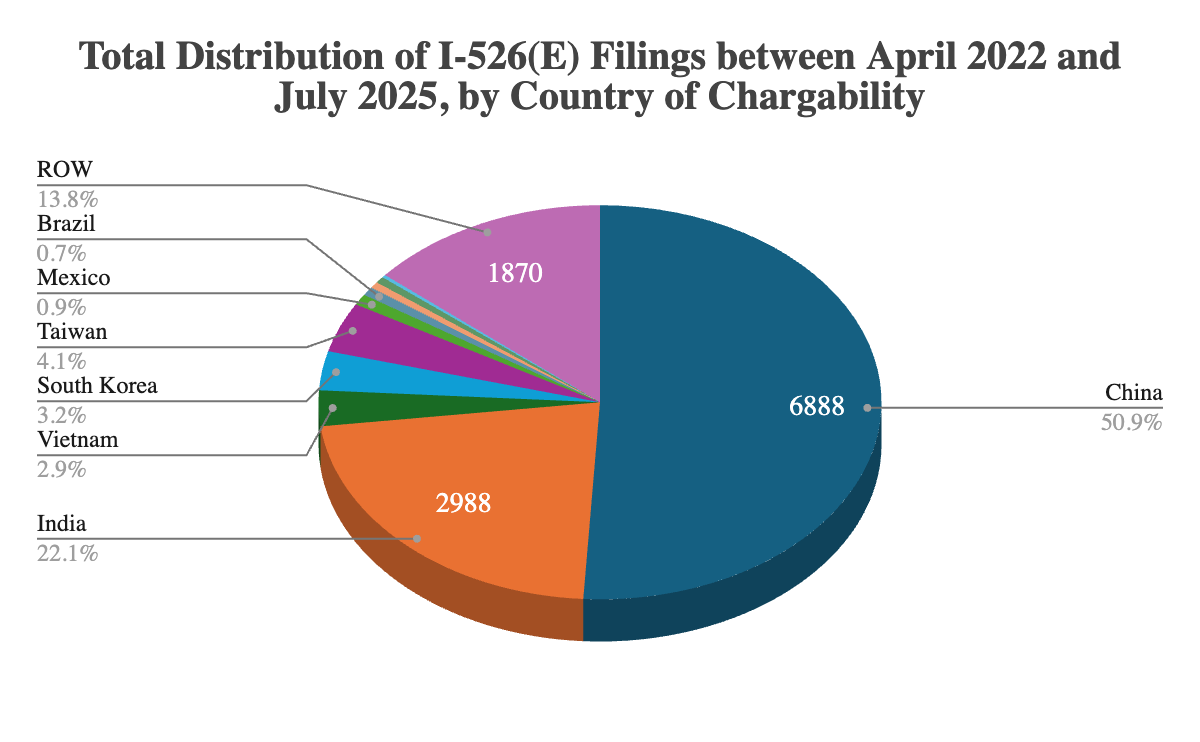
AIIA FOIA Series: Updated I-526E Inventory Statistics for July 2025
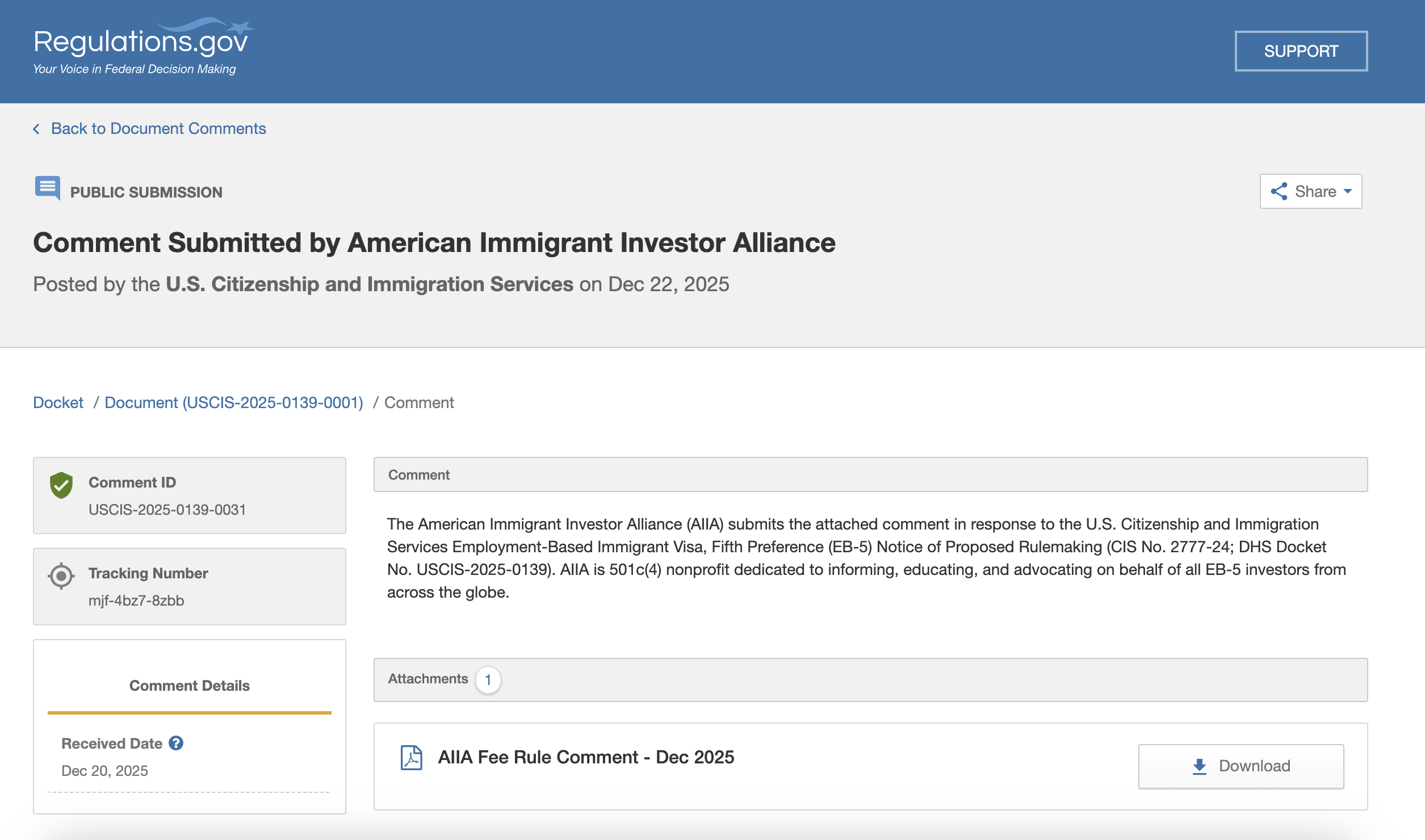
AIIA Submits Comments on USCIS NPRM on Updated EB-5 Fee Rule
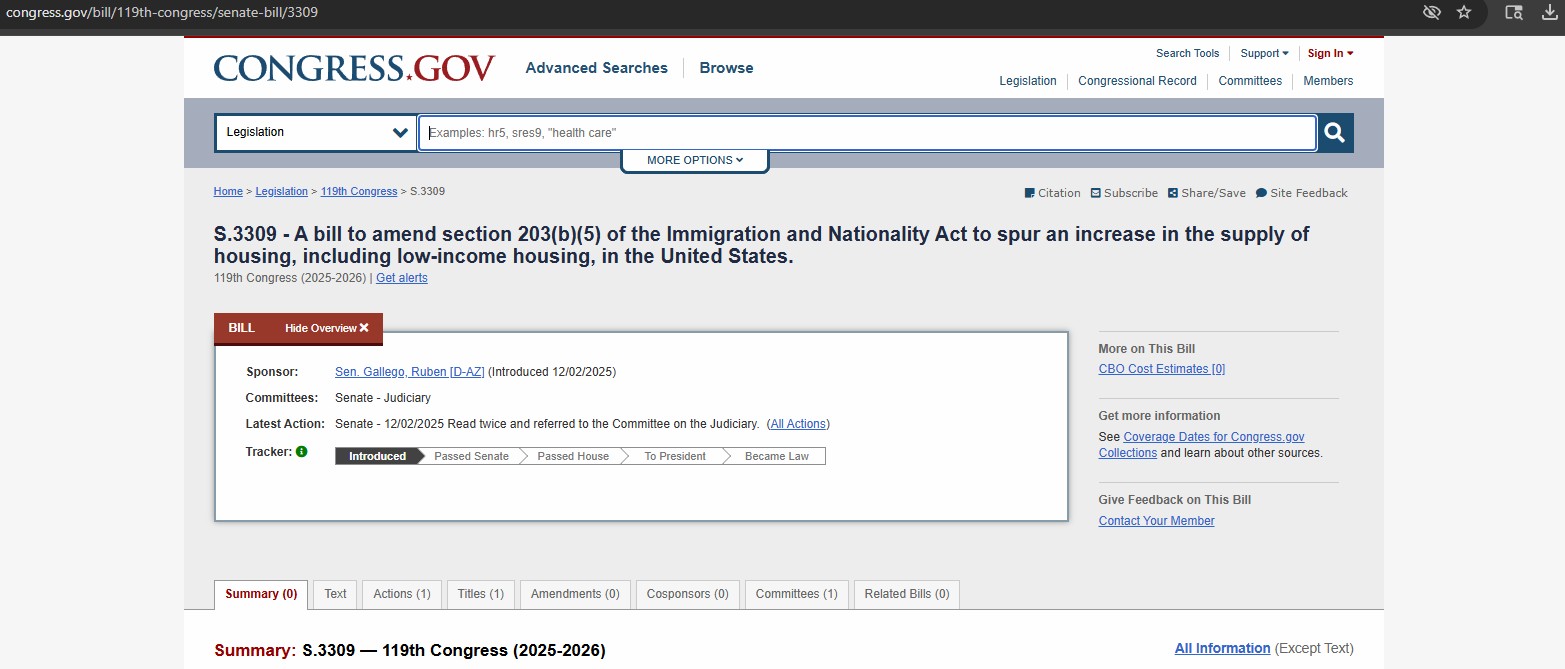
Chúng tôi xin chúc mừng Thượng nghị sĩ Gallego về dự luật mới tận dụng Chương trình EB-5 để xây dựng nhà ở giá rẻ.

Chúng tôi đã thắng kiện vụ kiện về việc tăng phí EB-5.

Hãy để lại bình luận của bạn
Phản hồi (1)
Danh bạ các chuyên gia
AIIA đã tuyển chọn một danh sách các chuyên gia hàng đầu, bao gồm luật sư, chuyên gia đầu tư và người viết kế hoạch kinh doanh, để hỗ trợ tất cả các bên liên quan đến chương trình EB-5.
Xem Danh bạ Chuyên giaBài viết liên quan
AIIA FOIA Series: Updated I-526E Inventory Statistics for July 2025
AIIA Submits Comments on USCIS NPRM on Updated EB-5 Fee Rule
Chúng tôi xin chúc mừng Thượng nghị sĩ Gallego về dự luật mới tận dụng Chương trình EB-5 để xây dựng nhà ở giá rẻ.
Chúng tôi đã thắng kiện vụ kiện về việc tăng phí EB-5.

Cập nhật thông tin mới nhất từ AIIA
Đăng ký nhận bản tin của chúng tôi để cập nhật thông tin mới nhất về chương trình EB-5.
Bằng cách đăng ký, bạn đồng ý với Chính sách Bảo mật của chúng tôi và đồng ý nhận các cập nhật từ công ty chúng tôi.
Nguồn tài liệu được khuyến nghị

Vấn đề về việc hết hạn tuổi trong chương trình EB-5
Luật Bảo vệ Tuổi của Trẻ em (CSPA) giúp giữ nguyên tuổi của trẻ em trong các đơn xin visa EB-5, nhưng tình trạng ùn tắc visa kéo dài vẫn tiềm ẩn rủi ro...
Đọc thêm
Việc bán các đợt chào bán chứng khoán EB-5
Bán chứng khoán EB-5 thường sử dụng các quy định miễn trừ theo Quy định D (nhà đầu tư Mỹ) và Quy định S (nhà đầu tư nước ngoài) để tránh đăng ký với Ủy ban Chứng khoán và Giao dịch Hoa Kỳ (SEC) trong khi...
Đọc thêm
Lựa chọn giữa tài trợ EB-5 trực tiếp và thông qua Trung tâm Khu vực
Chương trình EB-5 trực tiếp dành cho các nhà đầu tư cá nhân tạo ra việc làm trực tiếp; Chương trình EB-5 Trung tâm Khu vực tập hợp nhiều nhà đầu tư, tính cả việc làm trực tiếp và gián tiếp cho...
Đọc thêmBài viết mới nhất trên blog
AIIA FOIA Series: Updated I-526E Inventory Statistics for July 2025
AIIA obtained new FOIA data through July 31, 2025 revealing how USCIS is actually processing EB-5 petitions, showing heavy prioritization...
Tìm hiểu thêmAIIA Submits Comments on USCIS NPRM on Updated EB-5 Fee Rule
AIIA submitted comments on USCIS’s October 2025 EB-5 fee NPRM supporting revised, lawful fee levels but urging refunds for overpaid...
Tìm hiểu thêmChúng tôi xin chúc mừng Thượng nghị sĩ Gallego về dự luật mới tận dụng Chương trình EB-5 để xây dựng nhà ở giá rẻ.
Dự luật EB-5 của Thượng nghị sĩ Gallego huy động vốn nước ngoài để xây dựng nhà ở giá rẻ. Sự hợp tác này đã củng cố mối quan hệ và uy tín của AIIA với Quốc hội...
Tìm hiểu thêmChúng tôi đã thắng kiện vụ kiện về việc tăng phí EB-5.
AIIA đã thắng kiện thành công trong vụ kiện chống lại việc tăng phí EB-5 của USCIS vào tháng 4 năm 2024, với phán quyết của một thẩm phán liên bang rằng cơ quan này...
Tìm hiểu thêmLiên hệ với chúng tôi
Nếu quý vị có bất kỳ câu hỏi, thắc mắc hoặc đề xuất hợp tác nào, xin vui lòng liên hệ với chúng tôi mà không ngần ngại.
 Vietnamese
  English
  Chinese
Thank you for the article. I would like to suggest an addition: please include Ankara in the list of Consulates along with Ho Chi Minh City, Abu Dhabi, Guangzhou, and Montreal that have demonstrated notable backlogs in processing EB-5 applicants. The Consulate in Ankara has processed only 13 cases since January 2023. It’s important to highlight that many Iranian investors are required to conduct their interviews in Ankara. Regrettably, this delay has significant repercussions for many of them.