Chúng tôi xin chúc mừng Thượng nghị sĩ Gallego về dự luật mới tận dụng Chương trình EB-5 để xây dựng nhà ở giá rẻ.
4th Tháng mười hai, 2025
Dự luật EB-5 của Thượng nghị sĩ Gallego huy động vốn nước ngoài để xây dựng nhà ở giá rẻ. Sự hợp tác này đã củng cố mối quan hệ và uy tín của AIIA với Quốc hội trong lĩnh vực này.
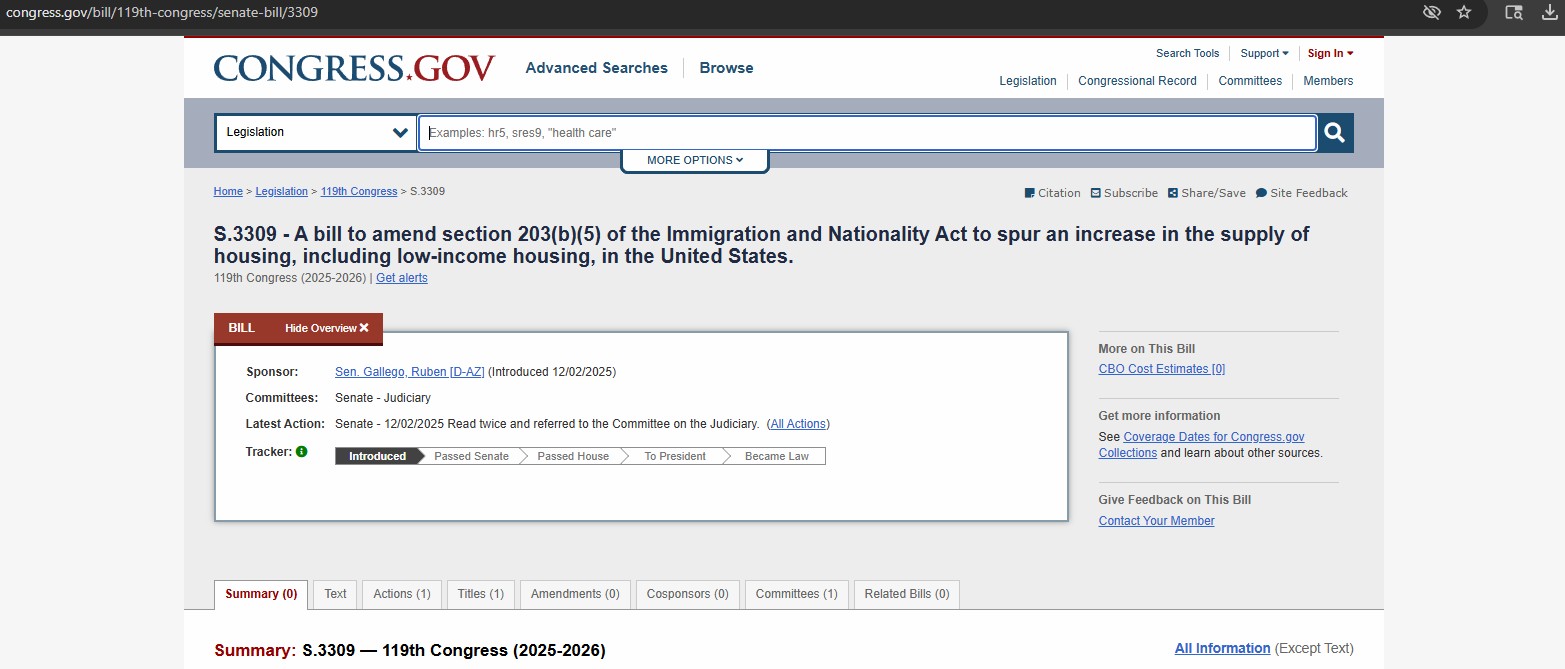
The American Immigrant Investor Alliance (AIIA) is pleased to support the introduction of the “Building Housing for the American Dream Act,” by U.S. Senator Ruben Gallego, Democrat from Arizona, whom AIIA has been honored to work with closely over the past several months. A link to the complete bill text can be found on the press release on the senator’s website.
“We thank Sen. Gallego for his commitment to working on creative solutions to solve the nation’s housing affordability problem.,” said Ishaan Khanna, speaking for AIIA. “Senator Gallego recognizes that affordable housing is essential for the 21st century but the problem has always been these types of projects despite their need do not qualify for the lower investment amount and are thus unable to attract foreign investors. This legislation creates new incentives for EB-5 investments in affordable housing projects across the country. In many areas, the high cost of living and inflation of property prices has prevented U.S. citizens from buying their first homes and renting quality apartments. By integrating the housing market with the EB-5 program we believe that this bill will not only help Americans buy homes, and also increase EB-5 investor access to quality, in-demand projects.”
AIIA applauds this legislation. It is a genuine innovation to create desperately needed affordable housing; is a great use of the EB-5 investment program, and doesn’t harm existing job creating projects or immigrant investors.
Programs such as Section 202 housing for seniors, Low-Income Housing Tax Credit (LIHTC), Community Development Block Grants (CDBG), and HOME Investment Partnerships (HOME) programs, have generated millions for construction of affordable units but consistently face funding gaps. The bill addresses a fundamental challenge in real estate finance: affordable housing developers have access to multiple federal programs but insufficient capital to fully fund projects. The bill will help mobilize foreign capital for labor-intensive projects like housing development that simultaneously address the nation’s affordable housing shortage while supporting immigration policy objectives.
The Problem: Affordable Housing Projects Currently Cannot Qualify for EB-5 Investments
The EB-5 program is mutually beneficial for both foreign investors and U.S. businesses. EB-5 has evolved into a viable alternative capital market for developers and operators. However in order for projects to qualify for this type of financing strict requirements must be me.
It’s important to acknowledge that EB-5 investments in affordable housing projects are technically permitted, but generally require a higher investment level ($1.05 million per investor versus $800,000) and are therefore less attractive investment opportunities. Affordable housing projects are usually built in metropolitan areas such as cities, where lots of workers (including high-earning professionals) are competing for existing housing, and where municipal zoning requirements often limit housing construction.
The Solution: What this Bill will Change for EB-5
The Building Housing for the American Dream Act will expand the EB-5 Infrastructure Targeted Employment Area (TEA) category into an “Infrastructure and Housing” category making set-aside immigrant visas available for affordable housing projects and allow for these projects to raise money at the lower investment tier.
The projects must be for Federal project-based housing assistance programs, and qualify under a number of separate statutes enacted for housing affordability. Projects classified under the following regimes will be applicable:
- Section 202 of the Housing Act of 1959 (for very low-income senior citizens aged 62 and older);
- Section 1338 of the Federal Housing Enterprises Financial Safety and Soundness Act of 1992 (for extremely low income and homeless families, through Housing Trust Fund grants to states);
- Section 42 of the Internal Revenue Code of 1986 (involving tax credits to developers to set aside portions of their building for low-income housing);
- Title I of the Housing and Community Development Act of 1974 (involving community development block grants to state and localities for low-to-moderate income housing);
- The HOME Investment Partnerships Program of the Cranston-Gonzalez National Affordable Housing Act of 1990 (for rehabilitating structures to become affordable housing for low-income persons)
- Section 11 of the Housing Opportunity Program Extension Act of 1996 (for the renovation of homes by homeowners and building of infrastructure for affordable housing communities).
Changes to the EB-5 Industry and Program Administration
Should this bill pass, AIIA foresees more affordable housing developers who have not been able to access this type of financing before now entering the market. For sponsors of affordable housing projects EB-5 may be a viable option for projects that may find it difficult to secure commercial financing in a tightened lending market. Existing investment issuers will also likely begin to raise money for housing projects, as many of them already have experience funding real estate development deals.
AIIA also foresees that the U.S. Department of Housing and Urban Development (HUD) will become involved in the EB-5 program, to assist the U.S. Citizenship and Immigration Services’ Investor Program Office in its analysis of whether a project meets the statutory criteria. The bill includes provisions for the Secretary of Housing and Urban Development to be consulted by the Department of Homeland Security for this purpose.
The bill would require the Secretary of Homeland Security to annually report to Congress on the number of visas and projects funded by the new housing provisions of the subcategory, among other provisions. AIIA applauds this move towards greater transparency and accountability with the program.
AIIA’s Involvement and Future Advocacy
AIIA was intimately involved with the production of the bill. We provided Sen. Gallego’s office with technical assistance about the EB-5 program, its internal procedures, trends among investors and investments, and an audience with stakeholders from across the industry including attorneys, business plan writers, economists, developers and broker dealers.
Our work on this bill exemplifies our commitment to advancing EB-5 legislation that serves the broader national interest while benefiting immigrant investors. By bridging the capital gap in affordable housing through integration with Section 202, LIHTC, CDBG, and HOME programs, this legislation demonstrates how EB-5 can mobilize foreign investment to address the nation’s housing shortage while creating employment opportunities. Our collaborative approach with Senator Gallego and industry stakeholders has strengthened relationships with Congress and reinforced AIIA’s position as a trusted voice on EB-5 policy. As we continue to advance our primary policy objectives—preventing investor exploitation by restricting sustainment period requirements, a permanent ‘grandfathering’ provision, and obtaining visa relief for backlogged immigrant investors—this affordable housing initiative positions AIIA to build the coalitions and credibility necessary to achieve meaningful legislative victories for our members.
As AIIA continues its advocacy for investor-friendly EB-5 reforms, we welcome support from the entire EB-5 ecosystem. If our work aligns with your interests, please consider making a donation of any amount or join our Chương trình thành viên to strengthen our impact with Congress and advance meaningful policy change.
Danh bạ các chuyên gia

AIIA đã tuyển chọn một danh sách các chuyên gia hàng đầu, bao gồm luật sư, chuyên gia đầu tư và người viết kế hoạch kinh doanh, để hỗ trợ tất cả các bên liên quan đến chương trình EB-5.
Xem Danh bạ Chuyên giaBài viết liên quan
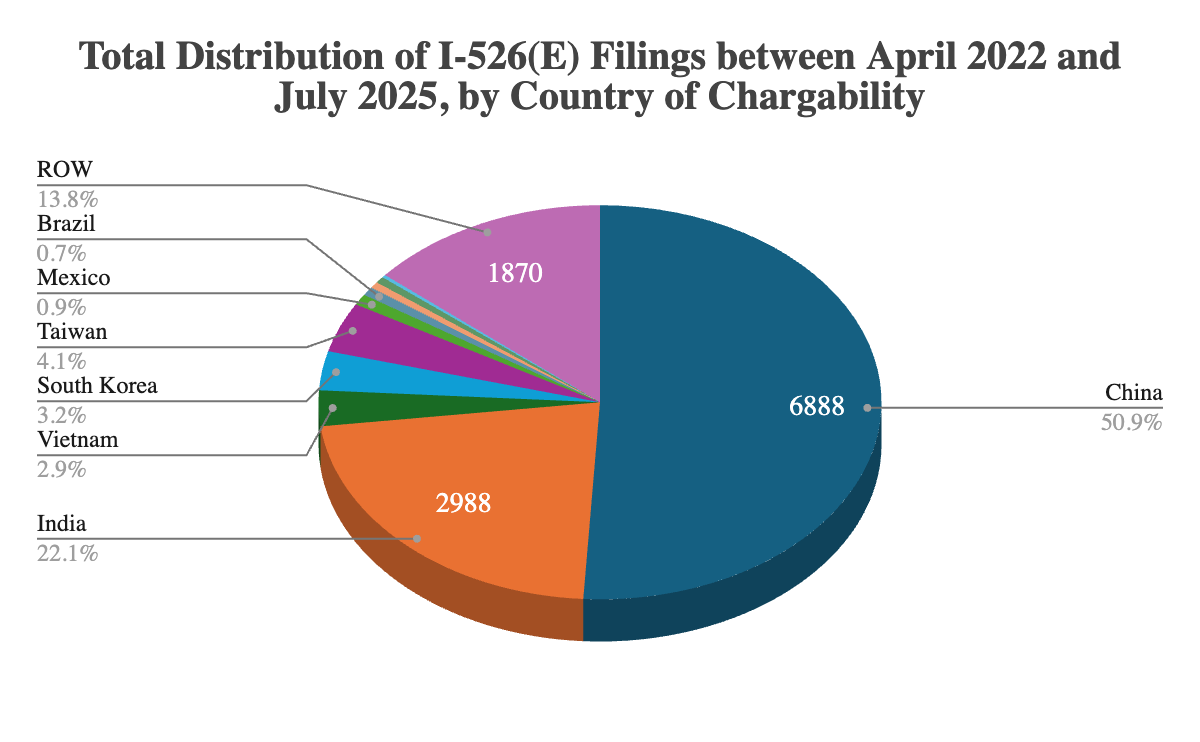
Chuỗi bài viết về Đạo luật Tự do Thông tin (FOIA) của AIIA: Số liệu thống kê cập nhật về hồ sơ I-526E tháng 7 năm 2025
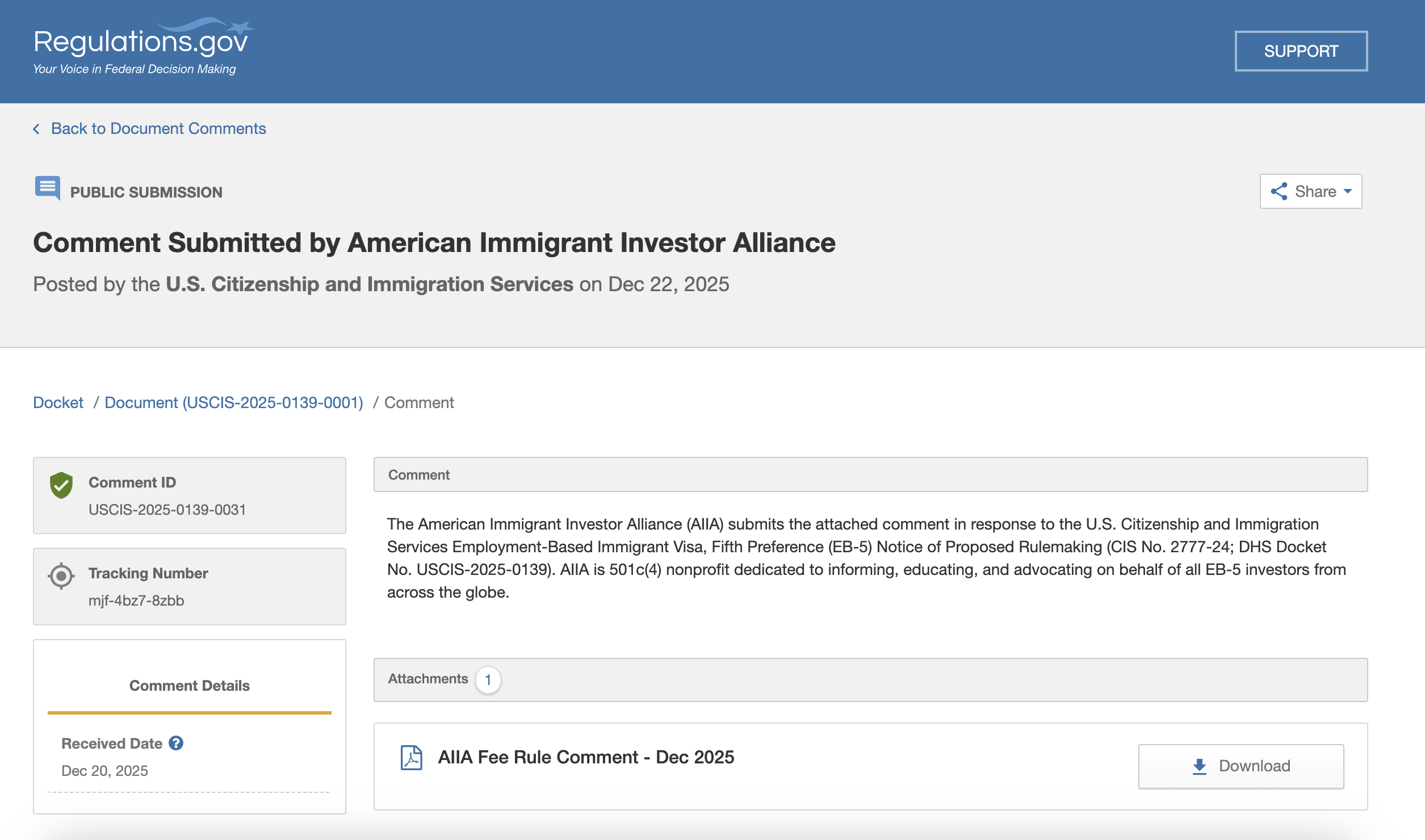
Hiệp hội Đầu tư Nước ngoài Hoa Kỳ (AIIA) gửi ý kiến đóng góp về Dự thảo Quy định (NPRM) của Sở Di trú và Nhập tịch Hoa Kỳ (USCIS) liên quan đến quy định cập nhật về lệ phí EB-5

Chúng tôi đã thắng kiện vụ kiện về việc tăng phí EB-5.

Còn một năm nữa để đầu tư vào dự án Trung tâm Khu vực EB-5.

Danh bạ các chuyên gia
AIIA đã tuyển chọn một danh sách các chuyên gia hàng đầu, bao gồm luật sư, chuyên gia đầu tư và người viết kế hoạch kinh doanh, để hỗ trợ tất cả các bên liên quan đến chương trình EB-5.
Xem Danh bạ Chuyên giaBài viết liên quan
Chuỗi bài viết về Đạo luật Tự do Thông tin (FOIA) của AIIA: Số liệu thống kê cập nhật về hồ sơ I-526E tháng 7 năm 2025
Hiệp hội Đầu tư Nước ngoài Hoa Kỳ (AIIA) gửi ý kiến đóng góp về Dự thảo Quy định (NPRM) của Sở Di trú và Nhập tịch Hoa Kỳ (USCIS) liên quan đến quy định cập nhật về lệ phí EB-5
Chúng tôi đã thắng kiện vụ kiện về việc tăng phí EB-5.
Còn một năm nữa để đầu tư vào dự án Trung tâm Khu vực EB-5.

Cập nhật thông tin mới nhất từ AIIA
Đăng ký nhận bản tin của chúng tôi để cập nhật thông tin mới nhất về chương trình EB-5.
Bằng cách đăng ký, bạn đồng ý với Chính sách Bảo mật của chúng tôi và đồng ý nhận các cập nhật từ công ty chúng tôi.
Nguồn tài liệu được khuyến nghị

Cách tìm một luật sư giỏi về tranh tụng EB-5
Chọn một luật sư có kinh nghiệm về EB-5 và tranh tụng, người có tổ chức, chú trọng đến chi tiết và tránh đưa ra các cam kết. Bạn có thể cần một...
Đọc thêm
Vấn đề về việc hết hạn tuổi trong chương trình EB-5
Luật Bảo vệ Tuổi của Trẻ em (CSPA) giúp giữ nguyên tuổi của trẻ em trong các đơn xin visa EB-5, nhưng tình trạng ùn tắc visa kéo dài vẫn tiềm ẩn rủi ro...
Đọc thêm
Việc bán các đợt chào bán chứng khoán EB-5
Bán chứng khoán EB-5 thường sử dụng các quy định miễn trừ theo Quy định D (nhà đầu tư Mỹ) và Quy định S (nhà đầu tư nước ngoài) để tránh đăng ký với Ủy ban Chứng khoán và Giao dịch Hoa Kỳ (SEC) trong khi...
Đọc thêmBài viết mới nhất trên blog
Chuỗi bài viết về Đạo luật Tự do Thông tin (FOIA) của AIIA: Số liệu thống kê cập nhật về hồ sơ I-526E tháng 7 năm 2025
AIIA đã thu thập được dữ liệu mới theo Đạo luật Tự do Thông tin (FOIA) tính đến ngày 31 tháng 7 năm 2025, tiết lộ cách USCIS thực sự xử lý các đơn xin EB-5, cho thấy việc ưu tiên xử lý rất cao...
Tìm hiểu thêmHiệp hội Đầu tư Nước ngoài Hoa Kỳ (AIIA) gửi ý kiến đóng góp về Dự thảo Quy định (NPRM) của Sở Di trú và Nhập tịch Hoa Kỳ (USCIS) liên quan đến quy định cập nhật về lệ phí EB-5
AIIA đã gửi ý kiến đóng góp về Dự thảo Quy định về Phí EB-5 tháng 10 năm 2025 của USCIS, trong đó ủng hộ mức phí được điều chỉnh và hợp pháp, nhưng đồng thời kêu gọi hoàn trả số tiền đã nộp thừa...
Tìm hiểu thêmChúng tôi đã thắng kiện vụ kiện về việc tăng phí EB-5.
AIIA đã thắng kiện thành công trong vụ kiện chống lại việc tăng phí EB-5 của USCIS vào tháng 4 năm 2024, với phán quyết của một thẩm phán liên bang rằng cơ quan này...
Tìm hiểu thêmCòn một năm nữa để đầu tư vào dự án Trung tâm Khu vực EB-5.
AIIA cảnh báo rằng các nhà đầu tư vào Trung tâm Khu vực EB-5 sẽ mất quyền bảo vệ sau ngày 30 tháng 9 năm 2026 trừ khi họ nộp đơn I-526E trước...
Tìm hiểu thêmLiên hệ với chúng tôi
Nếu quý vị có bất kỳ câu hỏi, thắc mắc hoặc đề xuất hợp tác nào, xin vui lòng liên hệ với chúng tôi mà không ngần ngại.
 Vietnamese
  English
  Chinese
Phản hồi (0)