Newsletter #5 – Reauthorization Not Expected Until Next Year
2nd November, 2021
Reauthorization of the EB-5 Regional Center Program is unlikely to happen before the end of the year; we need to come together to make sure Congress secure the future of immigrant investors.
There is now an answer to the most burning question in the EB-5 world: Will the Regional Center Program be reauthorized on December 3?
The answer is: unlikely.
The bigger question facing the industry has a more hopeful, but still ominous answer: Will the Program be restored at all?
Probably. But not certainly.
Recently, we hosted a Q&A session for our donors with former member of Congress and AIIA lobbyist, Bruce Morrison of the Morrison Public Affairs Group. Mr. Morrison shared insightful analysis and information about the current state of reauthorization and the political currents that will shape action – and inaction – on Capitol Hill for the remainder of the year.
We are sharing some takeaways from the session below, followed by further analysis and context on where the EB-5 Regional Center Program stands today.
Key Takeaways
- Congress is unlikely to come to a consensus on a spending bill by December 3. They are expected to pass another continuing resolution (CR) to fund the government through February or March of 2022.
- A new regional center reform bill, which has achieved general consensus among EB-5 industry stakeholders, has been presented to congressional members and will likely be the basis of the final reauthorization bill.
- There is a willingness in Congress to get to a deal on reauthorization.
- AIIA backs reauthorization and will be working to ensure that key provisions of our Foreign Investor Fairness Protection Act (FIFPA) are integrated in the final language of the Regional Center reform bill.
- AIIA will continue to gauge activity on Capitol Hill and will be ready to push for a standalone bill to protect existing investors’ rights if and when it is evident that reauthorization is headed for a deadlock or dead-end. If we are able to garner sufficient support by the end of December – and it is politically expedient – AIIA will advocate for FIFPA to be hotlined in the Senate.
Timeline of Reauthorization
For those tracking the current Regional Center reauthorization saga, December 3 has come to be the latest beacon of hope for the Program (for those who have not been tracking the developments closely, we covered a brief summary in our last post). On December 3, Congress is expected to either pass an omnibus spending bill (and with it a DHS appropriations bill, to which EB-5 reauthorization would ideally be attached) or pass another continuing resolution to extend government funding into 2022.
According to our contacts in Congress, we expect the latter. Congress is currently faced with the social spending and infrastructure bills, two massive and contentious pieces of legislation, not to mention the debt-ceiling that must be raised or suspended by December 3. It is widely expected that Congress will delay taking up appropriations before December 3, and will instead issue another CR that extends through February or March of 2022.
The Consensus Reform Bill, or the “EB-5 Reform and Job Creation Act”
The EB-5 industry and key stakeholders have been notoriously at odds among themselves about the provisions of any long-term reauthorization bill, as have key members of Congress. The newest reform bill, which was distributed to congressional offices by the U.S. Chamber of Commerce last month, is unique in that it is the first proposed bill that has consensus support from the EB-5 industry and addresses all of the hot issues of the Program, not just integrity and reform measures.
The proposed bill reauthorizes the Regional Center Program through 2032, includes provisions to address visa backlogs and processing times, redefines investment amounts and TEA designations, and, of course, includes reform and integrity measures. While the bill also attempts to grandfather existing investors’ rights, we see the current language as inadequate and hope the industry continues to work with us to fix this portion of the bill. We have unpacked this issue and other issues that existing investors should closely pay attention to in our previous newsletter.
The Path Forward
While another CR would keep the Program in limbo for yet another three to four months, the extended time may ultimately be beneficial for the industry. Additional time for negotiations on the new Regional Center reform bill also gives AIIA time to continue our lobbying efforts and build support, ensuring that existing investors have a seat at the negotiating table and that the final bill includes language that serves the interests of existing investors and adequately protects their rights.
Getting a final version of the reform bill attached to the DHS appropriations bill is the best path forward for Regional Center reauthorization. For Congress to take this reauthorization effort seriously, it is imperative that the industry remains flexible and in consensus, even if Congress objects to some of the more controversial provisions in the industry’s reform bill. The success of the reauthorization effort will depend on how the industry protects its own interests while recognizing that it does not have the political capital required to play hardball with key Senators who can easily sink it.
There is no guarantee that the new reform bill will have any better chance of getting through Congress then previous attempts proffered at past reauthorization junctures. But that is what makes AIIA’s work so imperative. If we are able to continue to retain our lobbyist (by having the financial resources to do so), we can continue to advocate to influential members of Congress, garner bipartisan support for grandfathering, and ensure that either:
- Proper grandfathering language and other investor protection measures (detailed in our previous newsletter) are added to the Regional Center reform bill, which would then be attached to a must-pass legislative vehicle and enacted into law. OR
- We have enough support from members of Congress to either attach FIFPA independently to must pass legislation or hotline FIFPA as a standalone, in the event the reauthorization and reform bill fails to make it through
We are already approaching Rep. Greg Stanton (D-AZ) about our proposed grandfathering legislation (FIFPA). Representative Stanton is the lead sponsor of HR 2901, which was just referred to the Subcommittee on Immigration and Citizenship.
AIIA’s Position
We recognize that any further delay in the processing of investors’ petitions will be extremely painful for every member of AIIA and indeed for all investors. However, we believe that it would be counterproductive at this stage to push FIFPA as a standalone piece of legislation, independent of the Regional Center reform bill, even if it were possible to do so.
While we will continue to circulate FIFPA among members of Congress to build support for grandfathering, there is no appetite in Congress right now for piecemeal EB-5 legislation which must be passed individually. Because Congress needs to see the EB-5 industry as aligned and cooperating, not divided into different interest groups, AIIA is willing to work side-by-side with members of the industry to arrive at a final bill that will adequately protect existing investors while also achieving long-term reauthorization and long-needed reform to the program.
It is critically important that we succeed in this effort as future lapses of the program without proper grandfathering language included in the bill could have a similarly devastating impact as it is having on investors and their families today. At the same time, we continue to advocate for the principles of treating investors in accordance with the standards and laws that were in place when they made their investment.
We view a regional center reform bill as the most expedient way to integrate the language and provisions of our bill and cement other protection measures for existing investors. The program is at a critical juncture that requires all industry stakeholders to come together to ensure Congress does not lose the will to carry reauthorization over the finish line.
In the event that reauthorization is no longer politically viable, we are fully prepared to present and push FIFPA as a standalone bill. To this end, as well as to participate in ongoing reauthorization dialogue, we will continue to retain the services of the Morrison Public Affairs Group to stay abreast of the developments in Washington and build support for FIFPA and the rights of existing EB-5 investors. To do so, we need support from our members to keep our lobbying efforts in full force until processing of petitions and issuance of Green Cards to EB-5 immigrant investors fully resumes.
It is important to recognize that there is an administrative lag between Congress passing a certain law and for the USCIS to start implementing the law’s provisions with full momentum. Therefore, we see it as our responsibility to not just see through the passage of a reauthorization bill in Congress, but to also hold USCIS accountable to implement the law to the fullest extent both in letter and spirit.
If you have not done so yet, please consider donating to keep AIIA actively engaged during this crucial and pivotal time. If you are an EB-5 stakeholder of any nature, now is more important than ever before to advocate for the protection of our community. There is no guarantee the Regional Center reform bill will pass this year and while we fully acknowledge how much of a disturbing thought that may be, it would be much worse if that became the reality and AIIA, on behalf of the EB-5 community, were unable to establish FIFPA as a viable alternative.
Directory of Professionals

AIIA has curated a list of the top professionals from attorneys, investment specialists, to business plan writers to support all EB-5 stakeholders.
View Directory of ProfessionalsRelated Posts
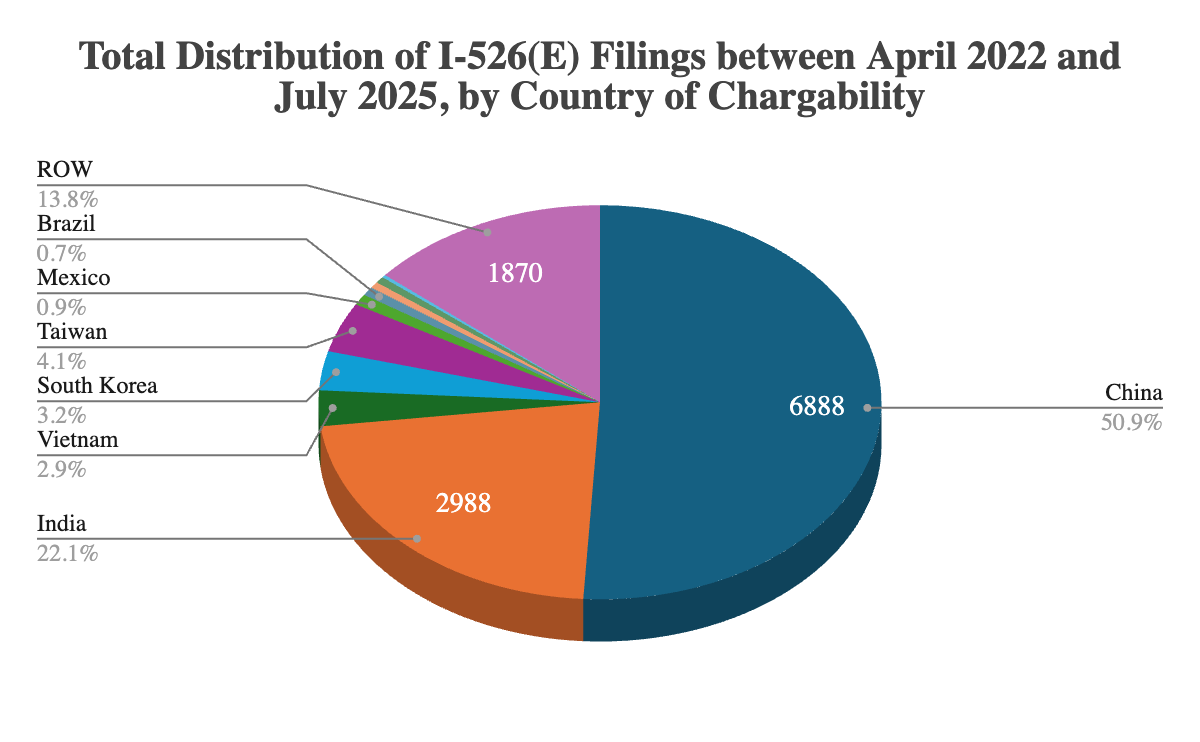
AIIA FOIA Series: Updated I-526E Inventory Statistics for July 2025
AIIA Submits Comments on USCIS NPRM on Updated EB-5 Fee Rule
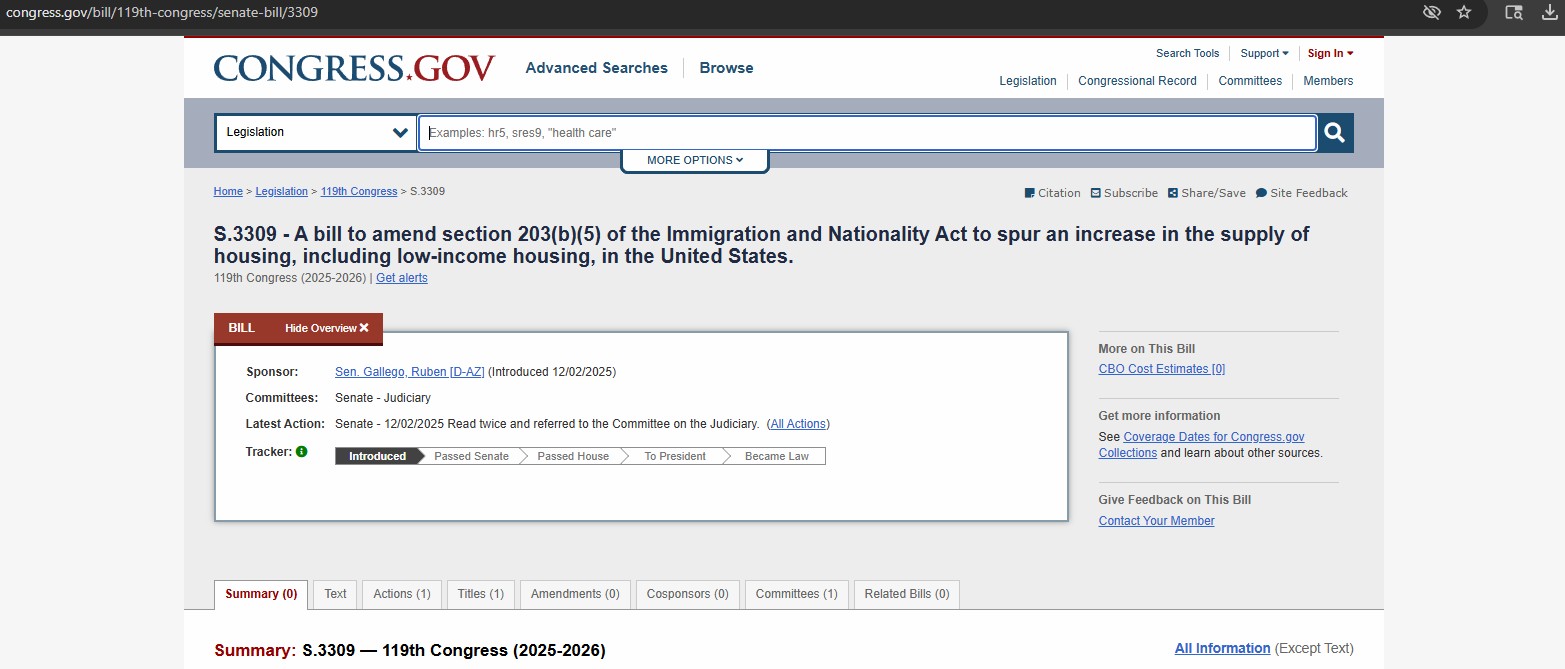
We Congratulate Senator Gallego for New Legislation that Leverages the EB-5 Program to Build Affordable Housing

We Won The EB-5 Fee Increase Lawsuit

Directory of Professionals
AIIA has curated a list of the top professionals from attorneys, investment specialists, to business plan writers to support all EB-5 stakeholders.
View Directory of ProfessionalsRelated Posts
AIIA FOIA Series: Updated I-526E Inventory Statistics for July 2025
AIIA Submits Comments on USCIS NPRM on Updated EB-5 Fee Rule
We Congratulate Senator Gallego for New Legislation that Leverages the EB-5 Program to Build Affordable Housing
We Won The EB-5 Fee Increase Lawsuit

Stay Up To Date With AIIA
Join our newsletter to stay up to date on EB-5 updates.
By subscribing you agree to with our Privacy Policy and provide consent to receive updates from our company.
Recommended Resources

The Issue of Aging Out in EB-5
The Child Status Protection Act (CSPA) helps freeze a child’s age on EB-5 petitions, but long visa backlogs still risk...
Read More
The Sale of EB-5 Securities Offerings
EB-5 securities sales often use Regulation D (U.S. investors) and Regulation S (foreign investors) exemptions to avoid SEC registration while...
Read More
Choosing between Direct vs Regional Center EB-5 financing
Direct EB-5 suits single investors creating direct jobs; Regional Center EB-5 pools multiple investors, counting direct and indirect jobs for...
Read MoreRecent Blog Posts
AIIA FOIA Series: Updated I-526E Inventory Statistics for July 2025
AIIA obtained new FOIA data through July 31, 2025 revealing how USCIS is actually processing EB-5 petitions, showing heavy prioritization...
Learn MoreAIIA Submits Comments on USCIS NPRM on Updated EB-5 Fee Rule
AIIA submitted comments on USCIS’s October 2025 EB-5 fee NPRM supporting revised, lawful fee levels but urging refunds for overpaid...
Learn MoreWe Congratulate Senator Gallego for New Legislation that Leverages the EB-5 Program to Build Affordable Housing
Sen. Gallego's EB-5 bill mobilizes foreign capital to build affordable housing. This collaboration has boosted AIIA's Congressional ties & credibility...
Learn MoreWe Won The EB-5 Fee Increase Lawsuit
AIIA successfully won its lawsuit against USCIS’s April 2024 EB-5 fee increases, with a federal judge ruling that the agency...
Learn MoreGet In Touch With Us
If you have any questions, inquiries, or collaboration proposals, please don’t hesitate to reach out to us.
 English
  Chinese
  Vietnamese
Responses (0)