Developers Business Owners and Governments
Preparing a Project for EB-5
Guides and best practices for preparing your project for EB-5 financing
The process of raising capital from EB-5 investors starts with ensuring the venture is a good fit for EB-5 investment and is structured and executed appropriately. Ensuring the necessary steps are taken – with diligence, detail, and scrutiny from qualified professionals – will facilitate the greatest chance of success for both your project and your investors’ immigration.
Additionally, USCIS requires a straightforward yet heavily-detailed investment offering to be documented in a regional center’s annual filing (form I-956G) and in the project’s form I-956F.
Preparing a project for EB-5 is not just about the offering: it’s about demonstrating to USCIS your knowledge of the program’s requirements, a dedication to comply, and marketing said project with ethics and tact. Know that failure to adequately prepare an offering may hinder you from raising EB-5 capital or marketing your offering(s) both now, and in the future.
Before reviewing this section, we recommend reading EB-5 Basics (for investors) and Why EB-5 Financing (for project sponsors/developers) to cover the foundational knowledge of the EB-5 program.
Raising EB-5 capital requires proper structuring, detailed preparation, and compliance with USCIS requirements. Ethical marketing, trust, and a proven track record are critical for success. Start with EB-5 Basics and Why EB-5 Financing for foundational knowledge.
For Developers, Business Owners, and Governments
Resources For Preparing a Project for EB-5

Parties involved in creating an EB-5 investment offering
Successful EB-5 offerings require expert teams—immigration and securities attorneys, economists, business plan writers, fund administrators, and full-service NCE managers ensure compliance and efficiency.
Learn More
Choosing between Direct vs Regional Center EB-5 financing
Direct EB-5 suits single investors creating direct jobs; Regional Center EB-5 pools multiple investors, counting direct and indirect jobs for larger projects needing more capital.
Learn More
Meeting the Job Creation requirement
EB-5 projects must create 10 new full-time jobs per investor within two years, with regional centers allowing indirect jobs but requiring at least 10% direct jobs and a job cushion for safety.
Learn More
The EB-5 Investment Amounts, Targeted Employment Areas and Set Aside Categories
EB-5 investment minimums depend on location: $800K in TEAs, $1.05M elsewhere; visas are set aside for rural, high-unemployment, and infrastructure projects.
Learn More
Regional Center Project Operations
Developers can join or create regional centers via USCIS Form I-956, requiring due diligence, geographic scope, economic plans, annual fees, and strict management duties.
Learn More
Setup costs of an EB-5 Project
EB-5 project setup costs vary widely; regional centers incur higher fees for legal, economic reports, filings, marketing, and management compared to direct projects.
Learn More
Building an EB-5 Offering
Prepare your EB-5 team, business model, and capital plan; finalize economic impact reports, business plans, and Private Placement Memorandum compliant with USCIS and SEC rules.
Learn More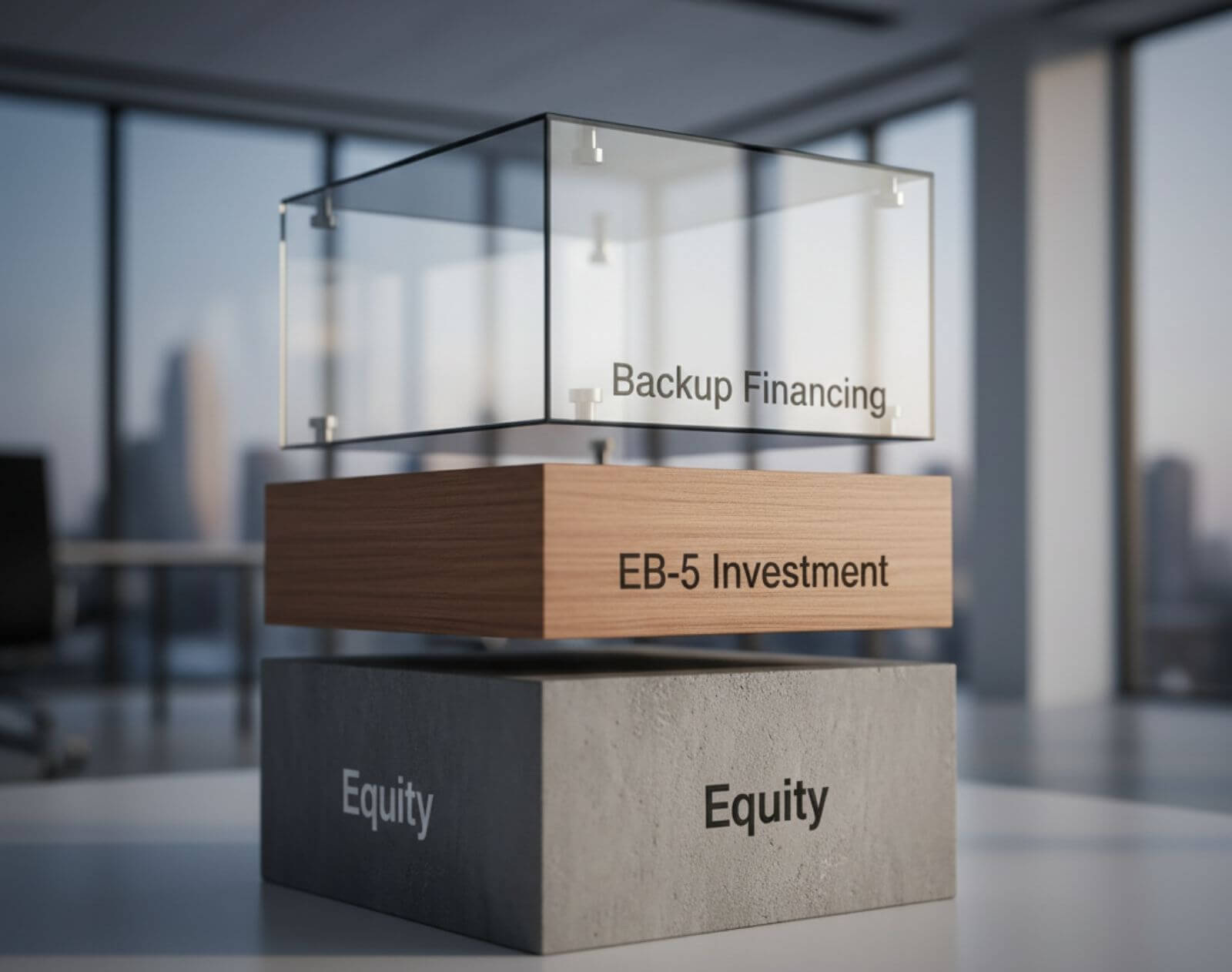
Structuring an EB-5 Regional Center Offering
EB-5 offerings require equity investment with no guarantees; structure capital stacks balancing investor risk preferences and include backup financing to enhance project viability and appeal.
Learn More
Navigating the EB-5 Paper Trail: Project Documentation and Compliance
Clear, compliant documentation and timely USCIS filings (various I-956s) are essential to avoid delays, ensure transparency, and maintain EB-5 regional center and investor compliance.
Learn MoreParties involved in creating an EB-5 investment offering
Successful EB-5 offerings require expert teams—immigration and securities attorneys, economists, business plan writers, fund administrators, and full-service NCE managers ensure compliance and efficiency.
Learn MoreChoosing between Direct vs Regional Center EB-5 financing
Direct EB-5 suits single investors creating direct jobs; Regional Center EB-5 pools multiple investors, counting direct and indirect jobs for larger projects needing more capital.
Learn MoreMeeting the Job Creation requirement
EB-5 projects must create 10 new full-time jobs per investor within two years, with regional centers allowing indirect jobs but requiring at least 10% direct jobs and a job cushion for safety.
Learn MoreThe EB-5 Investment Amounts, Targeted Employment Areas and Set Aside Categories
EB-5 investment minimums depend on location: $800K in TEAs, $1.05M elsewhere; visas are set aside for rural, high-unemployment, and infrastructure projects.
Learn MoreRegional Center Project Operations
Developers can join or create regional centers via USCIS Form I-956, requiring due diligence, geographic scope, economic plans, annual fees, and strict management duties.
Learn MoreSetup costs of an EB-5 Project
EB-5 project setup costs vary widely; regional centers incur higher fees for legal, economic reports, filings, marketing, and management compared to direct projects.
Learn MoreBuilding an EB-5 Offering
Prepare your EB-5 team, business model, and capital plan; finalize economic impact reports, business plans, and Private Placement Memorandum compliant with USCIS and SEC rules.
Learn MoreStructuring an EB-5 Regional Center Offering
EB-5 offerings require equity investment with no guarantees; structure capital stacks balancing investor risk preferences and include backup financing to enhance project viability and appeal.
Learn MoreNavigating the EB-5 Paper Trail: Project Documentation and Compliance
Clear, compliant documentation and timely USCIS filings (various I-956s) are essential to avoid delays, ensure transparency, and maintain EB-5 regional center and investor compliance.
Learn MoreDirectory of Professionals

AIIA has curated a list of the top professionals from attorneys, investment specialists, to business plan writers to support all EB-5 stakeholders.
View Directory of ProfessionalsConnect With A Professional
AIIA has curated a list of the top professionals from attorneys, investment specialists, to business plan writers to support all all EB-5 stakeholders
For Developers, Business Owners, and Govs
More Resources

Can't Find The Right Resource
Use this tool before to find the most applicable EB-5 resource for your needs.
Get In Touch With Us
If you have any questions, inquiries, or collaboration proposals, please don’t hesitate to reach out to us.
 English
  Chinese
  Vietnamese