USCIS cho biết các nhà đầu tư EB-5 nên trả thêm 150%+ phí.
28th Tháng hai, 2023
USCIS đang đề xuất tăng phí đáng kể đối với nhà đầu tư EB-5, cho rằng điều này là cần thiết do chương trình bị thiếu kinh phí. AIIA cho rằng điều này là bất công đối với nhà đầu tư vì không giải quyết được vấn đề thời gian xử lý chậm và các vấn đề trước đây liên quan đến dịch vụ của USCIS.
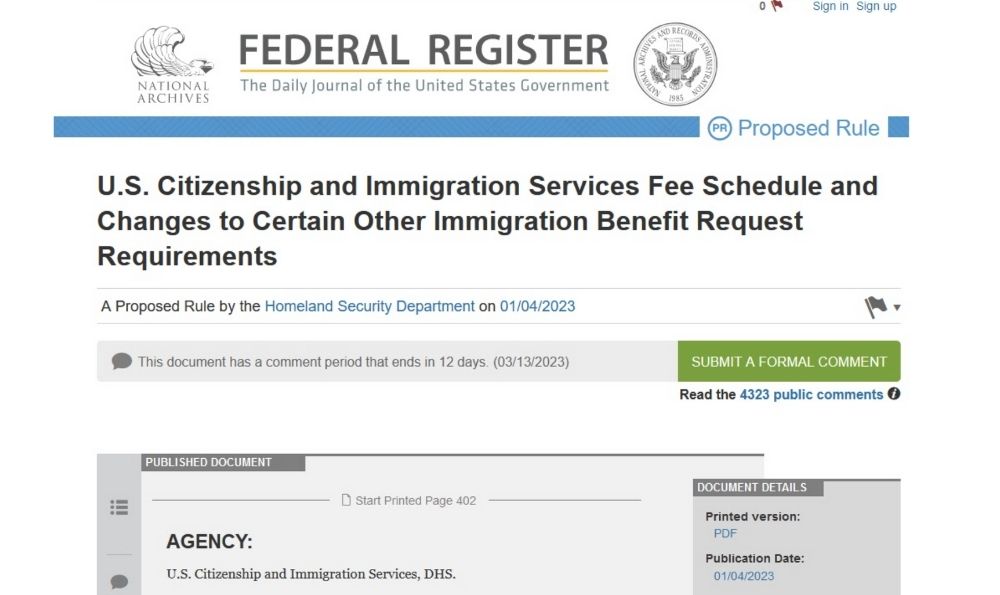
Earlier this year, the USCIS released a Notice of Proposed Rulemaking (NPRM) for adjusting petition filing fees, aiming to raise fees for certain immigration petitions to cover increased cost of adjudication. The last time USCIS successfully raised application fees was in 2016, therefore fee-hike proposals are naturally overdue. Every few years, USCIS reevaluates the cost of adjudicating all cases received by the agency to adjust fees – allegedly for inflation, increased complexity of forms and adjudication times, as well as expected fluctuation in staffing at the agency. However, even with an extensive backlog of EB-5 pending petitions and a small number of active adjudicators, USCIS still believes it is justified in raising the cost of filing an I-526 or I-829 by over 150% or more.
Hiện tại, USCIS thu phí $3,675 cho việc nộp đơn I-526 hoặc I-526E, và $3,750 cho việc nộp đơn I-829. Cơ quan này hiện đang đề xuất tăng phí nộp đơn lên $11,160 cho đơn I-526/I-526E và $9,525 cho đơn I-829. Điều này tương đương với mức tăng hơn 204% và 154% so với mức phí hiện tại và sẽ affect anyone who has yet to file these petitions.

USCIS’s Justification
USCIS justifies this increase for EB-5 fees by stating:
“Under the ability-to-pay principle, those who are more capable of bearing the burden of fees should pay more for a service than those with less ability to pay…”
“The requirements of the immigrant investor program indicate that immigrant investors and regional centers have the ability-to-pay more than most USCIS customers…”
“Compared to the amount of capital required and the required investment levels for an immigrant investor, the USCIS fees are an insignificant amount” (NPRM PDF p. 109).
Assuming individuals can pay extensively to file their application, without any expectations for timely processing is an example of typical bureaucratic disconnect with reality. Not only are the proposed fee-hikes astronomical, but it is justified with a disconnected assumption that investors, simply because they have the ability to invest a large sum of money, would continue to tolerate disproportionate and abysmal allocation of resources designated for their benefit. There is already a significant backlog of EB-5 investors who have already paid their fees but not received any service from USCIS. It is also a relevant question for the economic times we live in as to who should bear the burden of years of inflation. Who should shoulder the inflationary cost of adjudication built up in the ever-increasing petition backlogs caused in no small part by the agency’s own delays?
EB-5 investors should be extremely skeptical about whether these incredible fee-hikes bring any promised or implied improvement to the service levels they will receive. Many investors have already paid extensive fees for adjudication. Yet, since even before the program lapse, processing times have been so abysmal that investors have also paid the indirect cost of agency delays through their investments, which are forcibly sustained to maintain the required sustainment period. This puts many petitioners at risk of having their hard earned capital redeployed, a practice which has become a common nightmare for EB-5 investors.
Why are these fees so high?
The basis of NPRM’s projected fee increase is based solely on their expected workload in accepting new petitions and without factoring in the extensive backlog of applications which await review. Given the statistics provided by the current proposal, USCIS supposedly does not receive sufficient funding to continue processing petitions at their current processing rate and will quickly run out of agency funding (because USCIS runs the agency based on fees from immigrant petitioners). Their business plan indicates USCIS will need to continue bringing new investors into the program in order to continue adjudicating older petitions under the proposed cost model. However, what is not factored into this proposal is that this drastic fee increase proposal, coupled with a program already struggling from the minimum investment increase in 2019, would greatly shrink the expected number of EB-5 petitions for this business plan to work out. If the stream of new investors does not meet USCIS’s estimation, the agency may fail to break even between adjudication costs and income from petition fees.
This NPRM estimates the need to generate around $21.27 Million annually to adjudicate petitions for EB-5 applicants, yet the EB-5 program currently has a backlog amounting to over $100 Million worth of adjudication costs. Additionally, Suzanne Lazicki, author of Lucidtext, found that the agency diverts most of its funding received from EB-5 petition fees into covering other costs. If the business plan relies on steady income from new petition fees to continue this adjudication process, there is no possible way in which USCIS could address this processing backlog in less than a decade, and more likely far longer, given that this regressive new tax would force new investor demand to massively plummet. The math between the funding that USCIS needs from new petitioners to address the backlog and the reallocation of EB-5 fees is not anywhere near enough to begin chipping away at the $100 million worth of adjudication required to reduce the EB-5 backlog. In fact, the “break even” model proposed in the NPRM only threatens to make this backlog worse through budget reallocation.
The NPRM Supporting Documentation published by USCIS provides further justifications for the fee increase. When analyzing the fine print, this is what we noticed:
From Immigration Examinations Fee Account Fee Review Supporting Documentation, Appendix Table 4: Proposed Fees by Immigration Benefit Request (sorted by highest proposed fees)
| Immigration Benefit Request | Current Fees | Model Output | Cost Reallocation | Proposed Fees | Proposed Change in Fees | Percent Change in Proposed
Fees |
| I-956 Application for Regional Center Designation | $17,795 | $35,127 | $12,568 | $47,695 | $29,900 | 168% |
| I-526/I-526E Immigrant Petition by
Standalone/Regional Center Investor |
$3,675 | $8,220 | $2,940 | $11,160 | $7,485 | 204% |
| I-829 Petition by Investor to Remove Conditions on
Permanent Resident Status |
$3,750 | $7,013 | $2,512 | $9,525 | $5,775 | 154% |
| I-956G Regional Center Annual Statement | $3,035 | $3,290 | $1,180 | $4,470 | $1,435 | 47% |
| I-698 Application to Adjust Status from Temporary to
Permanent Resident (Under Section 245A of the INA) |
$1,670 | $1,149 | $521 | $1,670 | $0 | 0% |
| I-485 Application to Register Permanent Residence or
Adjust Status |
$1,140 | $1,133 | $407 | $1,540 | $400 | 35% |
| I-212 Application for Permission to Reapply for
Admission into the U.S. After Deportation or Removal |
$930 | $1,027 | $449 | $1,455 | $525 | 56% |
| I-129 L | $460 | $1,021 | $364 | $1,385 | $925 | 201% |
| N-600 Application for Certificate of Citizenship –
Online |
$1,170 | $1,354 | $31 | $1,385 | $215 | 18% |
| N-600 Application for Certificate of Citizenship –
Paper |
$1,170 | $1,535 | -$150 | $1,385 | $215 | 18% |
EB-5 petitions have the highest proportional fee increase and yet receive the worst treatment as shown by the crawling pace of processing and consistent lack of program transparency from USCIS. In conclusion, the proposed rulemaking does not solve the EB-5 program backlog but rather takes it into a death spiral of less overall fee collections, leading to ever slower processing, which leads to yet lower fee collections as investor demand dissipates. USCIS’s NPRM gives little to no indication that this proposed fee increase would lead to building out the agency’s workforce to offset the processing times of a program whose expected adjudication time is two to three times worse than that of any other immigrant category.
Existing investors are not exempt
Investors who are already well into their immigration journeys would not be exempt from this fee hike proposal. For example, I-829 petitioners will now need to cough up the significantly higher fee amounts just to acquire their permanent residency. There is no proposal in the NPRM to protect investors against the higher fees at downstream adjudication steps, such as removal of conditions stage.
Investors would have much rather preferred to see the USCIS look to raise some of their funding requirements from commercial, for-profit entities, such as Regional Centers who truly would have the ability-to-pay under the so-called principle. It would be much more fair to adjust fees for Regional Centers based on the scale of their operations and annual revenue. Smaller Regional Centers who try and fund some of the most community-impactive projects across America are facing an extremely high barrier of entry since the post-RIA implemented Regional Center fee changes; whereas, multi-million dollar projects can easily digest these fees as simply a rounding error in their business plans.
Investors’ take
We acknowledge that USCIS is well overdue for fee realignment given that fees have stayed stagnant since 2016. However, it must also ensure that the fees update is used as a vital opportunity to fix the entire business plan of USCIS. It should simply be a non-starter to use the ability-to-pay principle as the be-all and end-all justification to extract ever-higher fees from investors without any follow through on their adjudication efficiency. As one EB-5 investor has commented already, “Time and again EB-5 filing fees have been increased, each time with USCIS promising to deliver better service and reasonable timelines, but the delays have only grown longer and longer.”
As the EB-5 program is such an important contributor to Foreign Direct Investment into the United States, and creates thousands of American jobs each year, the agency must begin remediating the extensive adjudication-debt which has piled up over years and now threatens to slowly bleed the program to its demise with ever-increasing wait times. The processing fees proposal is merely a symptom to a much larger issue which often goes unnoticed and unasked – Is the US government providing a fair bargain to foreign investors who are being enticed to make investments with the opportunity to call this country their new home?
Act Now
The NPRM is open for public comment until March 13th, 2023. Any individual or entity can submit a comment to the Department of Homeland Security with regards to this proposed rule and offer considerations for the future. We strongly encourage all EB-5 stakeholders to submit their comments to this form in order to ensure that their individual stories are heard, and help encourage the department to begin addressing the much larger problems which are intertwined with this fee increase, mainly, agency inefficiencies and lack of prioritization of EB-5 petitions, relative to all other workload. We must encourage and hold the agency accountable to release a public plan which acknowledges the EB-5 backlog with a promise to remediate the large debt of overdue petitions which is owed to existing immigrant petitioners. Additionally, investors demand a follow-up on Alissa Emmel’s plea for patience with processing petitions, a reference to May 2022 where she justified the slow processing with the IPO’s plan to expand its adjudication staff. It is necessary to put pressure on DHS to provide further justification of why EB-5 investors are more fit and able to pay extraordinary fees but not expect anything in return. It is also necessary to highlight how this business plan does not even address the huge backlog of EB-5 petitioners and relies on funds brought in by new investors to break even with adjudication costs of new EB-5 petitions and other immigrant categories.
AIIA expects to issue a formal comment on the NPRM, and will continue to issue updates on this fee increase as the NPRM is taken into effect once it closes for public comment. We encourage you to support these efforts by volunteering with our organization or donating to our cause. With the assistance of our donors and members, we can continue to push back against unjust and ineffective policies and work with the stakeholders inside the US government to remediate immigrant investors’ concerns. When the program works for investors first with transparency and equity, all parties involved in the program reap its benefits, and the program will continue to sustain US businesses and jobs for years to come.
If you are interested in supporting our organization and the valuable work we do, you can donate on our Take Action page and consider becoming a member. As always, please use Biểu mẫu liên hệ của chúng tôi to sign up for our newsletter, or send in any questions, comments, or concerns.
Danh bạ các chuyên gia

AIIA đã tuyển chọn một danh sách các chuyên gia hàng đầu, bao gồm luật sư, chuyên gia đầu tư và người viết kế hoạch kinh doanh, để hỗ trợ tất cả các bên liên quan đến chương trình EB-5.
Xem Danh bạ Chuyên giaBài viết liên quan
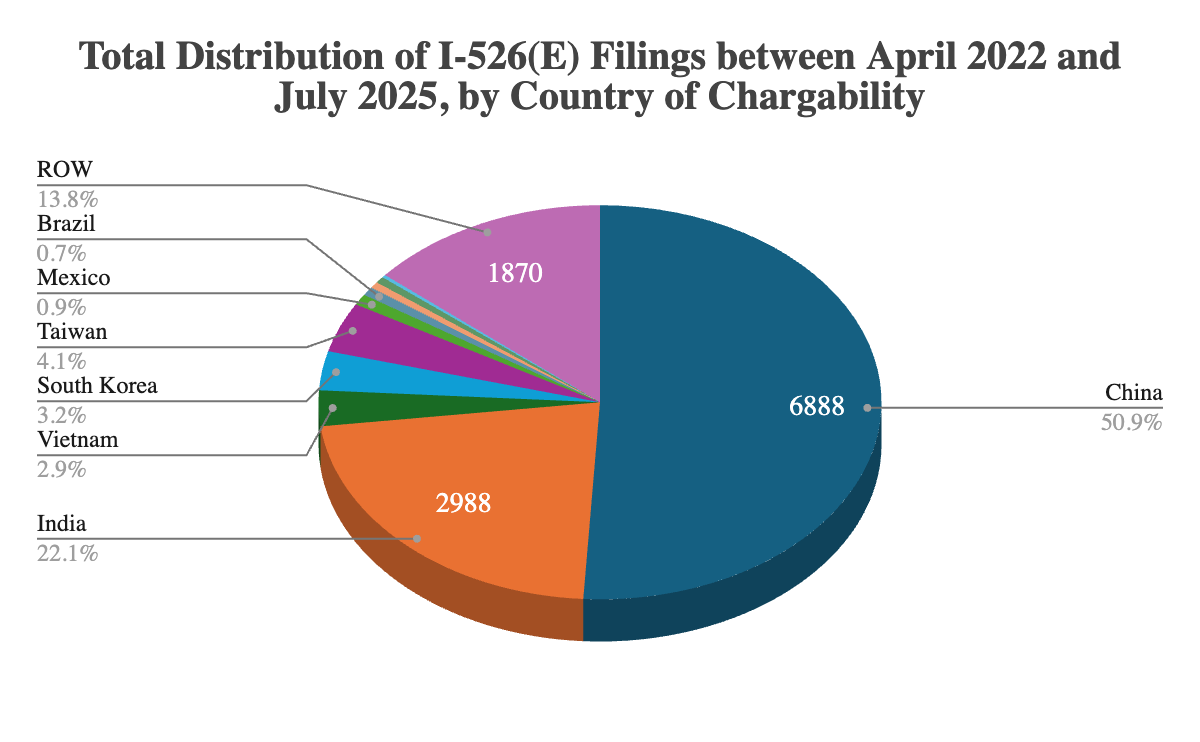
AIIA FOIA Series: Updated I-526E Inventory Statistics for July 2025
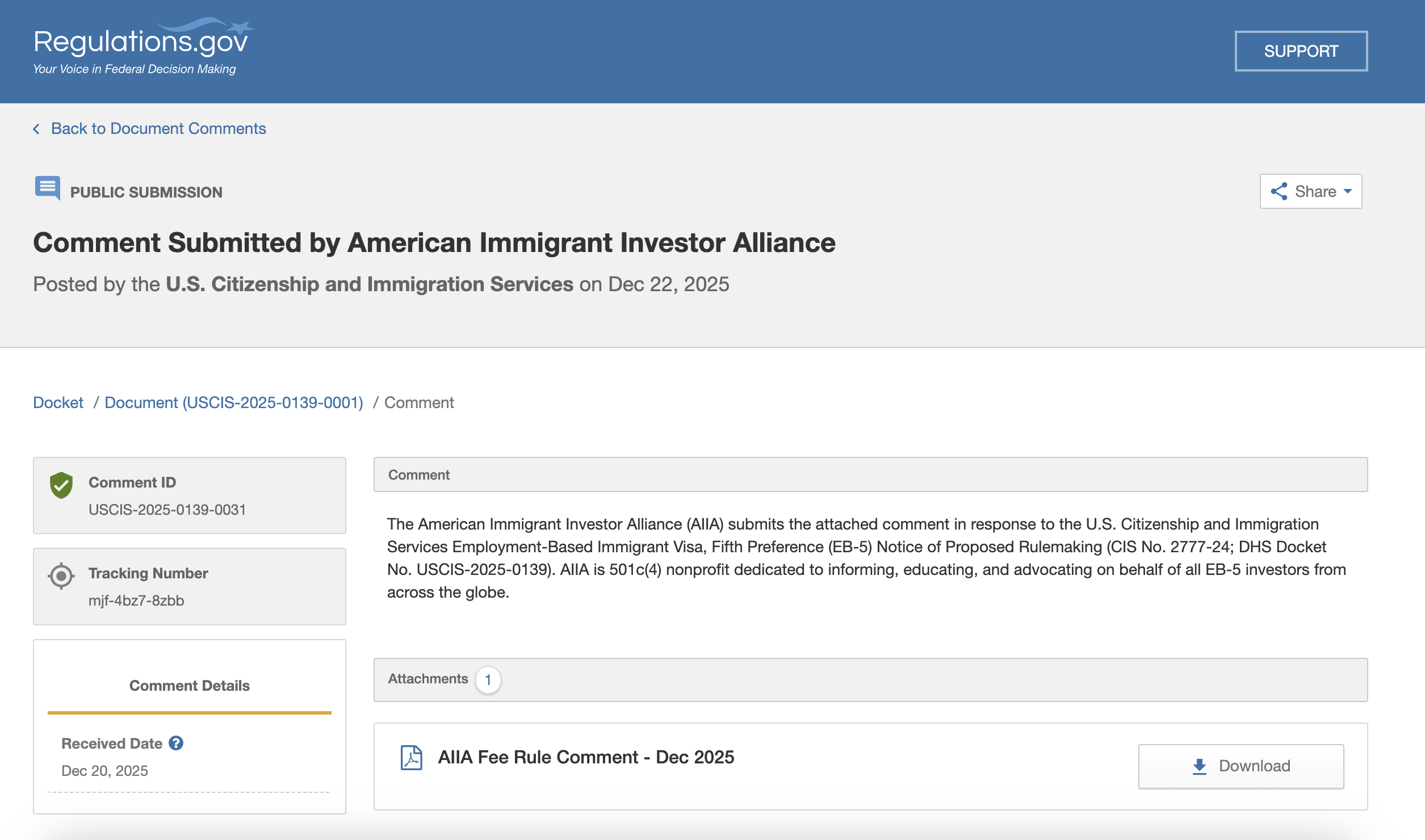
AIIA Submits Comments on USCIS NPRM on Updated EB-5 Fee Rule
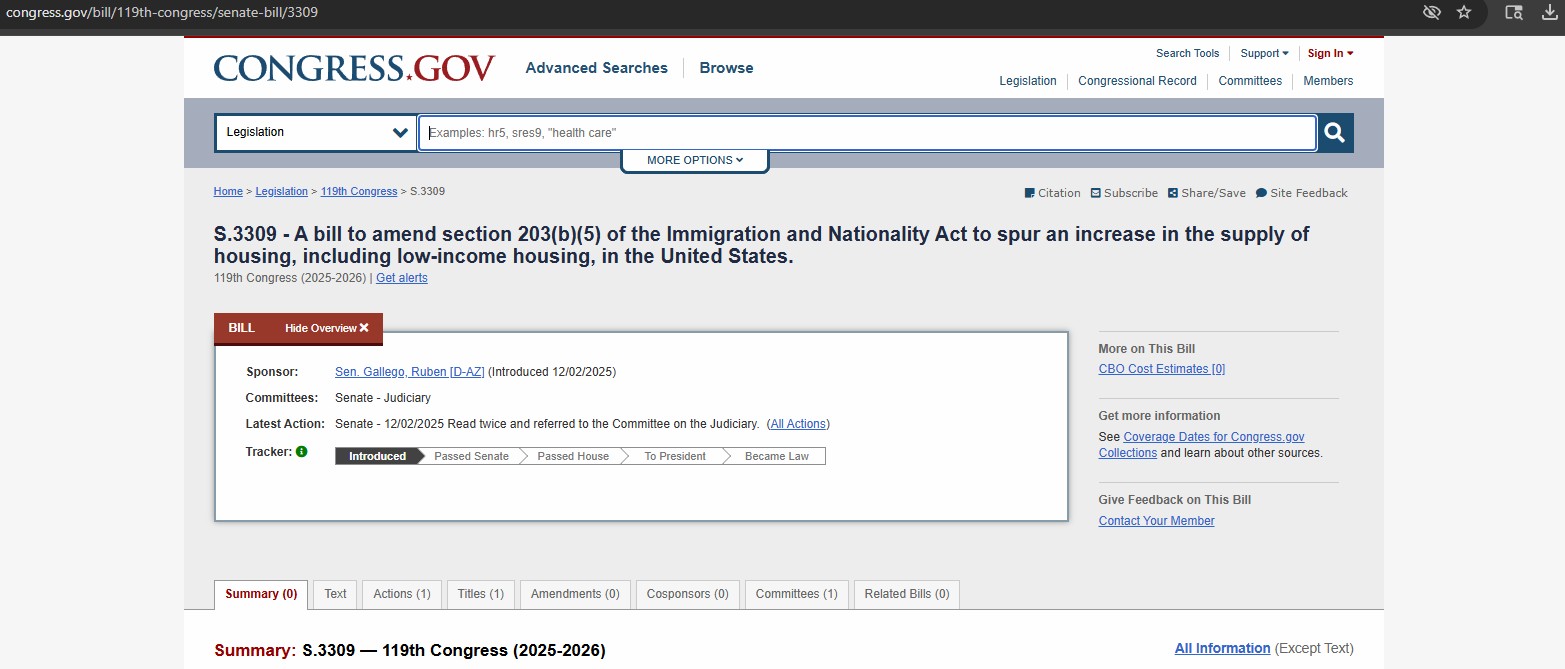
Chúng tôi xin chúc mừng Thượng nghị sĩ Gallego về dự luật mới tận dụng Chương trình EB-5 để xây dựng nhà ở giá rẻ.

Chúng tôi đã thắng kiện vụ kiện về việc tăng phí EB-5.

Danh bạ các chuyên gia
AIIA đã tuyển chọn một danh sách các chuyên gia hàng đầu, bao gồm luật sư, chuyên gia đầu tư và người viết kế hoạch kinh doanh, để hỗ trợ tất cả các bên liên quan đến chương trình EB-5.
Xem Danh bạ Chuyên giaBài viết liên quan
AIIA FOIA Series: Updated I-526E Inventory Statistics for July 2025
AIIA Submits Comments on USCIS NPRM on Updated EB-5 Fee Rule
Chúng tôi xin chúc mừng Thượng nghị sĩ Gallego về dự luật mới tận dụng Chương trình EB-5 để xây dựng nhà ở giá rẻ.
Chúng tôi đã thắng kiện vụ kiện về việc tăng phí EB-5.

Cập nhật thông tin mới nhất từ AIIA
Đăng ký nhận bản tin của chúng tôi để cập nhật thông tin mới nhất về chương trình EB-5.
Bằng cách đăng ký, bạn đồng ý với Chính sách Bảo mật của chúng tôi và đồng ý nhận các cập nhật từ công ty chúng tôi.
Nguồn tài liệu được khuyến nghị

Vấn đề về việc hết hạn tuổi trong chương trình EB-5
Luật Bảo vệ Tuổi của Trẻ em (CSPA) giúp giữ nguyên tuổi của trẻ em trong các đơn xin visa EB-5, nhưng tình trạng ùn tắc visa kéo dài vẫn tiềm ẩn rủi ro...
Đọc thêm
Việc bán các đợt chào bán chứng khoán EB-5
Bán chứng khoán EB-5 thường sử dụng các quy định miễn trừ theo Quy định D (nhà đầu tư Mỹ) và Quy định S (nhà đầu tư nước ngoài) để tránh đăng ký với Ủy ban Chứng khoán và Giao dịch Hoa Kỳ (SEC) trong khi...
Đọc thêm
Lựa chọn giữa tài trợ EB-5 trực tiếp và thông qua Trung tâm Khu vực
Chương trình EB-5 trực tiếp dành cho các nhà đầu tư cá nhân tạo ra việc làm trực tiếp; Chương trình EB-5 Trung tâm Khu vực tập hợp nhiều nhà đầu tư, tính cả việc làm trực tiếp và gián tiếp cho...
Đọc thêmBài viết mới nhất trên blog
AIIA FOIA Series: Updated I-526E Inventory Statistics for July 2025
AIIA obtained new FOIA data through July 31, 2025 revealing how USCIS is actually processing EB-5 petitions, showing heavy prioritization...
Tìm hiểu thêmAIIA Submits Comments on USCIS NPRM on Updated EB-5 Fee Rule
AIIA submitted comments on USCIS’s October 2025 EB-5 fee NPRM supporting revised, lawful fee levels but urging refunds for overpaid...
Tìm hiểu thêmChúng tôi xin chúc mừng Thượng nghị sĩ Gallego về dự luật mới tận dụng Chương trình EB-5 để xây dựng nhà ở giá rẻ.
Dự luật EB-5 của Thượng nghị sĩ Gallego huy động vốn nước ngoài để xây dựng nhà ở giá rẻ. Sự hợp tác này đã củng cố mối quan hệ và uy tín của AIIA với Quốc hội...
Tìm hiểu thêmChúng tôi đã thắng kiện vụ kiện về việc tăng phí EB-5.
AIIA đã thắng kiện thành công trong vụ kiện chống lại việc tăng phí EB-5 của USCIS vào tháng 4 năm 2024, với phán quyết của một thẩm phán liên bang rằng cơ quan này...
Tìm hiểu thêmLiên hệ với chúng tôi
Nếu quý vị có bất kỳ câu hỏi, thắc mắc hoặc đề xuất hợp tác nào, xin vui lòng liên hệ với chúng tôi mà không ngần ngại.
 Vietnamese
  English
  Chinese
Phản hồi (0)