The Administration is Attacking EB-5 by Wasting Visa Numbers through an RFE Debacle
22nd Tháng chín, 2026
USCIS is deliberately issuing baseless, repetitive RFEs demanding already-submitted Form I-693 medical exams from EB-5 and other employment-based adjustment applicants, timed near fiscal year-end after unusual transfers to the Texas Service Center, in order to stall adjudications and worsen Visa Bulletin backlogs, and it's calling for a coordinated lawsuit against the agency.

It’s well known that the Trump Administration is anti-immigration. This hostility is not limited to illegal immigrants but also to legal immigrants, and extends to EB-5 immigrant investors, even though the program is premised on job creation for U.S. workers. Early in the administration in 2025, the U.S. Secretary of Commerce, Howard Lutnick, said that the EB-5 program was “full of nonsense, make believe and fraud.” The administration has since introduced an alternative immigration program called the “Trump Gold Card” involving direct $1 million payments to the U.S. Treasury, which Lutnick has advertised as a replacement to the EB-5 program.
Recently, U.S. Citizenship and Immigration Services (USCIS), likely at the behest of nationalist populist anti-immigrant lobbying groups, has been attacking legal immigration through arbitrary, capricious, and unlawful action involving a flagrant abuse of discretion in the adjudication process by issuing bizarre Requests for Evidence (RFE).
The Threat: Baseless RFEs
After input from AIIA’s network of EB-5 investors, immigration attorneys, and former USCIS officers; analysis of month-to-month USCIS data; as well as news reports and commentary from advocacy peers; we have concluded that USCIS is unlawfully abusing its discretion by issuing baseless RFEs when adjudicating I-485 Applications to Adjust Status to that of an Lawful Permanent Resident (LPR).
This arbitrary exercise is not limited to EB-5 investors but affects all employment-based immigration categories, for which there exists annual numerical limits per Fiscal Year. AIIA recognises the threat that such actions pose to EB-5 investors and is calling for appropriate action in response.
AIIA identified this problem after noticing three trends.
First, an alarming number of RFEs have been issued for employment-based adjustments of status in the last two months, which are the last two months of Fiscal Year 2025-26. The number of RFEs issued in these months are disproportionate to the number of RFEs issued over the rest of the Fiscal Year.
Second, these RFEs have been issued after the applications for adjustment were transferred from USCIS’s California Service Center to the agency’s Texas Service Center. These transfers are without precedent. They resemble a common practice by the Trump Administration to transfer immigration cases to jurisdictions where adjudications by non-partisan civil servants may be more favorable (i.e., more conservative). E.g., the transfer of immigration detainees in removal proceedings across the country to the Central Louisiana ICE Processing Center in La Salle, Louisiana, where Immigration Judges frequently issue orders of removal and deny relief from removal.
Third, all the RFEs have a common request: resubmission of the Form I-693 Report of Medical Examination and Vaccination Record. The form is required as part of all adjustments of status, including for EB-5 investors, to ensure that all immigrants are medically admissible as LPRs per INA § 212(a)(1)(A), 8 U.S.C. § 1182(a)(1)(A). The RFEs all read as follows:
“Requested item: Form I-693, Report of Medical Examination and Vaccination Record is required to complete your Form I-485, Application to Register Permanent Residence or Adjust Status. Your Form I-693 medical exam has either not been submitted yet, or your existing Form I-693 was signed by the civil surgeon more than two years ago and is expired. Please submit a new Form I-693 completed by a designated civil surgeon to this office together with a copy of this notice. Including a copy of this notice will facilitate matching your medical report with your file.
[…]
Please note: if you have already submitted a recent Form I-693 to USCIS in response to a different RFE or on your own, you must still reply to this RFE. Include a brief explanation of when and where your I-693 was sent plus copies of any document(s) you have from that submission.”
These RFEs have been issued even if an immigrant has submitted a valid Form I-693 signed by a licensed civil surgeon within the allowable time period, i.e., after November 1, 2023 per agency policy. EB-5 investors in contact with AIIA report that the RFEs issued to them by USCIS suggest that the agency may have “lost…original medical exams submitted at the time of filing when transferring between service centers.”
Whenever an RFE is issued by USCIS for an application or petition, the adjudication process is paused until a response to the RFE is received and processed. Usually, responding to an RFE is a time-intensive process requiring extensive documentation and legal representation. The time period required to meritoriously respond prevents an adjustment from occurring within the present fiscal year.
Worse, the adjustments not adjudicated and carried forward to subsequent fiscal years contributes to worsening backlogs of the Visa Bulletin, which prevents EB-5 investors from receiving LPR status in a timely manner. Again, due to limitations per country of chargeability — which do not reflect the population distribution of the world — these backlogs are worst for India-born and Mainland China-born applicants, who make up a majority of EB-5 investors and employment-based immigrants in general.
Hence, the combination of unusually timed RFEs issued consistently by a new service center on the same subject leads AIIA to believe that USCIS is deliberately sabotaging adjustment of status applications to prevent immigration and worsen backlogs on the Visa Bulletin.
The 2025-26 Fiscal Year will end on September 30, which means that applicants with RFEs issued now cannot possibly make a meritorious response and receive an adjudication before the fiscal year’s end. They will be retrogressed to a subsequent year. USCIS has apparently adopted Visa Bulletin retrogression, which was previously a phenomenon condemned by all immigration stakeholders, as a policy to prevent immigration.
The Response
These actions require a response. Sadly, it is difficult to politically lobby the administration to change course.
The year 2026 is an election year for Congress. The administration cannot afford to alienate their voting base by withdrawing anti-immigration activities. If anything, these policies are being pursued for the express purpose of courting them in order to swell voter turnout.
Hence, the only response is through litigation. Given the numerosity, particularity, and commonality of these issues being experienced by all adjustment applicants beyond merely EB-5 investors, AIIA believes there exists a solid case for a lawsuit against USCIS by impacted immigrants to stop this action.
AIIA is calling on pro-immigration advocacy groups to coalesce behind such a lawsuit by pooling resources, identifying plaintiffs, and strategizing to ensure a single and unified legal effort that will elicit a preliminary injunction by a U.S. District Court enjoining such action. There is a meritorious case that such action by USCIS is arbitrary and capricious under the Administrative Procedure Act (APA) at 5 U.S.C. § 706, which would allow a U.S. District Judge to hold these policies unlawful and set them aside.
Furthermore, discovery during a civil action may enable the disclosure of USCIS policies and practices to definitively ascertain the existence of a wilful policy of thwarting adjustments. Immigration groups would be able to expose this shameless practice and amplify the bureaucratic chicanery of USCIS through the media. National coverage would invite scrutiny, embarrassment, and defensive responses by the Trump Administration that may undermine this threat to EB-5 investors and other immigrants.
AIIA seeks to be a team player and active participant in all organizing efforts to defend EB-5 investors and other immigrants more broadly. Consequently, we invite contact from investors, attorneys, industry participants, immigration advocacy groups, and other parties to discuss and execute plans to respond.
Any effort that AIIA makes on behalf of EB-5 investors and immigrants at-large costs money. This includes our lobbying, litigation, Freedom of Information Act transparency efforts to forensically uncover USCIS internal policies, and consultations for EB-5 investors and stakeholders for all things regarding EB-5. If you benefit from our efforts or support our mission, please quyên góp đến AIIA hoặc Trở thành thành viên Hôm nay.
Danh bạ các chuyên gia

AIIA đã tuyển chọn một danh sách các chuyên gia hàng đầu, bao gồm luật sư, chuyên gia đầu tư và người viết kế hoạch kinh doanh, để hỗ trợ tất cả các bên liên quan đến chương trình EB-5.
Xem Danh bạ Chuyên gia

Danh bạ các chuyên gia
AIIA đã tuyển chọn một danh sách các chuyên gia hàng đầu, bao gồm luật sư, chuyên gia đầu tư và người viết kế hoạch kinh doanh, để hỗ trợ tất cả các bên liên quan đến chương trình EB-5.
Xem Danh bạ Chuyên gia
Cập nhật thông tin mới nhất từ AIIA
Đăng ký nhận bản tin của chúng tôi để cập nhật thông tin mới nhất về chương trình EB-5.
Bằng cách đăng ký, bạn đồng ý với Chính sách Bảo mật của chúng tôi và đồng ý nhận các cập nhật từ công ty chúng tôi.
Nguồn tài liệu được khuyến nghị

Vấn đề về việc hết hạn tuổi trong chương trình EB-5
Luật Bảo vệ Tuổi của Trẻ em (CSPA) giúp giữ nguyên tuổi của trẻ em trong các đơn xin visa EB-5, nhưng tình trạng ùn tắc visa kéo dài vẫn tiềm ẩn rủi ro...
Đọc thêmBài viết mới nhất trên blog
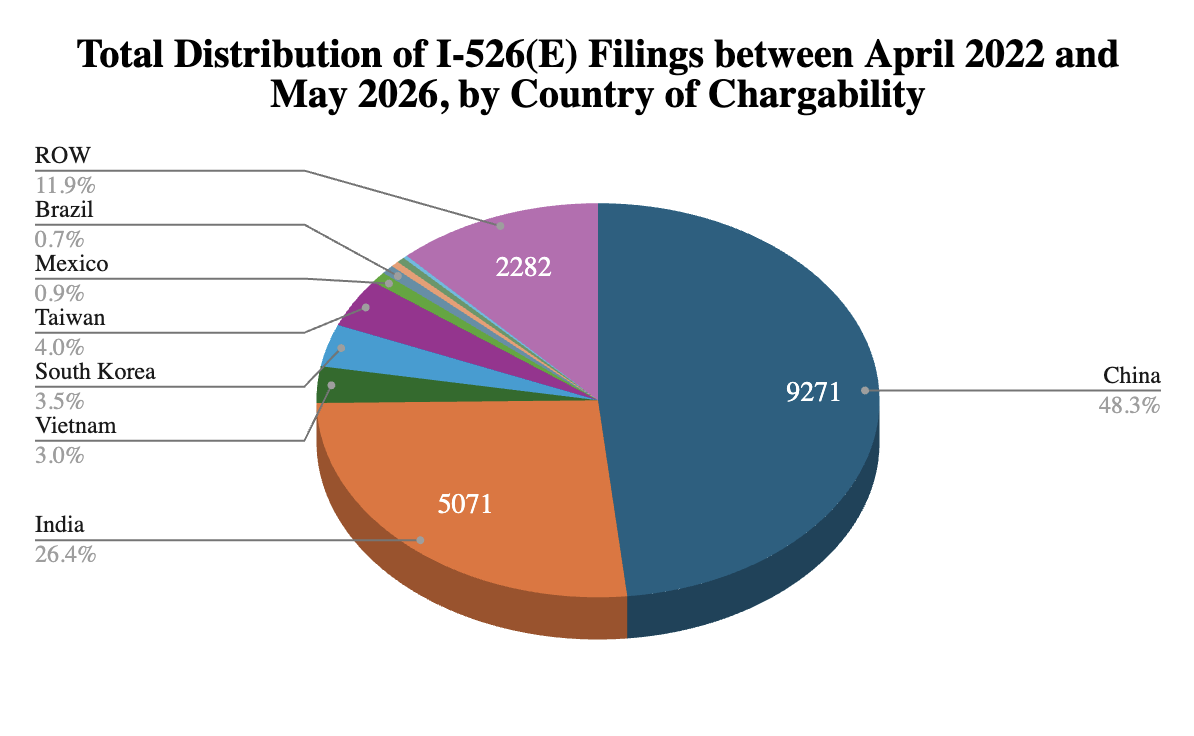
AIIA FOIA Series: Updated I-526E Inventory Statistics for May 2026
Investors from India and China still face significant visa backlogs regardless of category, Korea, Taiwan and Vietnam are still investing...
Tìm hiểu thêm
Investor First: Our Comment On The New Proposed EB-5 Rules
Our comments supporting the two-year sustainment clock while pressing for investor safeguards on third-party promoter liability, source-of-funds burdens, bridge financing,...
Tìm hiểu thêm
Class Action Lawsuit Filed Against USCIS for EB-5 Fee Refunds
Did you pay inflated EB-5 filing fees after April 2024? AIIA has filed a federal class action lawsuit against USCIS...
Tìm hiểu thêm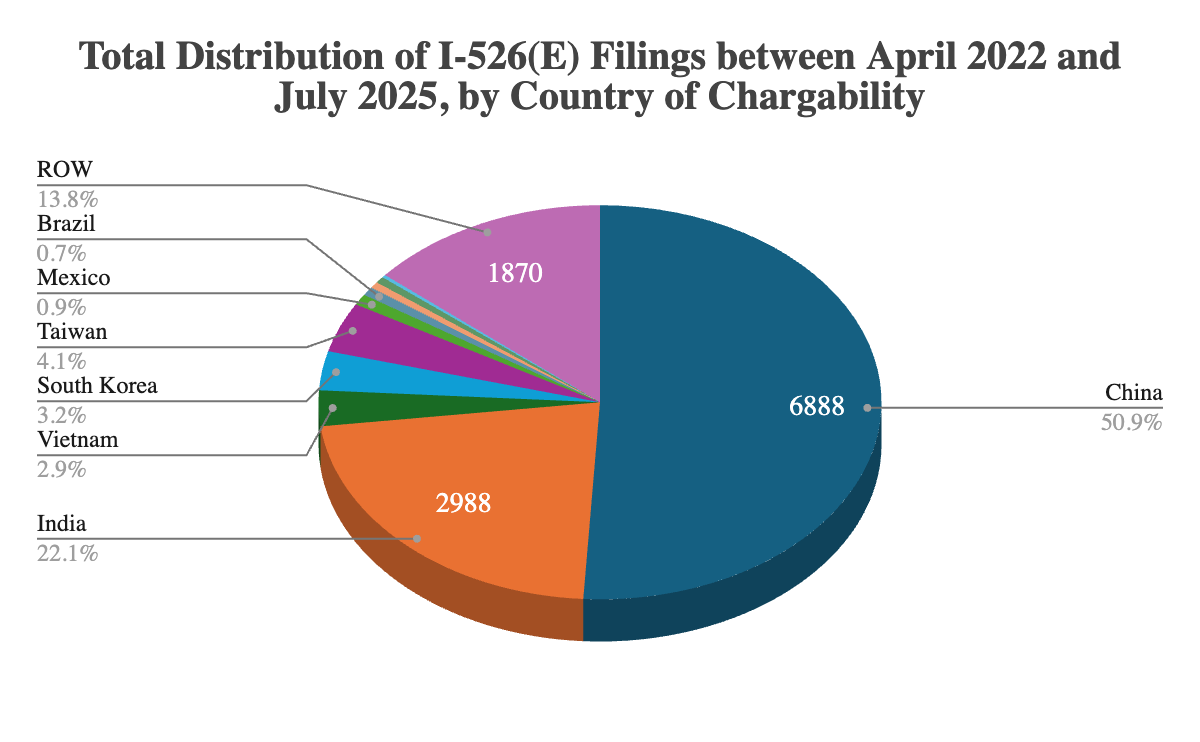
Chuỗi bài viết về Đạo luật Tự do Thông tin (FOIA) của AIIA: Số liệu thống kê cập nhật về hồ sơ I-526E tháng 7 năm 2025
AIIA đã thu thập được dữ liệu mới theo Đạo luật Tự do Thông tin (FOIA) tính đến ngày 31 tháng 7 năm 2025, tiết lộ cách USCIS thực sự xử lý các đơn xin EB-5, cho thấy việc ưu tiên xử lý rất cao...
Tìm hiểu thêmLiên hệ với chúng tôi
Nếu quý vị có bất kỳ câu hỏi, thắc mắc hoặc đề xuất hợp tác nào, xin vui lòng liên hệ với chúng tôi mà không ngần ngại.
 Vietnamese
  English
  Chinese
Phản hồi (0)