AIIA Goes to the Supreme Court: Our Amicus Brief in Bouarfa v. Mayorkas
12th July, 2024
AIIA is advocating for immigrant investors' rights to challenge USCIS decisions in federal court, particularly regarding the revocation of approved EB-5 petitions, which USCIS argues should be immune from judicial review. The Supreme Court is set to hear the case Bouarfa v. Mayorkas to decide whether these revocations can be appealed, and AIIA has filed an amicus brief to support investors' right to contest such decisions.
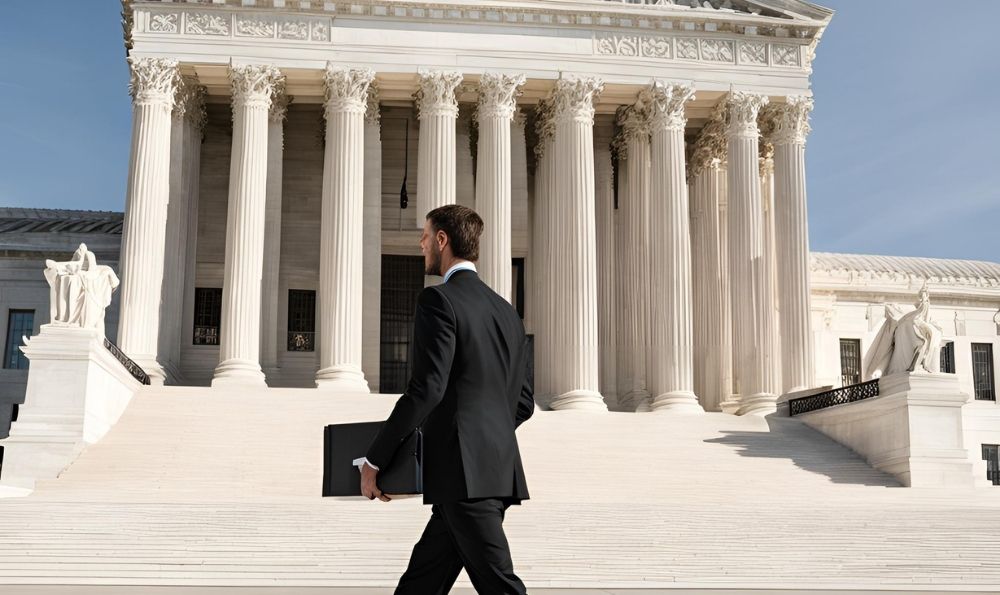
AIIA has always championed the rights of immigrant investors, particularly against adverse actions by USCIS. We know that USCIS often makes incorrect and unfair decisions against investors, which must be reversed to ensure investors can immigrate to the United States. Hence, the ability to challenge such decisions — particularly, in federal courts, to seek their “judicial review” and overturn USCIS decisions — is critical. If an investor’s immigrant petition is rejected, the ability to go to court and fight that decision is an important right. We cannot lose it.
Under current law, immigrant investors can seek the judicial review of federal courts if USCIS denies their EB-5 petitions, provided they exhaust all administrative remedies.
USCIS has, unfortunately, found a loophole to avoid judicial review of their decisions. Instead of denying immigrant status petitions outright, USCIS sometimes initially approves a petition but later revokes it. USCIS argues that such revocations fall under a category of decisions considered “discretionary” in immigration matters. If accepted by the courts to fall within 8 U.S.C. § 1252(a)(2)(B)(ii), this type of decision is immune from judicial review.
What this means is, if an immigrant’s petition is ever approved and later revoked, they will not be able to challenge the revocation in court. For example, if an EB-5 investor used a specific source or path of funds for their investment and, upon later review, USCIS revoked its approval of the underlying petition, the investor would have no way to fight that decision.
Some circuit courts (the various regional courts below the U.S. Supreme Court) have rejected USCIS’s argument, while others have accepted it:
- Sixth and Ninth Circuits: These circuits have rejected USCIS’s claim and ruled that revocations are, indeed, subject to judicial review.
- Second, Third, Seventh, and Eleventh Circuits: These circuits have agreed with USCIS, holding that revocations cannot be reviewed by the courts.
This circuit split has created an inconsistency in federal immigration law. To address this issue, the U.S. Supreme Court has recently agreed to hear a case called Bouarfa v. Mayorkas. This case, originating from the Eleventh Circuit, will determine whether revocations are indeed immune from judicial review or whether they can be challenged.
The outcome of this case will have great effects on immigrant investors’ ability to contest USCIS decisions if their I-526/I-526E/I-829 petitions are revoked. Many investors have often faced revocations for incorrect and unjustifiable reasons. It is essential that the right to appeal revocations of petitions be preserved. We must close the loophole that USCIS is exploiting to effectively deny petitions by qualified investors.
Our Action: AIIA has filed an “amicus” brief (i.e., “friend of the court” brief) in the case of Bouarfa. Amicus briefs are court filings that explain to judges the legal consequences of a decision on the questions in the case. With this amicus brief, AIIA has argued to Supreme Court justices against USCIS’s position — i.e., argues that revocations of visa petitions should be subject to judicial review — and in support of the petitioner. The brief highlights the negative consequences for EB-5 and other employment-based immigrants of adopting USCIS’s position. AIIA’s brief is the only amicus brief representing EB-5 investors at the Supreme Court in this case. Amicus briefs can be highly persuasive and are often cited in Supreme Court decisions, indicating their influence on the justices. We have previously filed such a brief to support investors who were fighting delays in the adjudication of their pending petitions.
For this brief, AIIA has retained the leading immigration law firm Kurzban Kurzban Tetzeli & Pratt LLP. We are currently working with this firm on another lawsuit against USCIS to uncover details on reasons for EB-5 petition and application denials and regional center terminations.
Oral arguments in the case will likely be held in the fall of 2024. Please contact us if you have any questions or wish to join our efforts. You can read more about the Bourafa case in SCOTUSBlog.
AIIA will always fight for the rights of immigrant investors seeking EB-5 status in America. We are zealous advocates for investors against an unfair and broken immigration system. Our ability to fight for you depends on your generosity. This amicus brief would not be possible without your financial support. Please take action and help AIIA continue the fight by donating to our legal defense fund.
Directory of Professionals

AIIA has curated a list of the top professionals from attorneys, investment specialists, to business plan writers to support all EB-5 stakeholders.
View Directory of ProfessionalsRelated Posts
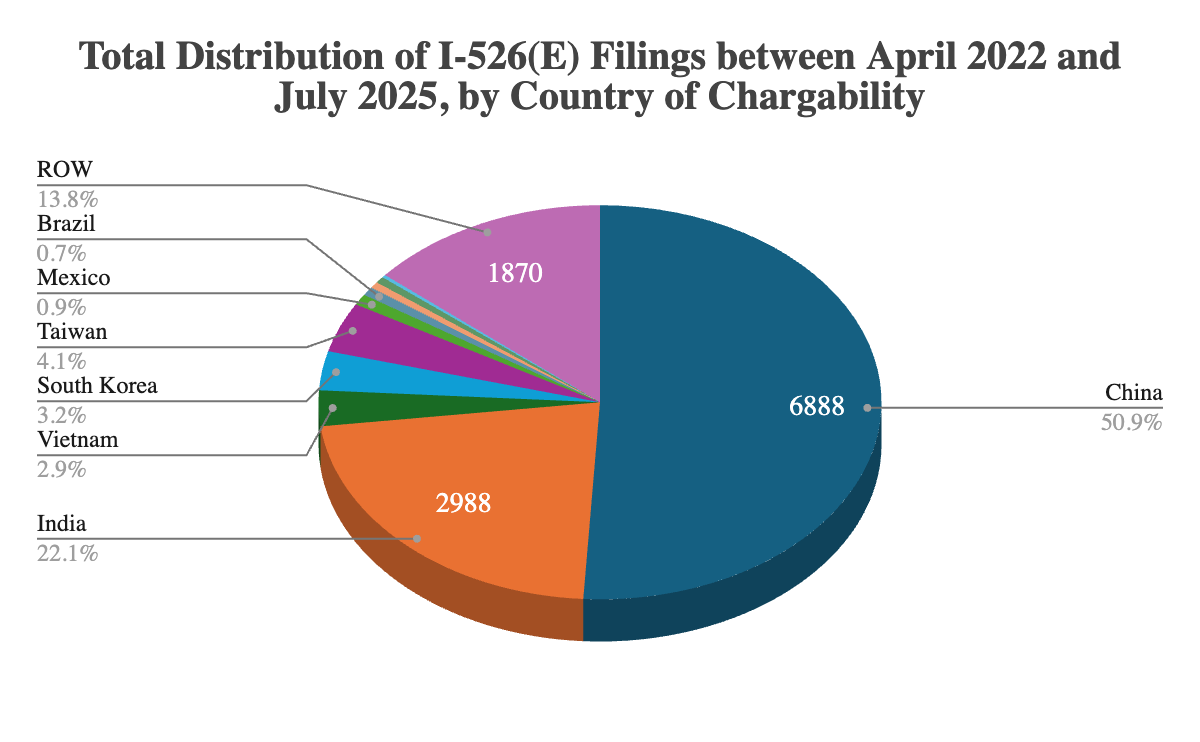
AIIA FOIA Series: Updated I-526E Inventory Statistics for July 2025
AIIA Submits Comments on USCIS NPRM on Updated EB-5 Fee Rule
We Congratulate Senator Gallego for New Legislation that Leverages the EB-5 Program to Build Affordable Housing

We Won The EB-5 Fee Increase Lawsuit

Directory of Professionals
AIIA has curated a list of the top professionals from attorneys, investment specialists, to business plan writers to support all EB-5 stakeholders.
View Directory of ProfessionalsRelated Posts
AIIA FOIA Series: Updated I-526E Inventory Statistics for July 2025
AIIA Submits Comments on USCIS NPRM on Updated EB-5 Fee Rule
We Congratulate Senator Gallego for New Legislation that Leverages the EB-5 Program to Build Affordable Housing
We Won The EB-5 Fee Increase Lawsuit

Stay Up To Date With AIIA
Join our newsletter to stay up to date on EB-5 updates.
By subscribing you agree to with our Privacy Policy and provide consent to receive updates from our company.
Recommended Resources

The Sale of EB-5 Securities Offerings
EB-5 securities sales often use Regulation D (U.S. investors) and Regulation S (foreign investors) exemptions to avoid SEC registration while...
Read More
Choosing between Direct vs Regional Center EB-5 financing
Direct EB-5 suits single investors creating direct jobs; Regional Center EB-5 pools multiple investors, counting direct and indirect jobs for...
Read More
Is EB-5 Regional Center financing right for my project?
EB-5 regional center financing fits large projects creating many jobs, preferably in TEAs, with sufficient funds and investor appeal, but...
Read MoreRecent Blog Posts

Class Action Lawsuit Filed Against USCIS for EB-5 Fee Refunds
Did you pay inflated EB-5 filing fees after April 2024? AIIA has filed a federal class action lawsuit against USCIS...
Learn MoreAIIA FOIA Series: Updated I-526E Inventory Statistics for July 2025
AIIA obtained new FOIA data through July 31, 2025 revealing how USCIS is actually processing EB-5 petitions, showing heavy prioritization...
Learn MoreAIIA Submits Comments on USCIS NPRM on Updated EB-5 Fee Rule
AIIA submitted comments on USCIS’s October 2025 EB-5 fee NPRM supporting revised, lawful fee levels but urging refunds for overpaid...
Learn MoreWe Congratulate Senator Gallego for New Legislation that Leverages the EB-5 Program to Build Affordable Housing
Sen. Gallego's EB-5 bill mobilizes foreign capital to build affordable housing. This collaboration has boosted AIIA's Congressional ties & credibility...
Learn MoreGet In Touch With Us
If you have any questions, inquiries, or collaboration proposals, please don’t hesitate to reach out to us.
 English
  Chinese
  Vietnamese
Responses (0)