The Fight to Protect Good Faith EB-5 Investors
14th July, 2025
The RIA was designed to protect “good faith” EB-5 investors when projects fail due to no fault of their own, but USCIS has failed to implement these protections, leading to lawsuits like those by AIIA co-founder Rajvir Batra and seven other investors. AIIA supports these legal actions to ensure timely notices, 180-day cure periods, and preservation of investors’ immigration status.

The EB-5 Reform and Integrity Act of 2022 (RIA) introduced many protections for good faith investors in the EB-5 Program. Specifically, the RIA sought to protect investors losing their immigration benefits as result of things that are outside of their control, such as fraud and/or other non-compliance.To that end, the RIA has provisions that govern investors’ lawful status if their project’s regional center (RC), new commercial enterprise (NCE), or job-creating entity (JCE) are terminated, debarred, or otherwise impugned.
Under these provisions, certain “good faith” EB-5 investors — i.e., those who have (1) lawfully invested the required funds, (2) maintained their investment for the necessary period, (3) satisfied the job creation requirements, and (4) did not participate in any fraud or wrongdoing — can retain their eligibility for lawful permanent resident (LPR) status. The RIA requires U.S. Citizenship and Immigration Services (USCIS) to notify these affected investors that the underlying conditions for their status have been invalidated, and grant them a 180-day period to take remedial action, if needed. These protections apply to both pre-RIA and post-RIA investors.
While these protections exist on paper, they have not been effectively practiced. In our opinion, USCIS has failed to implement these investor protections as mandated by the RIA. Investors whose projects have become faulty have not received the required notices that would enable them to take remedial action and preserve their path to permanent resident status.
AIIA believes, and demands, that USCIS must timely terminate regional centers and/or debar projects and, critically, issue notices to investors as required by the RIA, so investors may protect their investment and immigration status.
Last year, AIIA’s frequent litigation partner The Galati Law Firm filed a lawsuit against USCIS on behalf of an EB-5 investor, Rajvir Batra, regarding this issue. Mr. Batra is one of the co-founders of AIIA and is, himself, an EB-5 investor. The project in which he invested failed to meet their compliance responsibilities, and USCIS — instead of issuing a notice so its investors could take remedial action — instead chose to deny some of the petitions of those investors.
After a preliminary process, Mr. Batra and USCIS reached a settlement in the case. The terms of the settlement include the following provisions:
- Recognition that some pre-RIA investors who reassociate with other EB-5 projects should not be subject to higher investment amounts to preserve LPR status;
- The acknowledgment that USCIS must send notices of regional center termination to investors in compliance with the RIA before taking adverse action on pending petitions;
- A stipulation reaffirming the 180-day period for reinvestment, after which USCIS may issue a notice of termination of LPR status.
The New Suit
Recently, The Galati Law Firm has filed another lawsuit on behalf of seven EB-5 investors who invested in the same project as Mr. Batra. These seven individuals had invested their funds in the “Texas EB-5 Regional Center,” which was later terminated and, collaterally, undermined their path to LPR status. They were not granted the 180-day period to cure this issue and make a new investment.
In this case, Plaintiffs argue that:
- USCIS failed to terminate the Texas EB-5 Regional Center in a timely manner and failed to issue required notices to investors, preventing them from exercising their rights to reassociate with new EB-5 projects;
- USCIS improperly denied their I-526 petitions despite their entitlement to good faith investor protections under the RIA as of July 1, 2023;
- USCIS violated the Administrative Procedure Act through its conduct, which constituted an “unlawful withholding” of agency action that is prohibited.
AIIA supports this lawsuit filed by The Galati Law Firm and urges USCIS to consider an offer of settlement in the case, akin to the settlement reached in the case of Mr. Batra.
It is critically important, for the credibility and continued success of the EB-5 program, to protect good faith investors who, through no fault of their own, experience collateral attacks on their status because of Regional Center chicanery.
EB-5 investments rarely yield returns at market rates, so the investment comes with a significant opportunity cost. Therefore, the investors’ immigration process is the EB-5 program’s biggest selling point. If investors fear that they will not be protected in no-fault situations (other than the project’s market failure), the EB-5 Program’s popularity will likely decline to the detriment of the U.S. economy.
Should a settlement be reached in the case, it will hopefully allow those investors to continue their EB-5 journey. AIIA hopes that a settlement will establish a pattern for dealing with other, similar situations where investors are implicated in RC, NCE, or JCE failure.
AIIA will continue to monitor the lawsuit closely, and may consider filing an amicus brief in the case if merited by the situation. Our efforts to keep vigil over matters affecting immigrant investors rely on your support. Please donate to AIIA today so that we may continue to keep you informed about the EB-5 program and fight for immigrant investors’ rights.
Directory of Professionals

AIIA has curated a list of the top professionals from attorneys, investment specialists, to business plan writers to support all EB-5 stakeholders.
View Directory of ProfessionalsRelated Posts
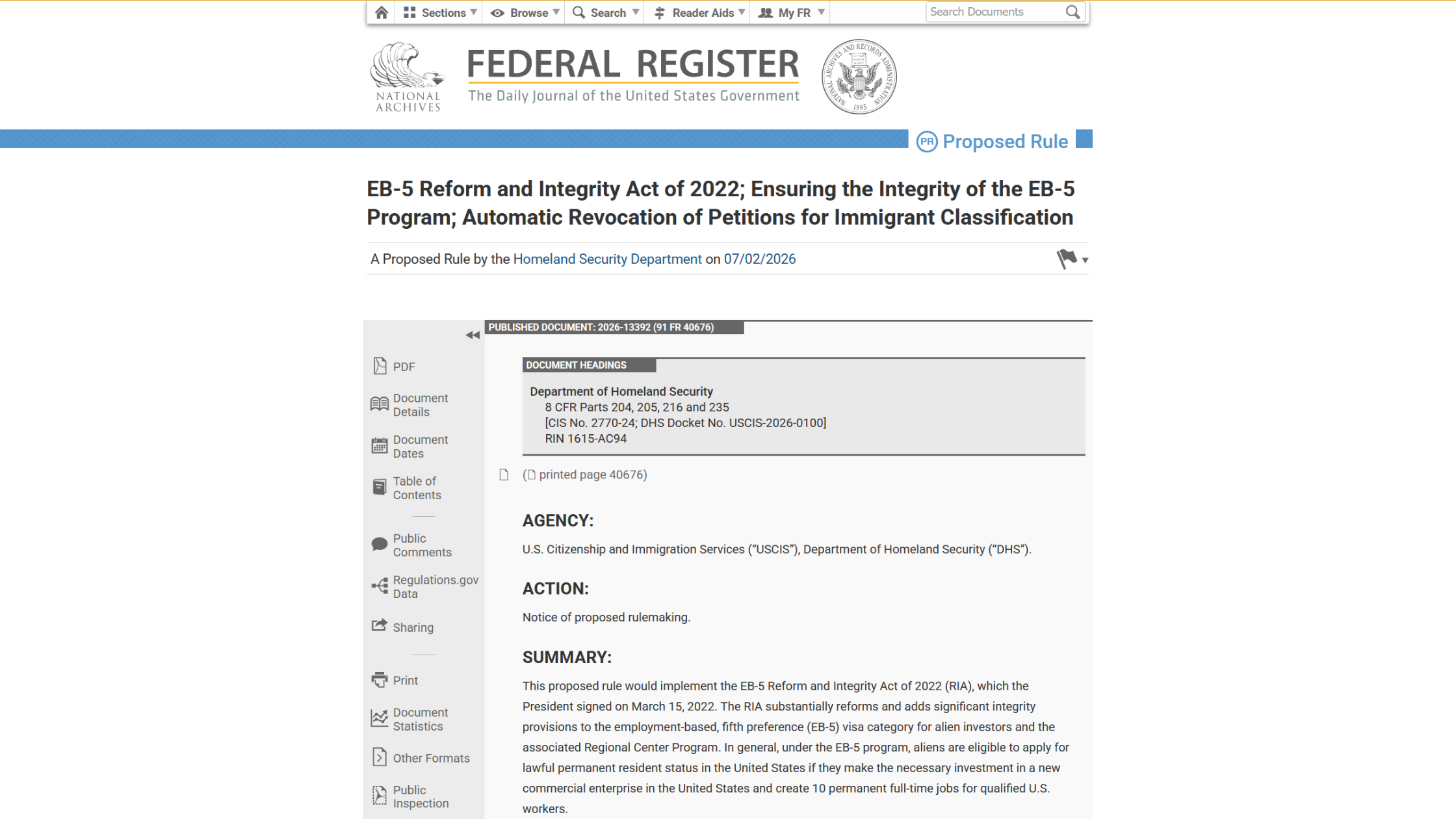
Investor First: Our Comment On The New Proposed EB-5 Rules
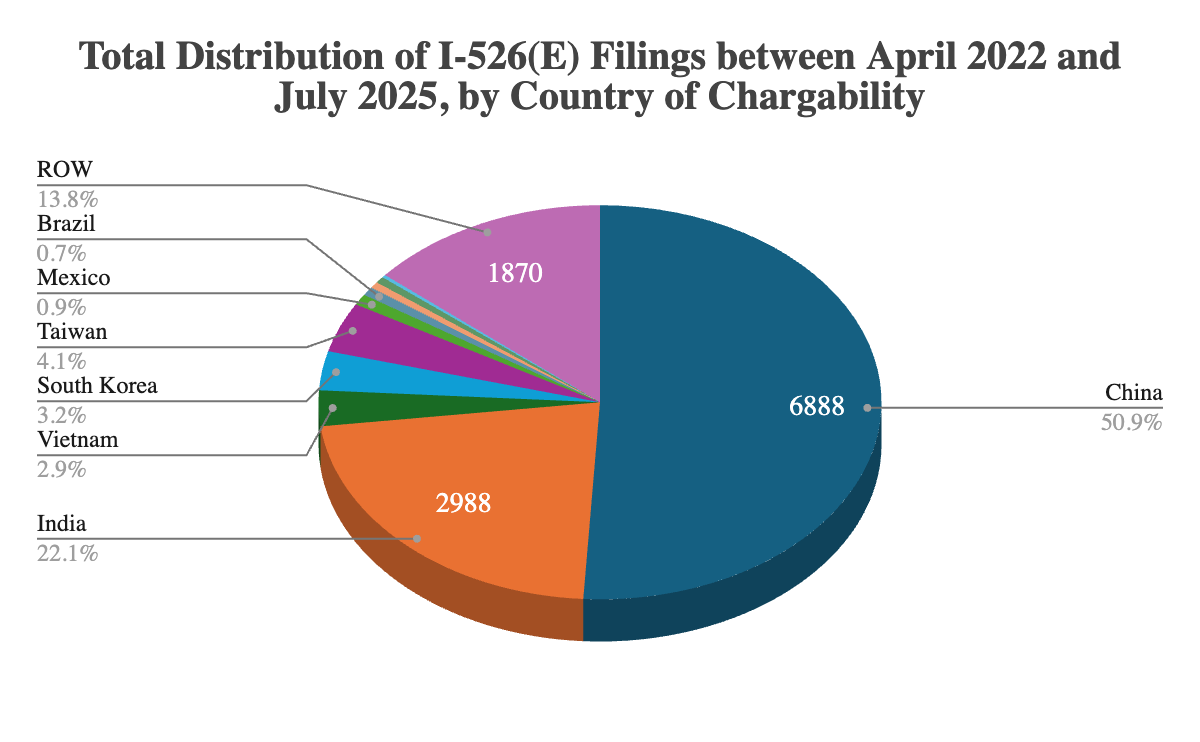
AIIA FOIA Series: Updated I-526E Inventory Statistics for July 2025
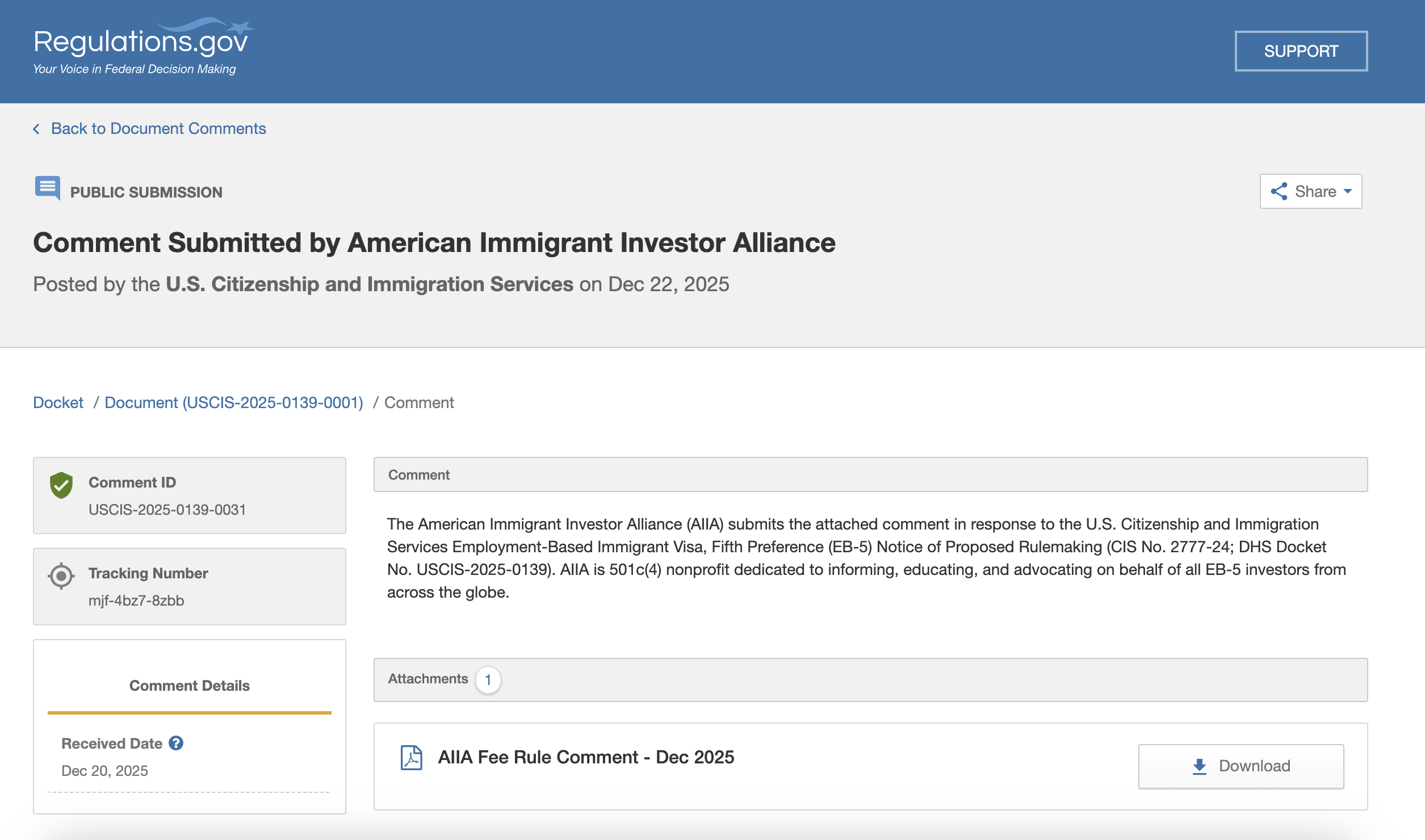
AIIA Submits Comments on USCIS NPRM on Updated EB-5 Fee Rule
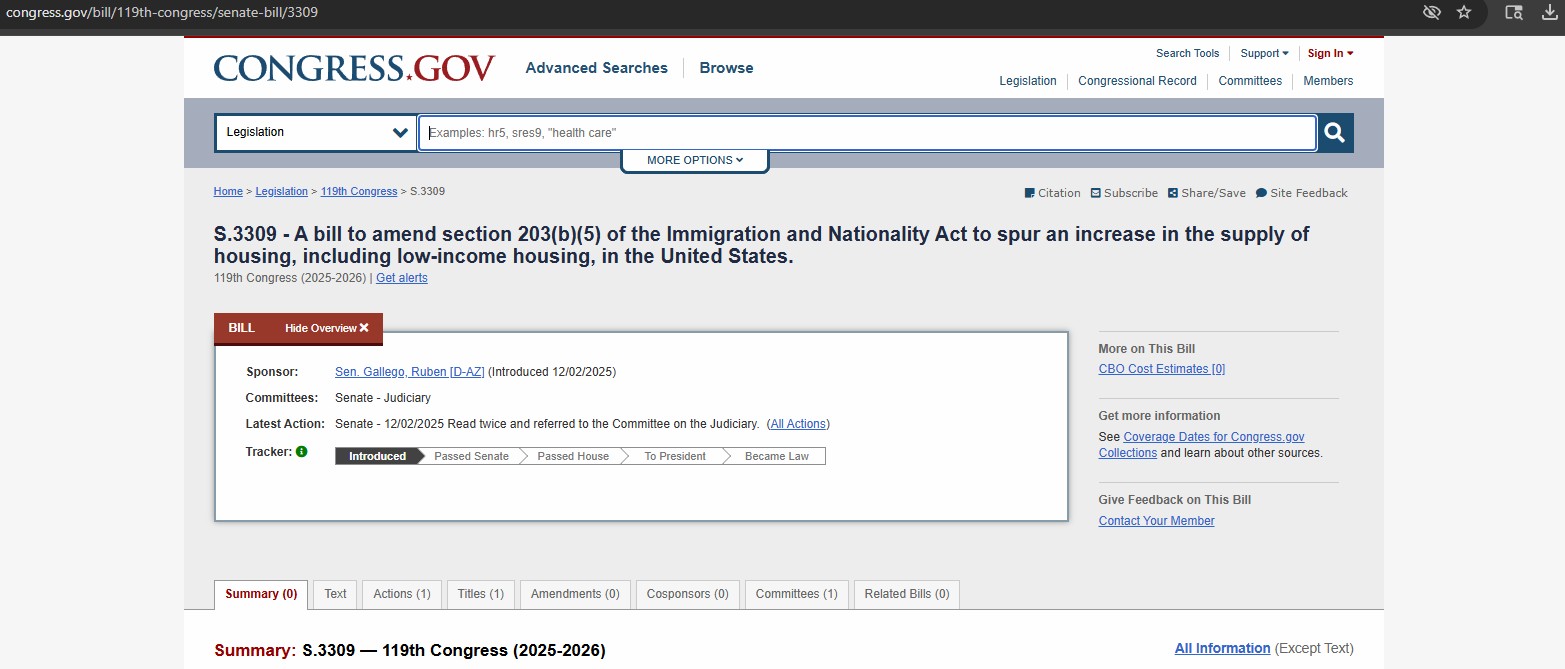
We Congratulate Senator Gallego for New Legislation that Leverages the EB-5 Program to Build Affordable Housing

Directory of Professionals
AIIA has curated a list of the top professionals from attorneys, investment specialists, to business plan writers to support all EB-5 stakeholders.
View Directory of ProfessionalsRelated Posts
Investor First: Our Comment On The New Proposed EB-5 Rules
AIIA FOIA Series: Updated I-526E Inventory Statistics for July 2025
AIIA Submits Comments on USCIS NPRM on Updated EB-5 Fee Rule
We Congratulate Senator Gallego for New Legislation that Leverages the EB-5 Program to Build Affordable Housing

Stay Up To Date With AIIA
Join our newsletter to stay up to date on EB-5 updates.
By subscribing you agree to with our Privacy Policy and provide consent to receive updates from our company.
Recommended Resources

The Issue of Aging Out in EB-5
The Child Status Protection Act (CSPA) helps freeze a child’s age on EB-5 petitions, but long visa backlogs still risk...
Read More
The Sale of EB-5 Securities Offerings
EB-5 securities sales often use Regulation D (U.S. investors) and Regulation S (foreign investors) exemptions to avoid SEC registration while...
Read More
Choosing between Direct vs Regional Center EB-5 Financing
Direct EB-5 suits single investors creating direct jobs; Regional Center EB-5 pools multiple investors, counting direct and indirect jobs for...
Read MoreRecent Blog Posts
AIIA FOIA Series: Updated I-526E Inventory Statistics for May 2026
Investors from India and China still face significant visa backlogs regardless of category, Korea, Taiwan and Vietnam are still investing...
Learn More
The Administration is Attacking EB-5 by Wasting Visa Numbers through an RFE Debacle
USCIS is deliberately issuing baseless, repetitive RFEs demanding already-submitted Form I-693 medical exams from EB-5 and other employment-based adjustment applicants,...
Learn MoreInvestor First: Our Comment On The New Proposed EB-5 Rules
Our comments supporting the two-year sustainment clock while pressing for investor safeguards on third-party promoter liability, source-of-funds burdens, bridge financing,...
Learn More
Class Action Lawsuit Filed Against USCIS for EB-5 Fee Refunds
Did you pay inflated EB-5 filing fees after April 2024? AIIA has filed a federal class action lawsuit against USCIS...
Learn MoreGet In Touch With Us
If you have any questions, inquiries, or collaboration proposals, please don’t hesitate to reach out to us.
 English
  Chinese
  Vietnamese
Responses (0)