Update on the IIUSA vs USCIS Sustainment Lawsuit
31st January, 2025
On Jan. 28, 2025, a court hearing in IIUSA v. USCIS cast doubt on DHS’s two-year sustainment interpretation, risking a return to pre-RIA rules with longer investment periods and redeployment risks. AIIA is fighting back with legal action and needs your support to protect EB-5 investors.

Background: Invest in the U.S.A. (IIUSA), an association of EB-5 regional centers, filed a lawsuit against the U.S. Department of Homeland Security (DHS) that challenges the two-year sustainment period that the EB-5 Reform and Integrity Act (RIA) established for subsequent EB-5 investors. As we mentioned in our first post on this case, AIIA opposes this lawsuit as it will severely harm post-RIA EB-5 investors by limiting their ability to withdraw capital. In response, we have filed an amicus brief in support of DHS’s position and launched a fundraising campaign to involve ourselves in this lawsuit in order to ensure investors’ voices are heard as this lawsuit proceeds. This update summarizes the most recent development in the case: a hearing on motions for dismissal and summary judgement at the U.S. District Court for the District of the District of Columbia on January 28, 2025.
Following up on our previous two blogs where we analyzed the arguments presented by IIUSA, AIIA submitted its amicus brief to the District Court on November 12, 2024.
On the advice of multiple EB-5 industry experts and attorneys, AIIA’s amicus brief exhibited to the court the following arguments that refuted IIUSA’s position:
- We argued that USCIS properly interpreted the RIA to require that an EB-5 investment remain at risk for not less than two years from the first date of the investment. We cite the plain language of the RIA, as well as the U.S. Supreme Court’s recent landmark ruling in Loper Bright Enterprises v. Raimondo, to support our conclusions of law. Additionally, we refuted IIUSA’s speculative and false claims that RCs are being unduly harmed by USCIS’s proper actions. To this end, we cite economic data that clearly shows RCs are thriving under the current EB-5 regime. These facts fly in the face of IIUSA’s claims to the contrary.
- We argued that the plain-language changes by the RIA regarding the sustainment period align fully with Congress’s intent regarding the RIA. Our argument explains to the court how the RIA’s pro-investor reform to sustainment period makes the EB-5 program more accessible and favorable to investors, which supports the program’s overall objective of attracting investments to create jobs in the United States. Contrary to IIUSA’s belief, the primary purpose of the program is to create jobs, and not to provide cheap financing for capital projects undertaken by U.S. investors. Where those two objectives diverge, it is no contest that the former must prevail. It is supported by the RIA.
A full copy of the Amicus Brief filed by us can be found here. We highly encourage all of you to read the brief, especially pages 20-28 that cover the main arguments we made.
The Hearing on January 28, 2025
On January 28, 2025, Judge Ana C. Reyes of the U.S. District Court for the District of the District of Columbia held a preliminary hearing regarding the motions for dismissal and summary judgment in the case. Both parties, IIUSA and the DHS, were represented by their respective attorneys. AIIA attended the hearing in person.
Unfortunately, the attorney representing DHS seemed unprepared and struggled to answer questions from the judge, even those addressed by both DHS and AIIA in our respective briefs. As a result, the judge appeared unconvinced by the DHS’s argument that the RIA established a two-year sustainment period for investments beginning from the date of the investment. At the end of the hearing, the judge ordered the two parties to confer with each other and file a Joint Status Report (JSR) before February 27, 2025.
Our Assessment
It is clearly bad news for post-RIA investors that the judge did not appear to recognize the merits of DHS’s position. The case could be decided in IIUSA’s favor. If that happens, USCIS’s interpretation of the two-year sustainment period would be vacated and would no longer benefit post-RIA investors, including those who have already invested.
At this stage, it is difficult to predict the outcome of the conference between the DHS and IIUSA.
If the two parties are not able to agree on a common position, the judge will thereafter rule on the motions for dismissal and summary judgment, which may favor IIUSA. In that case, the post-RIA investors will no longer benefit from the RIA’s two-year sustainment period, which begins from the moment of initial investment.
We believe that the parties should discuss the following questions in their conference:
- Should USCIS go through a formal rulemaking process? If so, what would be the applicable sustainment period during the interim period until the final rule is published?
- Would the parties agree to a sustainment period that is longer than two years? If they do, how long will it be and when will it start?
- When will USCIS complete the rulemaking process and release the formal guidance on the sustainment period.
Overall, the hearing has not gone decisively in favor of USCIS. And that is bad news for the investors, who have to bear the uncertainty over the sustainment period and fear the demon of redeployment until final rules are in place.
The Effect upon Investors
As we explained in our previous blog posts, if IIUSA succeeds in the lawsuit, USCIS’s current interpretation will become invalid. The EB-5 sustainment period would likely then revert to the pre-RIA policy, whereby investors had to sustain their investment until they completed their period of conditional Lawful Permanent Residency. Given the invisible backlog that has already accumulated in the rural and high-unemployment area set-aside categories, and the requirement that investors’ capital remains “at risk” during the period of sustainment, this development may necessitate the redeployment of investors’ funds into projects that may well exceed their risk tolerance.
Although IIUSA has requested USCIS to make rules for a five-year sustainment period, the process for doing so normally takes years. In the meantime, much uncertainty would persist about the final rule and investors would likely be subject to horrible pre-RIA sustainment rules.
AIIA’s Response
AIIA’s legal counsel, Jesse Bless, and our lobbyist, The Honorable Bruce A. Morrison, are advising our organization on options to respond if the case results in an unfavorable outcome. One option to intervene in this case is as a party whose interests are no longer represented. So far, on the advice of counsel, we have merely filed an amicus brief in support of the DHS in this case, which remains the lead defendant. We have been the only party involved in the case that has exclusively represented immigrant investors’ interests. Intervention would require proving that AIIA’s interests are not already represented, which means that the court’s willingness to permit intervention is uncertain.
Intervention in the case would enable us to file merits briefs and argue against IIUSA’s position as well as to directly bring investors’ views to the bench.
How Can I Support This Battle?
Our legal efforts to defend investors will require your support. Litigation is expensive and, should AIIA intervene, we will be the only party challenging IIUSA and its predatory regional centers at the appellate level. Additionally, we intend to deploy our lobbyist to influence any internal administrative process that may occur in response (e.g., notice-and-comment rulemaking). This effort, too, will require funds. To safeguard investor interests, please donate to this fundraiser today and share this blog with other members of the community.
We wish to thank Lily Guo of ARCFE and Ashok Adusumilli of EB5 Resources for their generous contributions to our efforts. Their support is invaluable, yet AIIA’s fight to challenge IIUSA and its regional centers’ threat to investors’ interests must carry on. Please consider supporting us today to protect investors and, by extension, the EB-5 community.
Directory of Professionals

AIIA has curated a list of the top professionals from attorneys, investment specialists, to business plan writers to support all EB-5 stakeholders.
View Directory of Professionals



Leave your comments
Responses (1)
Directory of Professionals
AIIA has curated a list of the top professionals from attorneys, investment specialists, to business plan writers to support all EB-5 stakeholders.
View Directory of Professionals
Stay Up To Date With AIIA
Join our newsletter to stay up to date on EB-5 updates.
By subscribing you agree to with our Privacy Policy and provide consent to receive updates from our company.
Recommended Resources

How to Find a Good EB-5 Litigation Attorney
Choose an attorney with EB-5 and litigation experience who is organized, detail-oriented, and avoids making guarantees. You may need a...
Read More
The Redeployment Conundrum
Redeployment litigation arises when NCE managers reinvest EB-5 funds without proper judgment, exposing investors to unnecessary risk despite broad contractual...
Read More
“Privity” in EB-5 Litigation
EB-5 issuers often design complex structures and narrow “privity” relationships to make litigation difficult, forcing investors into uphill battles and...
Read MoreRecent Blog Posts

Class Action Lawsuit Filed Against USCIS for EB-5 Fee Refunds
Did you pay inflated EB-5 filing fees after April 2024? AIIA has filed a federal class action lawsuit against USCIS...
Learn More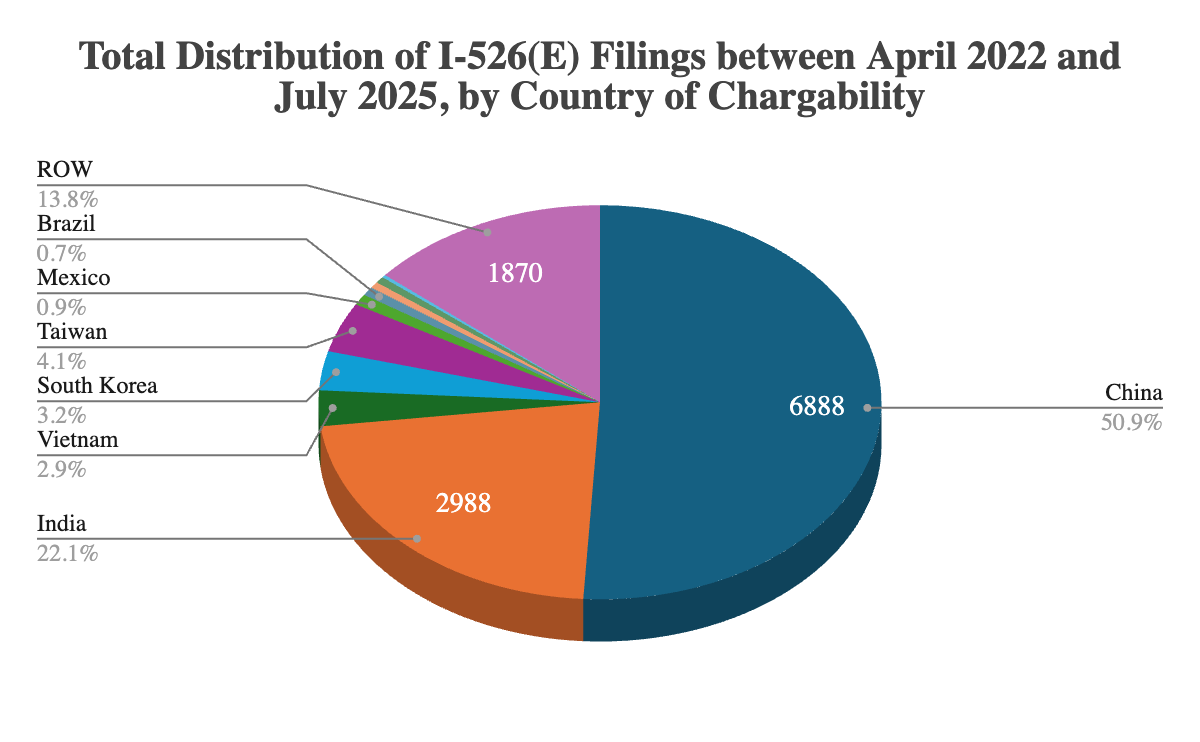
AIIA FOIA Series: Updated I-526E Inventory Statistics for July 2025
AIIA obtained new FOIA data through July 31, 2025 revealing how USCIS is actually processing EB-5 petitions, showing heavy prioritization...
Learn More
AIIA Submits Comments on USCIS NPRM on Updated EB-5 Fee Rule
AIIA submitted comments on USCIS’s October 2025 EB-5 fee NPRM supporting revised, lawful fee levels but urging refunds for overpaid...
Learn More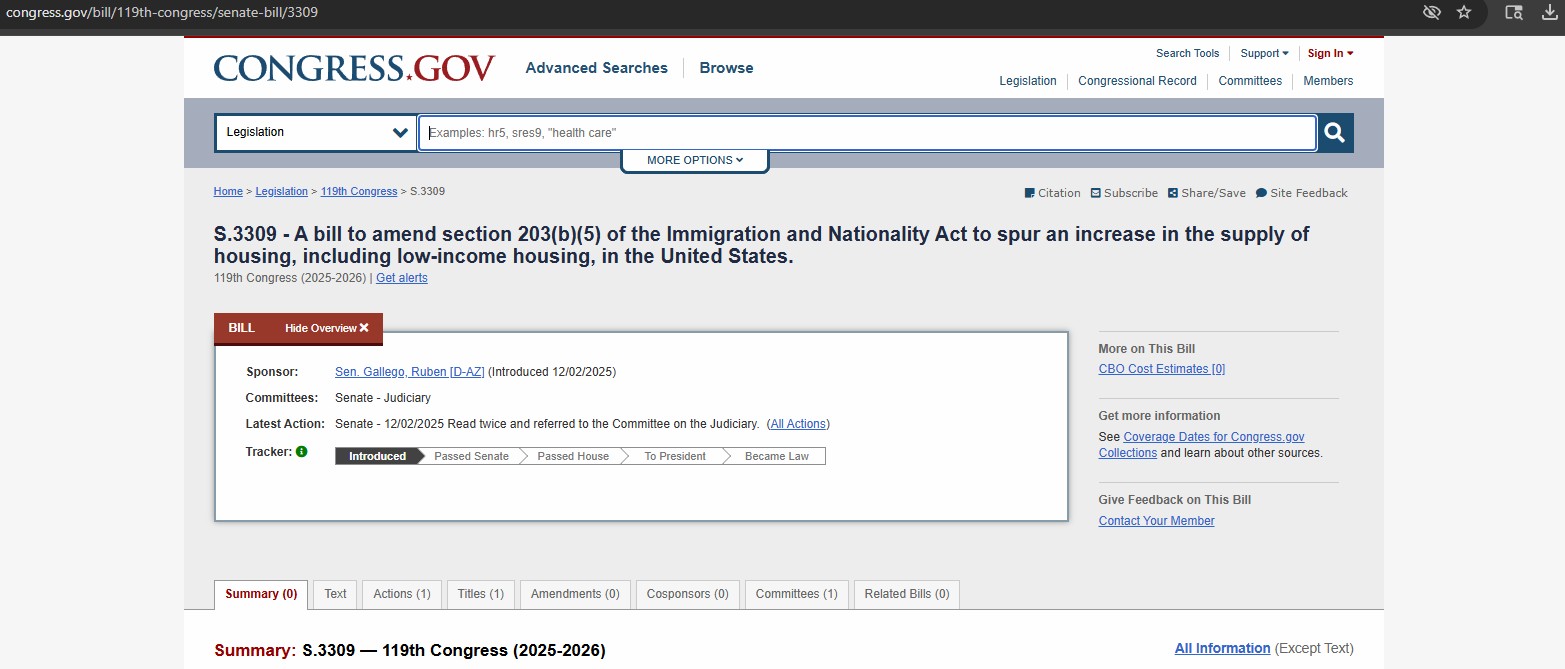
We Congratulate Senator Gallego for New Legislation that Leverages the EB-5 Program to Build Affordable Housing
Sen. Gallego's EB-5 bill mobilizes foreign capital to build affordable housing. This collaboration has boosted AIIA's Congressional ties & credibility...
Learn MoreGet In Touch With Us
If you have any questions, inquiries, or collaboration proposals, please don’t hesitate to reach out to us.
 English
  Chinese
  Vietnamese
Thank you for your efforts! As an EB-5 attorney who represents investors, this is much needed. We need to fight for the investors as this will have a negative effect on the program and the interest of investors in the program.