A summary of the EB-5 redeployment issue discussing how EB-5 investors must keep their money invested for a certain amount of time. This can be a problem for investors because the processing time for EB-5 petitions can be very long. AIIA is lobbying for changes to the redeployment policy that would benefit investors.
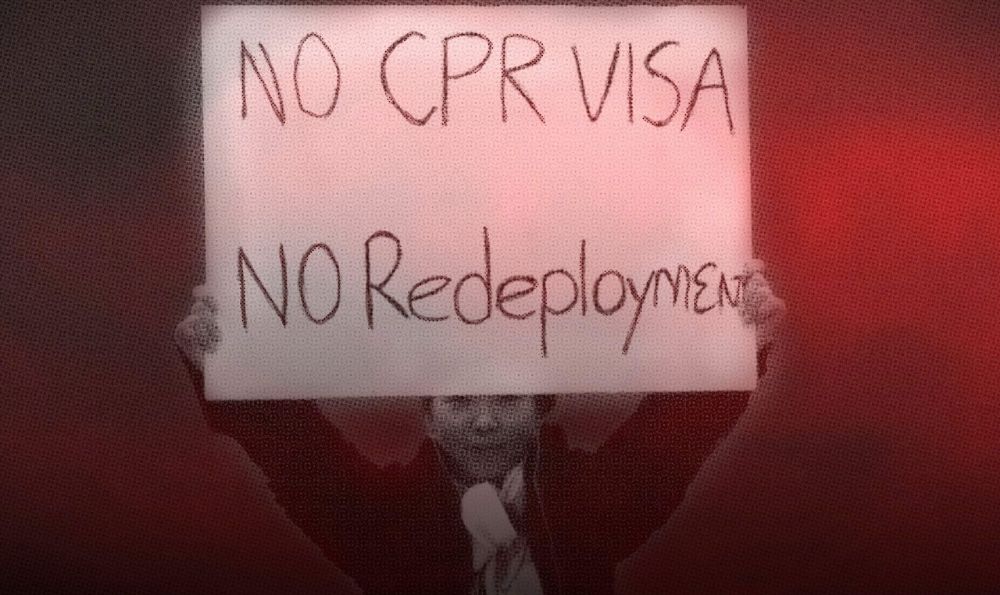
Redeployment has been a growing source of risk and heartache for EB-5 investors, and an important focus for our advocacy efforts since Reauthorization. This article examines the origins of redeployment policy, where it stands today, why redeployment is such a problem for EB-5 investors, and what can be done to address the problem.
Important Note: USCIS recently announced they will be hosting a listening session on Monday, March 20th, at 1:30 pm EST to discuss the agency’s response to the RIA’s update to the sustainment period. We encourage all EB-5 investors to register for this meeting to know directly from USCIS about how the agency plans to address this new legislative requirement.
2023-24 Update: In October of 2023, USCIS released their new guidance on the sustainment period after AIIA’s meeting with the CIS Ombudsman’s office. Read more here. It has been subsequently challenged by IIUSA.
What is redeployment?
In order to obtain their permanent residency, EB-5 petitioners who invested prior to March 2022 need to keep their funds “sustained” and “at risk” in an EB-5 project until the end of their two-year conditional residency period.
As the immigration process continues to lengthen due to slower processing times and restricted visa availability, the sustainment period also lengthens. This means that EB-5 investors who would have carefully vetted their first investment project and were offered a five to seven year investment exit strategy, now find out that the sustainment requirement completely changes their investment outcome and risk thesis.
The sustainment period requires that investors keep their funds in their New Commercial Enterprise (NCE) until the end of their conditional residency, or risk denial of their immigrant petition. If the investor’s petition for removal of conditions (I-829) is not approved before the Job Creating Entity (JCE) repays the investment back to the NCE and the investor wishes to preserve their immigration process, then their investment must be sustained – i.e. continue to be kept “at risk”– by re-deploying the EB-5 project repayment proceeds into one or more subsequent investments.
To avoid any risk of denials by failure to meet the sustainment requirement, investment issuers adopted a practice called “redeployment” in which the NCE manager or investment issuer reinvests the funds from the initial project repayment in a whole new project, which the investor has no chance vet upfront, at least not with the same scrutiny as they did their first investment. While EB-5 investment issuers did not create this policy, they naturally stand to benefit from a situation which enables them to maintain control over the investment funds for a longer period of time, earning the net-interest margin, sometimes over multiple reinvestment cycles. Meanwhile, EB-5 investors must watch helplessly as funds repaid from their first project are redeployed to other projects which can often offer an unfair return relative to the increased investment risk.
For many investors who took great care in selecting an EB-5 investment project, it is unconscionable to find themselves in a situation where the project they chose successfully carried out its business plan, created the requisite jobs for EB-5, and satisfied the repayment obligation, only for none of this to matter – as the proceeds of their capital are on way to a strange new project In some unfortunate cases, one of the subsequent investments may end up failing, and causing a huge loss of capital to the investor.
As the immigration process continues to lengthen, with I-526 processing alone reaching nearly five years even for investors from non-backlogged countries, more and more investors are likely to be affected by redeployment. This article outlines what you can do now to try to protect yourself and how AIIA is working to help the immigrant investor community.
What is the history and status of redeployment?
Redeployment policy and practice have been under development since 2015. Redeployment has three main pillars: (1) interpretation of the immigration requirement that EB-5 investment should be “sustained,” (2) that it be “at risk,” and (3) the fact that slow USCIS processing and limited visa availability have inordinately expanded the time that investors remain subjected to sustainment requirements. Each pillar of redeployment practice is controversial and subject to challenge and change, as evidenced in its history to date.
2015: Retrogression and redeployment emerge as issues
- The timing problem behind redeployment came into focus in 2015 when the Visa Bulletin, for the first time, signaled excess demand for visas and started publishing EB-5 Final Action Dates for China. The EB-5 industry peppered USCIS with questions about what to do when projects could create jobs and repay EB-5 funds before some investors could complete the immigration process. USCIS promised to draft a policy. (The timing problem in 2015 was mainly limited to Chinese visa backlogs; USCIS petition processing times were still under a respectable two years. Initially, the issue around redeployment emerged as a result of the problem of retrogression.)
- In August 2015, USCIS published a Draft Policy Memorandum that introduced several interpretations that later came to define the redeployment practice, including: (1) the idea that “the statute and regulations, when read together, require the invested capital to be ‘at risk’ throughout the sustainment period,” combined with (2) new guidance about what defines “at risk” and “sustainment period.” These fundamental interpretations were immediately controversial, and challenged by top EB-5 attorneys.
2016/2017: Redeployment practice, and then policy, take shape
- Throughout 2016 and into 2017, USCIS did not finalize the 2015 draft memorandum. In response to repeated questions at EB-5 stakeholder meetings, USCIS stated that the public could look at the 2015 memo to “see what we’re thinking” about the redeployment question, but could also expect changes based on public feedback to that draft and Investor Program Office’s consultation with securities professionals.
- While USCIS delayed policy publication, EB-5 issuers were already facing the practical question of how to handle EB-5 investor funds repaid from initial deployments even as investors remained in the immigration process. Lawyers made their best guesses about what policy USCIS would eventually formalize, and offered this guidance to clients, especially those with investors from backlogged countries. Redeployment practice, as a necessity, emerged and took shape in advance of official redeployment policy.
- On June 14, 2017, USCIS finally published an official policy for redeployment with an update to Chapters 2, 4, and 5. The policy was somewhat revised from the 2015 draft but was still controversial, with immigration attorneys such as Robert Divine and Ron Klasko pointing out problems and ambiguities in the policy.
2018-2021: Redeployment policy continues to be questioned and implemented
- The industry continued to question USCIS about redeployment. IIUSA sent a June 2018 letter to USCIS pointing out ambiguities in the 2017 policy. Having received no response, IIUSA sent a strongly-worded Memo to USCIS on Redeployment Policy in April 2019. The memo pointed out why the redeployment requirement should not even exist, since neither statute nor regulation nor precedent supports a requirement to redeploy EB-5 investment into additional business activity after the job creation requirement has already been met and funds have been returned to the NCE. The memo went on to make the case that if USCIS still persists in requiring redeployment, the options for redeployment investment should not be arbitrarily limited.
- USCIS did not soften the 2017 redeployment policy in response to public feedback. The one redeployment policy update, in July 2020, was a new and apparently arbitrary restriction on geographic area. Once again, the industry questioned the policy.
- While sections of the EB-5 industry questioned the redeployment policy in theory, that policy still existed and was implemented in practice, to the distress of investors. Some investors filed lawsuits alleging bad behavior by issuers in the context of redeployment, including fraudulent self-dealing, threats, and intimidation.
- Meanwhile, retrogression grew worse for China and spread to Vietnam and India, and EB-5 investors from all over the world suffered as the median I-526 processing time grew to four years. As processing time for immigrant petitions grew, more investors faced greater exposure to the risks of redeployment and this continues today for investors who filed before March 2022.
2022 – present: Redeployment policy since the EB-5 Reform and Integrity Act of 2022
The EB-5 Reform and Integrity Act of 2022 (RIA) passed on March 15, 2022, and included several provisions that bear on redeployment.
- In one sense, RIA strengthened redeployment by codifying it into law. A policy that could previously be challenged in toto as an “unjustifiable USCIS invention” now gets named specifically in the Immigrant and Nationality Act (See INA 203(b)(5)(F)(v) “Parameters for Capital Redeployment.”) The new law officially allows NCEs to redeploy EB-5 investor funds “anywhere within the United States,” and states that the capital must “remain at risk” after repayment and “not redeployed in passive investments such as stocks and bonds.” This part of the new law empowers issuers, takes no account of investor concerns or voices, turns a blind eye to the instances of misuse of redeployment by issuers, and increases the difficulty of theoretical challenges to redeployment policy.
- At the same time, however, RIA has provisions that challenge two pillars of redeployment: the sustainment policy and long processing times. As explained by attorney Robert Divine, RIA deleted the old requirement to sustain investment “throughout the period of the alien’s residence in the United States,” and inserts a new, much shorter requirement: the investor’s capital invested in the NCE “is expected to remain invested for not less than 2 years.” (However, this revision apparently only applies to investors who filed I-526 after March 15, 2022.) RIA also included a section requiring USCIS to study how to achieve “Timely Processing,” which, in theory, should reduce the redeployment risk from long processing times.
- There have been no regulatory announcements from USCIS about the changes imposed on the EB-5 sustainment period or redeployment, both of which have a direct and pressing impact on the safety of most EB-5 investments. These changes were mentioned on USCIS’s last public engagement call in October, when Paul Egan, Acting Policy Division Chief for the government agency, discussed USCIS’s “at risk requirements” for investor funds, specifically pertaining to sustainment requirements for new investors which are codified in the RIA. He stated: “[these] modifications relieve the burden on new investors of maintaining their investment at risk for long timeframes well beyond the scope of the new investment project.” USCIS has since announced that they will host a listening session on March 20th to discuss changes to the sustainment period since the RIA.
- Egan’s statements were broad and relatively vague, given USCIS’s lack of apparent response to these program changes. Egan stated that the new RIA language “modifies sustainment requirements for investors filing I-526 petitions on or after the 2022 act,” confirming that the adapted sustainment period requirements apply only to post-RIA investors. We suspect that these changes may bring good news for investors who have filed their immigrant petitions after the RIA was passed, but they are likely to leave the pre-RIA investors stuck with the same problem of redeployment for years to come
- If future investors are not theoretically or practically required to sustain EB-5 investments for such a long period of time, then redeployment will cease to be such a problem for post-RIA investors. While it is still early to draw conclusions about how the RIA changes will play out, we at AIIA feel EB-5 investors must be prepared to make their voices heard in the comment process in order for USCIS to take a position that will be positive for investors. This is especially important as USCIS is in the midst of drafting policy and regulations to implement RIA.
Why is redeployment such a problem for EB-5 investors?
As if the waiting periods were not anxiety-inducing enough, some investment issuers have taken advantage of this situation, redeploying investor funds to any project of their choosing, even if the business plans and terms of the new redeployment investment may be unfavorable to the investor. In many cases, investors are often given no say in which types of projects their funds are redeployed, resulting in NCEs and issuers investing in projects with disproportionate interest returns for managers, or making new investments against the better financial interests of the investor. Additionally, investors who seek to retain their investment funds or opt to be repaid have allegedly faced threats through calls from their issuer threatening to disqualify their EB-5 applications or receive less funds overall if they opted for repayment rather than redeployment. We have witnessed EB-5 issuers accused of racketeering, or using intimidation as a money-making tactic to exploit immigrants less familiar with the U.S. immigration system. Facing a 15+ year wait, many Chinese EB-5 investors have attempted to get their money back but it is evident that this can be a long and expensive affair.
Issuers have been accused of not disclosing to investors about the long immigration backlog and how their funds would not be returned to them for many years and using language barriers to their advantage to gain more profit. Meanwhile, the nightmare of redeployment keeps many investors awake at night with stress over losing their life savings in a country that promised them both repayment and a better life via a Green Card. Currently there is an estimated $23 billion USD which may be headed towards redeployment to keep investors’ funds at risk; however, there is no certainty that this money will eventually come back to the EB-5 investors because of the loophole that is created by the redeployment policy that the bad actors will stand ready to exploit to their full advantage.
Even well-intentioned and ethical investment issuers, who are ready to repay their investors upon the successful completion of the EB-5 investment, are unable to do so because the “at risk” requirements mean redeployment is necessary in order to fulfill the sustainment-period requirements and maintain Green Card eligibility for their investors.
The RIA adjusts sustainment periods and redeployment conditions in a way that could be favorable for investors in the program, but disproportionately favors post-RIA investors. We anticipate that the practice of redeployment COULD be ended for new investors, but we must wait to see how USCIS interprets the law in its policy manual or through other guidance to confirm this theory. Not to mention, increased processing times, COVID delays, embassy and consulate closures, visa backlogs, and more prominently, the EB-5 program lapse, have further delayed the end of conditional residency for many investors, meaning that redeployment will become far more common until it becomes a permanent feature of the EB-5 process for pre-RIA investors. Has the United States created two classes of investors by offering new investors more favorable terms for the same outcome that was promised to previous investors? If so, is that conscionable in the greatest free market in the world?
What is AIIA doing to challenge redeployment?
AIIA has long lobbied against the redeployment clauses and the degrees of freedom allowed to investment issuers vis-a-vis redeployment in the RIA. In 2021, when AIIA was lobbying for the grandfathering provision (which was eventually included in the RIA), we learned about certain concerning proposals contained in the proposed so-called ‘industry-consensus’ bill. In our October 2021 newsletter we informed our supporters of three noteworthy items in that bill that would impact investors. One of the proposed provisions was language which would codify redeployment policy, and give a wide leeway to the NCE with no mention of any role for, or control by investors, over redeployment decisions concerning their capital.
Right up until the final negotiations of the RIA, AIIA’s lobbyist also worked with congressional staff to incorporate additional investor-friendly provisions above those that were being included, namely, requiring investor consent before redeploying funds. We expressed the plight of investors to Congressional staffers, specifically explaining that the current USCIS policies and industry provisions were not inclusive to pre-existing investors and did not afford investors any agency over their redeployed funds, potentially for many years while they waited in the long visa queue to receive their green cards. However, our efforts to add this provision did not succeed. Investors that began their EB-5 journey before March 2022 will still have to deal with this issue for years to come.
Investor consent is crucial for USCIS to properly oversee investment issuers and managers, many of whom have shown a track record of using legal and financial leverage over immigrant investors. Without investor consent, investment issuers are still given a wide latitude. This will be one of our main priorities when we begin our public advocacy and lobbying in 2023.
Our work from here is to encourage USCIS to create an accountability mechanism for addressing the redeployment issue for pre-RIA investors and ensure that new investors are aware of the new sustainment period requirements, even if these provisions are not yet articulated comprehensively by USCIS itself. Many pre-RIA investors are left in the dark as to when they could receive their redeployed funds back, or whether NCEs are able to even continue redeploying old investor funds.
If redeployment is not ended for all, or at the very least if the sustainment requirement is not ended for all, the investment issuers and NCE managers who have abused the practice in the past will continue to do so, and EB-5 applicants will suffer the emotional and financial consequences of being forced to choose between immigration and financial security.
We will continue to update you, our investor and member community, with updates to this provision as we learn more information about redeployment in the post-RIA period. If you are an EB-5 stakeholder looking to join our online community, support our efforts, sign up through this contact form.
Our work at AIIA is never finished, as long as immigrant investors in the EB-5 program struggle to find justice in their immigration journey. Our work is made possible by our member and donor communities who help fund our administrative and public advocacy efforts. If you are interested in supporting our organization and the valuable work we do, you can visit our Take Action page and consider becoming a member.
As an EB-5 investor, what can I do today to protect myself from issues around redeployment?
- Read your PPM (Private Placement Memorandum) and operating agreements. This is the document you signed when you first made your investment and explains what the timelines are for the JCE to repay your money to the NCE. Look for provisions governing redeployment of funds.
- Contact your investment issuer to find out exactly when your funds are due for repayment from the EB-5 investment project. In large projects, investments can be made in tranches so not all investors will come up for repayment at the same time.
- If it looks as if your I-829 will not be approved before your repayment date, start to prepare for redeployment now. Reach out to your issuer. Do you know who the right person to talk to about redeployment would be? Make a note to contact your regional center around 6-12 months before the deadline to ask what their plans regarding redeployment are. Keep written records of all correspondences.
- Try to find other investors in the same project who will face redeployment at the same time as you. Investors can have significantly more influence together than alone.
- While it is more likely than not that you will be unable to change how or when your issuer reinvests your funds, the greatest impact all investors can have is by supporting AIIA in our effort to end the need for redeployment. Contact us if you wish to volunteer or more importantly – donate to the organization to support our lobbying efforts. By working together, we can protect the investments of thousands of individual investors.
- We highly encourage all investors to attend USCIS’s Public Engagement Call on March 20th and submit questions ahead of time regarding the sustainment period. Questions may be submitted by email to USCIS using the subject line “Question: EB-5 Engagement March 20, 2023” by 4 pm ET Friday, Feb. 10.
As always, please feel free to send us any questions, comments, and concerns via our contact page.
Directory of Professionals

AIIA has curated a list of the top professionals from attorneys, investment specialists, to business plan writers to support all EB-5 stakeholders.
View Directory of Professionals

Leave your comments
Responses (2)
Directory of Professionals
AIIA has curated a list of the top professionals from attorneys, investment specialists, to business plan writers to support all EB-5 stakeholders.
View Directory of Professionals
Stay Up To Date With AIIA
Join our newsletter to stay up to date on EB-5 updates.
By subscribing you agree to with our Privacy Policy and provide consent to receive updates from our company.
Recommended Resources

How to find a good EB-5 Litigation Attorney
Choose an attorney with EB-5 and litigation experience who is organized, detail-oriented, and avoids making guarantees. You may need a...
Read More
The Issue of Aging Out in EB-5
The Child Status Protection Act (CSPA) helps freeze a child’s age on EB-5 petitions, but long visa backlogs still risk...
Read More
The Redeployment Conundrum
Redeployment litigation arises when NCE managers reinvest EB-5 funds without proper judgment, exposing investors to unnecessary risk despite broad contractual...
Read MoreRecent Blog Posts
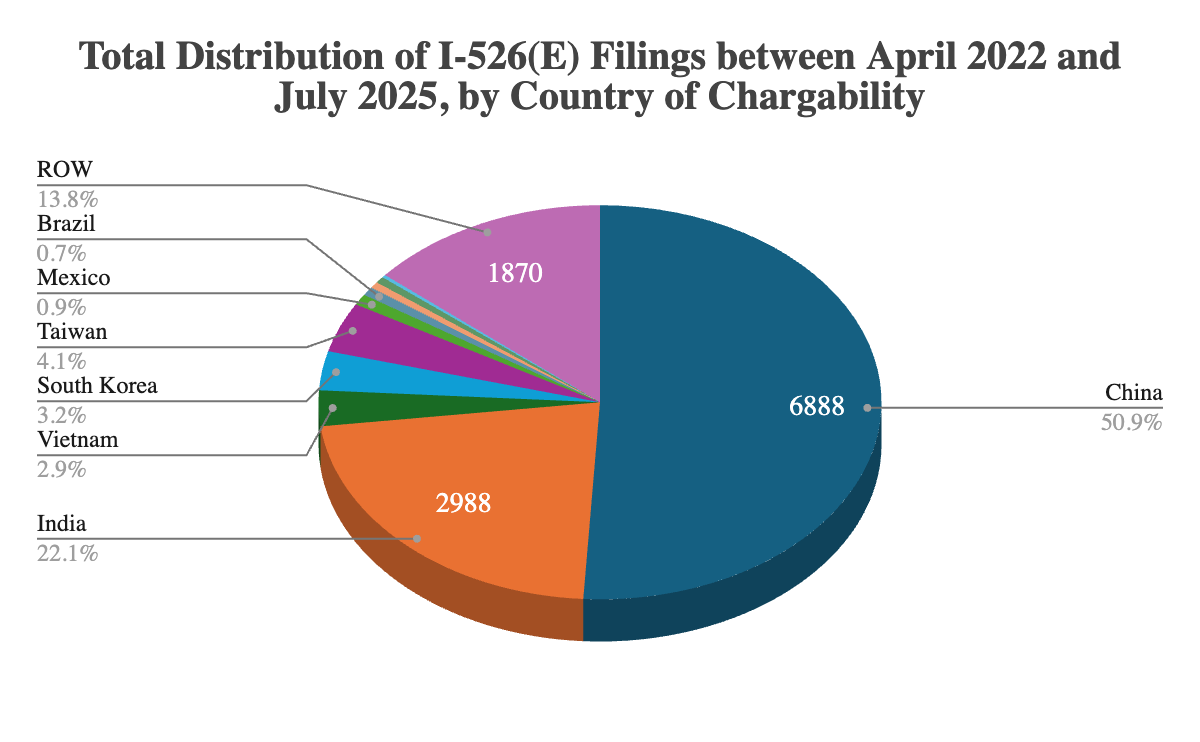
AIIA FOIA Series: Updated I-526E Inventory Statistics for July 2025
AIIA obtained new FOIA data through July 31, 2025 revealing how USCIS is actually processing EB-5 petitions, showing heavy prioritization...
Learn More
AIIA Submits Comments on USCIS NPRM on Updated EB-5 Fee Rule
AIIA submitted comments on USCIS’s October 2025 EB-5 fee NPRM supporting revised, lawful fee levels but urging refunds for overpaid...
Learn More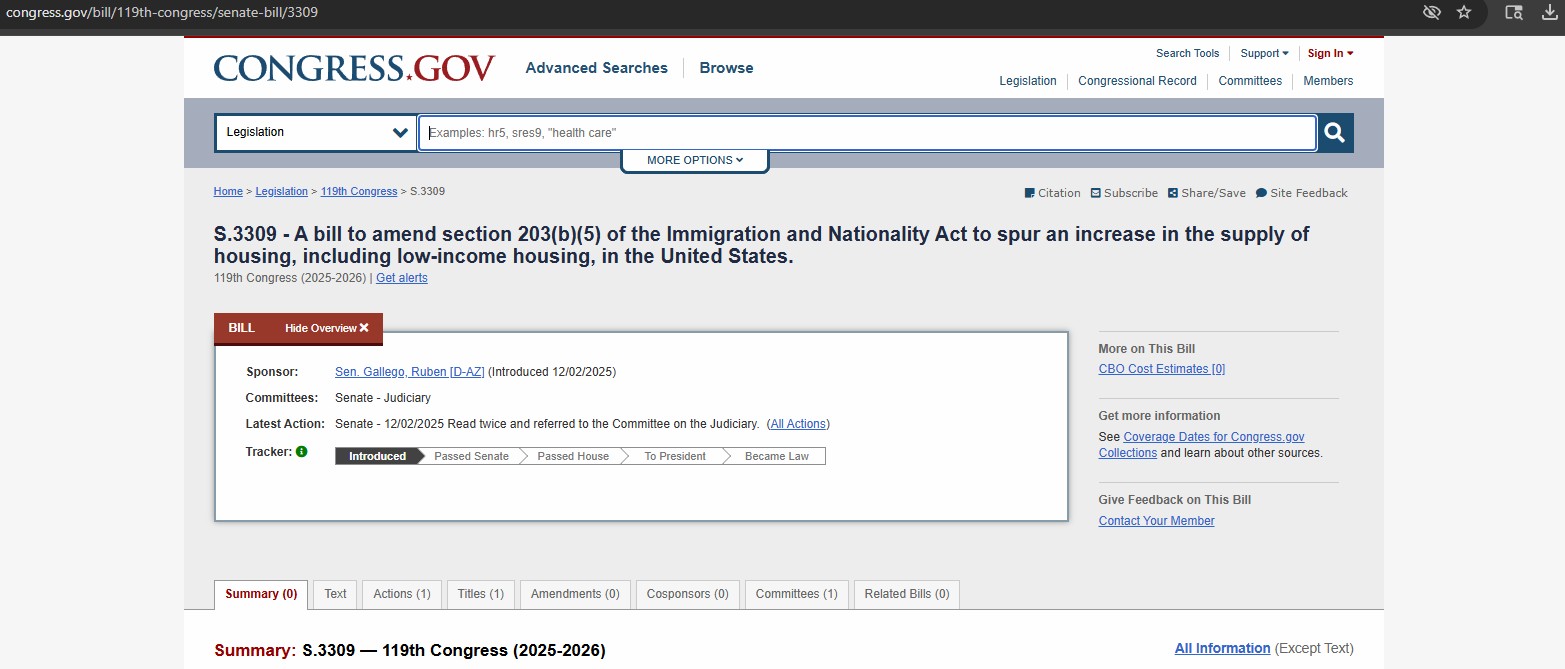
We Congratulate Senator Gallego for New Legislation that Leverages the EB-5 Program to Build Affordable Housing
Sen. Gallego's EB-5 bill mobilizes foreign capital to build affordable housing. This collaboration has boosted AIIA's Congressional ties & credibility...
Learn More
We Won The EB-5 Fee Increase Lawsuit
AIIA successfully won its lawsuit against USCIS’s April 2024 EB-5 fee increases, with a federal judge ruling that the agency...
Learn MoreGet In Touch With Us
If you have any questions, inquiries, or collaboration proposals, please don’t hesitate to reach out to us.
 English
  Chinese
  Vietnamese
Hi there,
What was the outcome of the “Question: EB-5 Engagement March 20, 2023 “.
Hi Clement,
The outcome of the EB-5 Engagement Call with USCIS was essentially nothing. USCIS officials made a short announcement at the beginning of the call that they would not be discussing redeployment or sustainment, despite one of the main agenda items for this call being redeployment. Since then, USCIS has issued no further policy changes or updates to the public. We are determined to find answers from the agency in our upcoming FOIA requests.